Browse

Log in / Register
 Share

MANILA — The Philippines’ largest mall operator is making energy efficiency part of its everyday operating model. On May 10, 2026, SM Supermalls is pushing forward with a long-running strategy that pairs daylight-driven architecture, rooftop solar power, and free EV charging across its national network. The approach started years before the country’s energy efficiency law took effect, and its benefits are designed to reach both shoppers and nearby communities.
“Under the SM Green Movement, responsible energy use is woven into the fabric of SM’s operations DNA,” said Engr. Junias M. Eusebio, SM Supermalls Vice President for Operations. “On top of the energy we utilize, efficiency is also implemented for the power we save to benefit the communities surrounding our business.”
SM’s green building work is visible at the architectural level. In new malls and major redevelopments, skylights are placed where natural sunlight is strongest. This reduces the need for artificial lighting during mall operating hours and cuts a major share of a building’s base electricity load.
The upcoming SM Nuvali mall, located south of Manila, is one of the clearest examples. The project includes a one-hectare indoor garden illuminated naturally through an ETFE roofing system. ETFE, or ethylene tetrafluoroethylene, is a lightweight polymer membrane that lets sunlight in while releasing heat. It gives the space a bright, open feel without turning the indoor garden into a hot greenhouse.
For a portfolio as large as SM’s, these design choices matter beyond aesthetics. Less artificial lighting means less heat from bulbs, lower cooling needs, and reduced strain on the mall’s electrical systems. Energy-efficient fixtures and building practices are now baked into new mall launches and renovations, not treated as optional add-ons.
SM began testing rooftop solar in the early 2010s at SM North EDSA, which became the network’s first mall with solar panels. Since then, solar has moved from pilot program to standard specification: new malls include rooftop solar from construction, and existing malls have expanded their panel networks in phases.
The latest milestone is a peak generating capacity of 123 megawatts-peak (MWp). SM says this is enough to cover the annual electricity consumption of more than 11,400 households. By the end of 2026, the target rises to 140 MWp, enough to power almost 13,000 households for a year.
Those numbers carry real meaning for the Philippine grid. Solar power produced on a mall roof does not need to travel long distances through transmission lines. It is generated close to where it is consumed, freeing up capacity on the national grid for nearby homes, hospitals, schools, and smaller businesses.
SM’s renewable energy push also predates a key piece of Philippine legislation. Republic Act 11285, the Energy Efficiency and Conservation Act, was signed into law in 2019. By that time, SM had already installed solar panels, adopted energy-efficient building systems, and begun developing its EV charging network.
That head start gave SM years of operating data and hands-on experience with clean energy technology. Instead of rushing to comply with a new regulation, the company had time to test what works at scale. That is a different position from many other large mall operators in Southeast Asia that are still in the early stages of rooftop solar adoption.
SM’s EV charging program also got an early start. The first stations were installed before electric cars became a common sight in the Philippines. That timing has turned into a practical advantage.
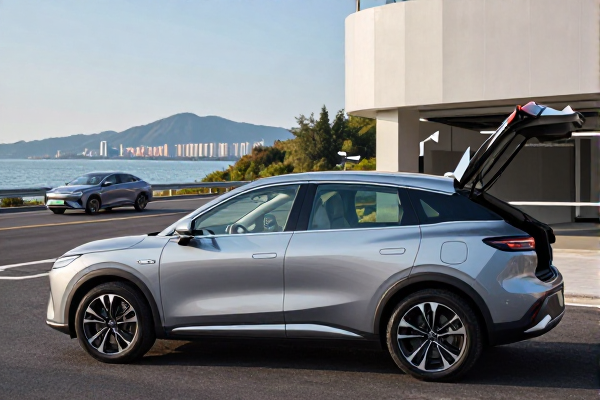
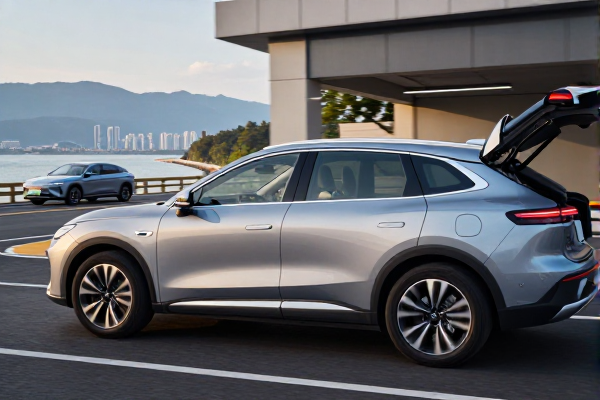
Every SM mall now has EV charging stations. The network totals 167 stations across 90 malls, and those stations are free for the first three hours of use. For EV owners, the cost of charging drops significantly when a full session is covered by the mall operator. For shoppers, the stations add convenience: a car can be charged while the owner eats, shops, or watches a movie.
The scale of the network also helps reduce a common problem in electric vehicle adoption: range anxiety. Drivers who know they can charge at any SM mall are more likely to rely on an EV for daily trips. That gives the company an unusual role in supporting low-carbon mobility without owning a single vehicle.
SM frames its energy program as more than an internal sustainability target. The company says the real goal is to make sure surrounding communities feel the benefit.
When a large mall draws significant electricity from a centralized grid, it can add pressure to local power supplies. SM says its approach does the opposite: on-site solar generation helps divert capacity back to essential services and households in the area. The result is a commercial building that tries to give back to its host community, not just consume from it.
That message is especially relevant in the Philippines, where electricity costs are a recurring concern for millions of families. Large commercial users who reduce their grid demand can help ease pressure on supply and potentially moderate price movements during peak periods.
“With these efforts, SM expands its spaces beyond retail while reaffirming its commitment to social equity to benefit customers and positively impact its surrounding communities,” Eusebio said.
For U.S.-based readers watching Asian retail trends, SM’s model offers a useful case study. Many American malls have added rooftop solar over the past decade, but SM is unusual in connecting three separate pieces at once: building design, renewable generation, and free EV charging. The integrated approach allows each part to reinforce the other.
The design-first strategy keeps electricity demand lower than it would otherwise be. The solar panels then cover a larger share of that reduced demand. Finally, the EV charging stations make the entire system visible to shoppers, turning sustainability into a reason to visit the mall instead of a behind-the-scenes utility program.
SM’s numbers also show the difference between a pilot project and an operational commitment. Across 90 malls, solar capacity has reached 123 MWp, with another 17 MWp expected by late 2026. EV chargers are present at every location. This is not a single flagship store or a green-labeled concept building; it is the entire network moving in the same direction.
SM is still adding capacity. The 140-MWp solar target for 2026 represents a steady increase over a three-year period, and the mall operator continues to build new properties with lower energy intensity. At SM Nuvali, the ETFE roof and indoor garden will serve as a working example of how natural light can replace electrical lighting in tropical malls.
The company’s energy-efficiency work is also part of a broader SM Green Movement that spans waste management, water conservation, and community programs. Energy efficiency is one of the most visible layers of that commitment because it affects every operating hour of every mall.
For customers, the day-to-day outcome is simple: a mall that is well lit, comfortable, and powered by a cleaner mix than the grid average. For surrounding communities, the outcome is measured in available capacity and reduced strain on public infrastructure. For the retail industry, SM is showing that energy-efficient spaces are not just good for public relations—they are a practical way to run a large real estate portfolio with lower risk and lower environmental impact.