Browse

Log in / Register
 Share


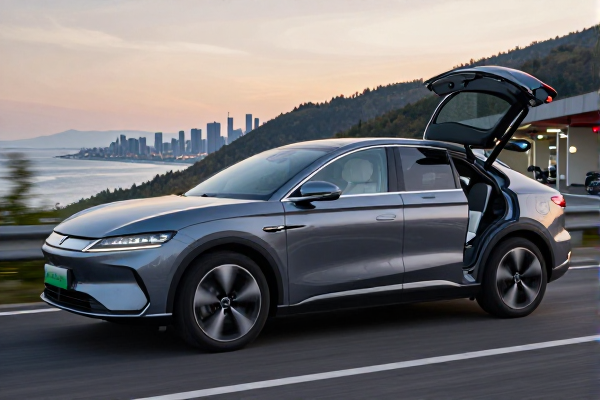
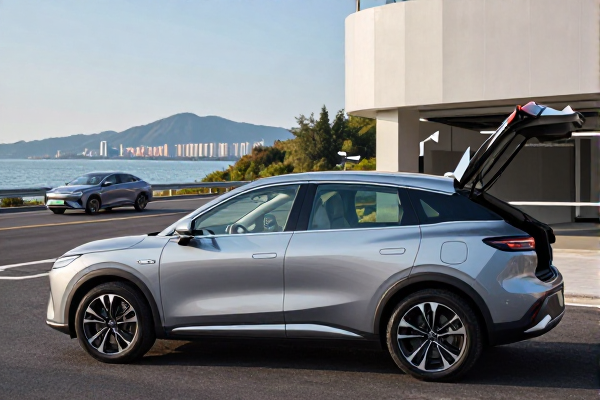
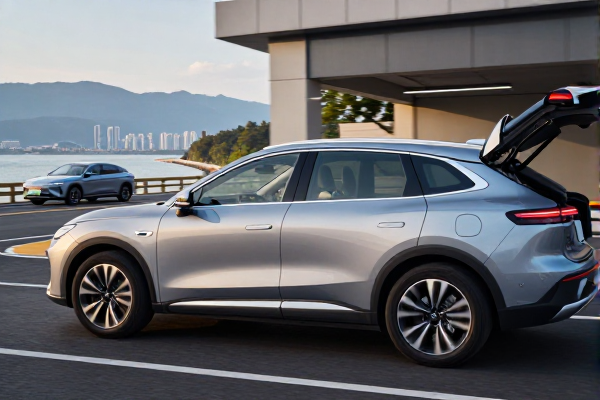
June 12, 2025 – Chery’s premium Exeed brand has filed a patent in India for the ET9, a six-seat electric SUV that could become one of the first solid-state battery vehicles sold outside China. The patent, first spotted by Indian automotive media, reveals an SUV with a boxy silhouette, rear-hinged rear doors, and an unconventional ceiling-to-floor tailgate – but the real story is under the skin.
The ET9 is the second Chery product to be patented in India with solid-state battery tech, following the Liefeng shooting brake earlier this year. And while full technical specs for the ET9 haven’t been released, the brand’s earlier solid-state announcement gives a strong hint: an energy density of 600Wh/kg, an 800V electrical architecture, and a claimed range of up to 1,500 kilometers on a single charge. Those are numbers that would put any current lithium-ion powertrain to shame.
Being a solid-state vehicle, the ET9 will use a ceramic or glass electrolyte instead of a liquid one. This brings three big advantages: higher energy density, faster charging, and much lower fire risk because there is no flammable liquid to ignite. The trade-off is cost – solid-state cells are still significantly more expensive to produce than conventional NMC or LFP cells. Chery has said that solid-state models will launch in China within the next two years, but it hasn’t said what they will cost.
Aside from the battery, the ET9 is notable for its "tank turn" ability – a 360° in-place rotation, similar to the feature Mercedes-Benz developed for the G-Class and called G-Turn. In practice, this requires independent control of each wheel’s torque and braking, and it’s a feature we’ve only seen on a handful of EVs like the Rivian R1T and some high-end Chinese models. That’s a sign that the ET9, if it reaches production in this form, will be positioned as a premium vehicle with serious off-road tricks.
Work on the ET9 also appears to include rear-wheel steering with a hydraulic mechanism, which should help with maneuverability in a vehicle this size. And the patent images show a six-seat layout with a rear door arrangement that opens from the middle rather than the front – think minivan-style, slightly complicated, but oddly practical for families, especially in tight parking spaces.
So why India? Chery hasn’t sold cars in the United States, and it doesn’t have a retail presence in most Western markets. But it has a big plan for India, through a joint venture with JSW Group, the industrial conglomerate. The JSW-Chery partnership is expected to bring multiple brands to the Indian market in its first phase: Jetour, Jaecoo, iCAUR, Exeed, and Tiggo. We’ve already seen Indian patent filings for the Jetour T2, Jaecoo J5 EV, and iCAUR V23 EV. The ET9 is now the second solid-state model in that pipeline.
This matters beyond India. When a Chinese automaker patents a vehicle in a major emerging market before that market has even approved its brand, it is a signal of long-term commitment. Patents take time, cost money, and often foreshadow actual product launches. For Chery, India could be a testbed for solid-state tech in a hot and dusty climate – conditions that are actually quite demanding for battery thermal management. If the ET9 survives Indian roads, it might be ready for other challenging environments.
There is also a global race context. Solid-state batteries are often called the "holy grail" of EV batteries, and almost every major automaker has a program. Toyota has been working on solid-state for years and expects to begin limited production by 2027 or 2028. Volkswagen, through its QuantumScape stake, has touted solid-state cells that could enable longer range and faster charging. Chinese companies like WeLion and Greater Bay Technology are supplying prototype cells to domestic EVs. Chery’s timeline – China launch within two years – actually puts it ahead of Toyota’s public schedule. That’s a big deal.
But the "within two years" claim belongs to the China arm. For India, and by extension for export markets, the timeline will likely be longer. The high production cost of solid-state cells means vehicles like the ET9 won’t be cheap. In India, where price sensitivity is extreme, that could push launch timelines further back. JSW-Chery has said the initial Indian lineup will include New Energy Vehicles – EVs using NMC and LFP chemistries, hybrids, and plug-in hybrids – but hasn’t specifically promised solid-state vehicles for India. This patent may simply be a "reserve the right" move, protecting the design and the tech without any near-term launch commitment.
What does this mean for US buyers? Realistically, not a lot in the near term. Chery has no confirmed US distribution, and the political climate for Chinese EVs in America remains difficult. But the ripple effect is real: as solid-state production scales in China and India, costs will come down, and the technology will eventually show up in cheaper, more common electric vehicles. When a volume brand like Chery – which sells more than a million cars a year globally – signals that it’s putting solid-state into its premium SUV line, the rest of the industry has to respond.
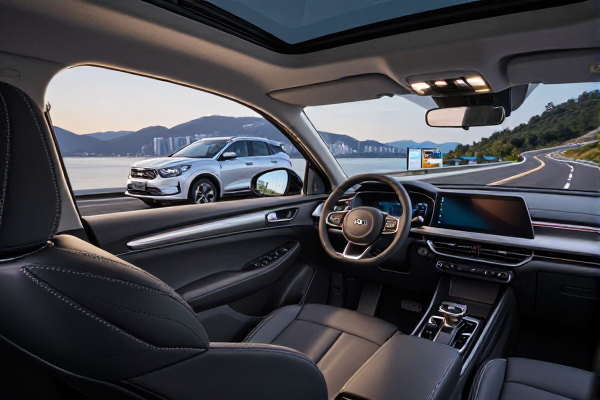
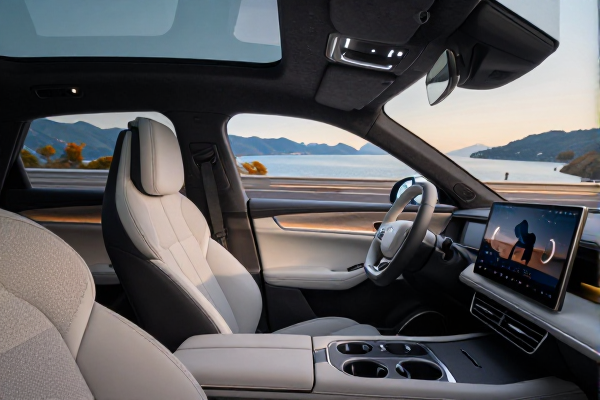
For now, the Exeed ET9 exists as patent images and a series of impressive claims. The tank turn, the rear-wheel steering, the six-seat cabin, and the potential 1,500-km range are all promising, but they mean little until a production version appears. Chery’s Chinese launch is the one to watch – if the ET9 or its siblings actually hit the road there with solid-state cells, expect the global automotive conversation to change fast.
Bottom line: Chery’s India patent for the ET9 is a strategic checkmark, not an imminent product announcement. It tells us the company is actively designing and planning for a solid-state future, that it’s willing to spend money on overseas IP, and that it sees India as a viable market for high-tech EVs. It also tells us that solid-state is moving from research papers to patent offices, which is perhaps the most important step of all.
As with any unannounced vehicle, details are subject to change. Chery has not commented on the patent or the ET9’s specifications. But one thing is certain: the second solid-state vehicle to be patented in India is not from Toyota or Volkswagen. It’s from Chery – and that’s a sign of how fast the baton is passing in the EV race.