Browse

Log in / Register
 Share


March 27, 2025 – Land Rover has officially confirmed that its first fully electric Range Rover will produce more torque than any internal combustion model in the nameplate’s history, marking a paradigm shift for the luxury off-road brand. The electric SUV, which has been undergoing secret testing in Arctic and desert conditions, promises to redefine what a Range Rover can do—without sacrificing the iconic design that has made it a status symbol for decades.
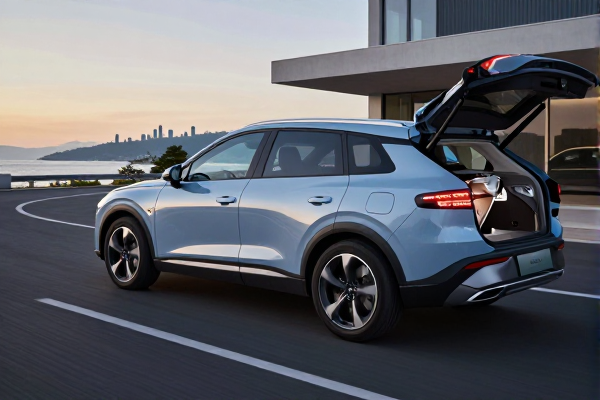
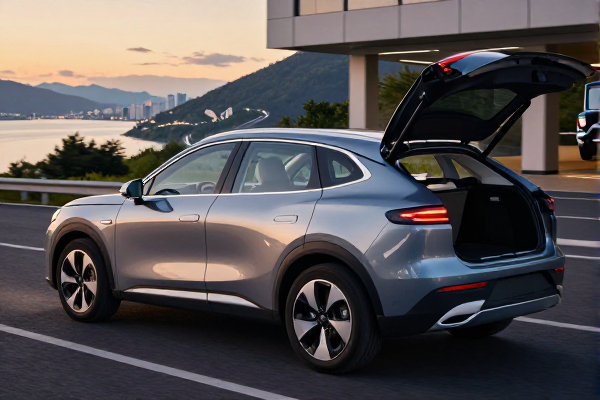
Unlike some competitors that radically reinvent their electric models, Land Rover chose to keep the exterior of the Range Rover Electric virtually identical to the current gas-powered version. The decision was deliberate: loyal buyers didn’t want a “space pod” or a futuristic blob; they wanted the same commanding presence, the same clamshell hood, the same floating roof. The only visual cues separating the EV from its petrol sibling are new wheel designs, a reworked front grille with active shutters, and subtle badging.
But under the skin, the story is completely different. The electric Range Rover uses a bespoke modular longitudinal platform (MLA) that was designed from the start to accommodate pure electric, plug-in hybrid, and mild-hybrid powertrains. For the EV version, engineers have installed a pair of electric motors—one on each axle—providing all-wheel drive and torque vectoring capability. The crucial figure: peak torque exceeds 1,000 Nm (738 lb-ft), surpassing the 900 Nm produced by the twin-turbocharged 4.4-liter V8 in the current Range Rover SV. This makes the electric version the most torquey Range Rover ever built, even before considering the instantaneous, wheel-spin-free delivery typical of electric motors.
“Torque is the language of luxury off-road performance,” said Thomas Müller, Land Rover’s chief engineer for electric propulsion. “With instant torque, we can climb gradients and pull loads that would make a diesel engine pause. The customer will feel a surge of controlled power unlike anything they’ve experienced in a Range Rover.” The 0–60 mph time is expected to be under 4.5 seconds, though official figures have not been released.
The battery pack, with a capacity of approximately 100 kWh, uses an 800-volt architecture enabling ultra-rapid DC charging of up to 350 kW. That means a 10–80% charge can be completed in under 30 minutes. Land Rover claims the WLTP range will be close to 300 miles (480 km), though real-world conditions may vary. The battery is also designed to withstand extreme temperatures: Land Rover has tested prototypes in -40°C Arctic conditions and +50°C desert heat, ensuring the battery thermal management system can maintain performance anywhere a Range Rover owner might venture.
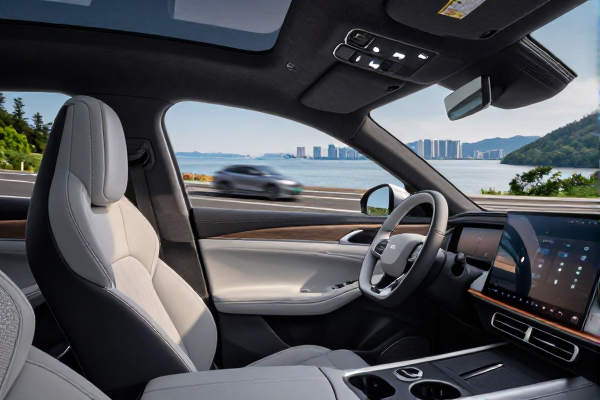
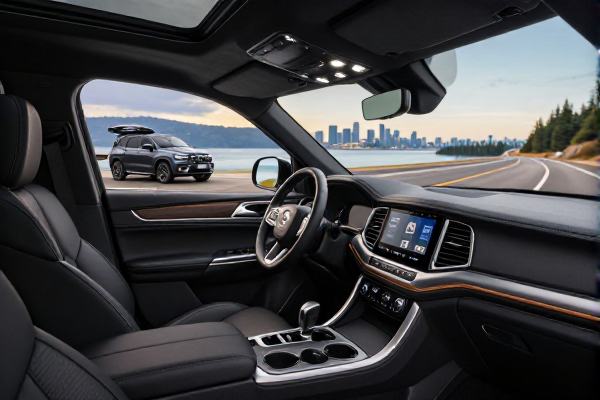
Inside, the cabin remains as opulent as ever, with semi-aniline leather, sustainable wood veneers, and a new “Kvadrat” wool blend option for the eco-conscious. The Pivi Pro infotainment system has been updated with a dedicated EV menu that displays battery state, charging stations, and efficiency tips. A 13.1-inch curved touchscreen dominates the dashboard, while a 13.7-inch digital instrument cluster provides driving data. The EV also features a new “Range Rover Electric” soundscape—a subtle, engineered hum that replaces the traditional V8 rumble, designed to be pleasant without being intrusive.
On the off-road front, the electric Range Rover maintains the brand’s legendary capability. The terrain response system has been calibrated for electric drive, with a new “Wade” mode that uses the battery’s sealed enclosure to allow fording depths of up to 900 mm—the same as the combustion model. The air suspension raises the body for maximum ground clearance, and the torque vectoring system can spin individual wheels to dig out of sand or mud. Land Rover demonstrated the EV crossing a 45-degree slope and pulling a 2.5-ton trailer up a gravel incline during a recent media event.
The biggest question mark remains pricing. Analysts expect the Range Rover Electric to start at around $170,000, roughly $20,000 more than the base V8 model, placing it in direct competition with the Mercedes EQS SUV, BMW iX, and upcoming Cadillac Escalade IQ. However, Land Rover’s strong brand cachet and the lack of a direct luxury EV rival with true off-road chops could justify the premium.
Production is slated to begin in Q4 2025 at Land Rover’s Solihull plant in the UK, with first deliveries expected in early 2026. Pre-orders opened in March 2025, and the company reports “very strong interest” from existing Range Rover owners—many of whom have never owned an electric vehicle before. The electric Range Rover is not just a car; it’s a statement that zero-emission luxury can still be rugged, capable, and unmistakably Range Rover.