Browse

Log in / Register
 Share

May 9, 2026 — European Commission President Ursula von der Leyen’s repeated threats to tighten trade restrictions against China are the wrong answer to Europe’s industrial stagnation, according to Chinese analysts who say protectionism cannot substitute for structural renewal. Their criticism comes as EU officials keep talking to Beijing while also preparing new tools that could restrict Chinese imports, a contradiction that risks eroding hard-won gains from recent negotiations.
Von der Leyen escalated her message in a mid-October address to the European Parliament, saying the bloc must be ready to deploy “trade defense instruments” if dialogue with China fails to deliver. She told lawmakers that safeguard measures should be triggered quickly when import surges threaten European industry, citing fears in the chemicals and machinery sectors. Her plan also included a DiversifyEU package, due in December, aimed at cutting reliance on single suppliers, plus a proposed mechanism to restrict access to Europe’s single market with less political delay.
The timing was telling. Less than two weeks earlier, Beijing and Brussels had closed a round of consultations with 16 points of consensus covering trade and investment, export controls, intellectual property and WTO reform. EU Trade Commissioner Maros Sefcovic described progress on rare-earth export controls and an understanding on exports of Chinese-made hybrid vehicles. Von der Leyen acknowledged the improvement, but dismissed it as insufficient to address broad trade imbalances.
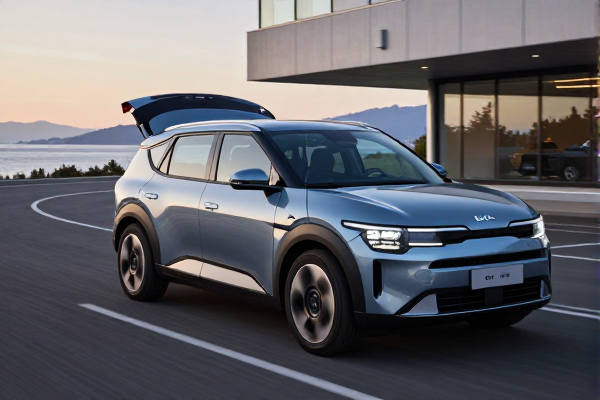
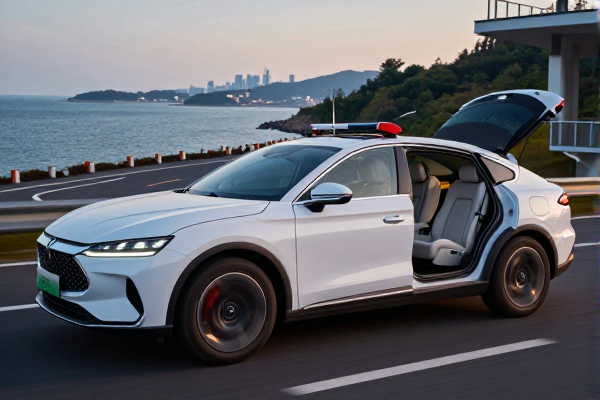
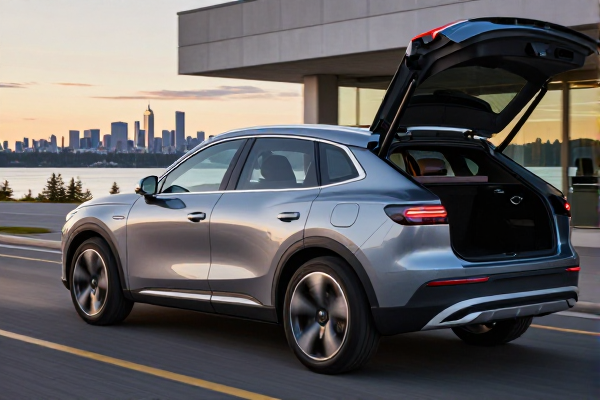
Chinese experts argue that the narrative of unfair competition is used to mask a deeper weakness. Wang Yiwei, director of the Center for European Studies at Renmin University of China, said Europe is struggling to adjust as Chinese manufacturers lead in electric vehicles, batteries, green technologies and advanced manufacturing. “Trade restrictions may provide temporary relief, but cannot deliver the technological advances or industrial transformation needed for sustained growth,” he told the Global Times.
Nor is the problem confined to any single product. Wang said the challenge is systemic: it lies in industrial capabilities, research systems and the technologies that will shape future supply chains. If Europe responds with tariffs instead of investment, it risks falling further behind while assigning blame to Beijing for problems that are largely internal.
This is not the first time Brussels has moved down this path. The EU’s anti-subsidy investigation into Chinese electric vehicles ended in October 2024 with five-year duties ranging from 7.8% for cooperating producers to 35.3% for companies that did not cooperate. China challenged the measures at the WTO and opened its own investigations into EU exports, including brandy and pork, making clear that unilateral pressure would have consequences. The vote itself exposed divisions in the EU, with Germany opposing a measure that many of its automakers regarded as self-defeating.
The latest push reflects internal political pressures as much as trade policy. With 27 member states pursuing different industrial interests, Brussels often finds itself unable to agree on a common strategy toward China. Wang said the European Commission is under constant pressure to show it is standing up for European industries, even when such posturing conflicts with economic logic.
The contradictions are most visible in Germany, Europe’s largest exporter and the country with the most direct exposure to China. Chancellor Friedrich Merz said he backed stronger EU trade defense tools to address what he called unfair competition from China, but added that the bloc does not want to use them. The goal, he said, is to achieve a new balance, not trigger a conflict.
Mercedes-Benz Group CEO Ola Källenius went further. He warned that protectionist measures would raise production costs and distort global supply chains. “Europe cannot become an island,” he said, captured in a Bloomberg report on the same day. European manufacturers rely on Chinese intermediate goods, and German carmakers build vehicles in China for export to other markets. Restrictions aimed at Beijing would therefore travel back into Europe through higher costs and lost export opportunities.
China’s trade regulator has been blunt about the limits of pressure. On October 16, the Ministry of Commerce said the purpose of China-EU consultations is to resolve differences through dialogue and accommodate each other’s concerns. It added that both sides must demonstrate sincerity, and that the EU should not expect to gain benefits by pressuring China. Any attempt to test China’s determination and ability to defend its interests would be a mistake, the ministry warned.
Despite the friction, contact continues. A 12-member delegation from the European Parliament’s Committee on International Trade was scheduled to visit China from October 27 to 29, with talks expected to cover market access, industrial subsidies, supply chains and critical raw materials. The delegation could serve as a reminder that the EU still values the relationship, particularly in areas where cooperation is unavoidable.
The stakes go beyond tariffs. The EU’s readiness to use restrictive tools, including the so-called anti-coercion instrument that has never been triggered, may reassure domestic audiences but send a chilling signal to trading partners. Analysts say that if Brussels continues to pair negotiations with threats, it will become harder to build the trust needed for long-term agreements.
Shi Xiaoli, director of the WTO Law Research Center at China University of Political Science and Law, urged the EU to abandon geopolitical and confrontational thinking. China’s innovation-driven development, she said, creates opportunities for green growth, new energy and digital industries. A mutually beneficial outcome is still possible if the EU changes course.
Seven months after von der Leyen’s speech, the debate remains unresolved. The EU is still trying to square its desire for access to Chinese markets with its fear of Chinese competition. What is missing, analysts say, is a credible industrial strategy that invests in Europe’s own strengths instead of spending political capital on trade threats that cannot build a factory, train a worker or close a technology gap.