Browse

Log in / Register
 Share

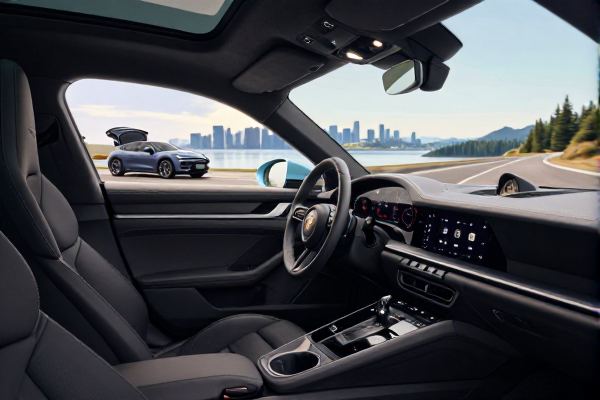
May 10, 2026 — Porsche is preparing for a long period of lower sales, and its recovery play is luxury. At a capital-markets day in Weissach this week, CEO Michael Leiters said the company is restructuring so it can turn a profit with fewer than 200,000 annual deliveries.
The new break-even threshold is not just an internal accounting target. It tells investors how much pain Porsche can absorb if demand in China or the U.S. deteriorates further. The carmaker delivered 279,449 vehicles in its latest financial year, so the cost base will now be designed to withstand a decline of nearly 30 percent before losses begin. That is a radically different posture for a brand that has often defined success by record sales.
Porsche's global deliveries have fallen by almost 10 percent since 2022, the year of its blockbuster listing on the Frankfurt exchange. The retreat has been shaped by two forces. In China, consumer confidence has weakened and local electric-car makers have seized the technology narrative. In the United States, tariff policy has made imported European vehicles harder to price. Both markets are crucial because they generate a large share of Porsche's profits, not just its unit count.
Despite the demanding backdrop, Leiters insisted the brand can become financially stronger. The lower break-even point gives him room to walk away from low-margin sales. If a market is not profitable, Porsche no longer feels obliged to push volume through the dealer network.
Porsche's profit margin collapsed to 1.1 percent in the most recent fiscal year, far below the double-digit margins investors were promised when the company went public in 2022. At that time, Porsche was presented as a high-margin luxury asset in the style of Ferrari, with scarcity and pricing power built into its model.
Michael Leiters inherited that promise but also inherited the missteps. Under his predecessor Oliver Blume, Porsche invested heavily in electric vehicles. Several of those projects were expensive and did not generate the returns the company expected. Leiters has since shifted course, rebalancing the lineup toward combustion-engine models that still command premium prices in many markets.
Blume remains chief executive of Volkswagen Group, Porsche's parent. He is fighting with unions over a drastic overhaul that includes roughly 100,000 job cuts worldwide and the possible closure of up to four German plants. The group is under intense pressure from Chinese competitors that are offering cheaper electric cars, and Porsche's own margin problems cannot be separated from that larger crisis.
Leiters describes his strategy as “value over volume.” In practice, that means steering product development, marketing, and dealer allocations toward high-end models such as the 911 and luxury SUVs. Less important body styles may not get the same investment, and some niche variants could disappear. The goal is not to sell one more car; it is to sell the right car to the right customer at a higher price.
The company also plans to cut 9,000 positions by 2035, reducing its workforce by one-fifth. The job cuts are part of a broader wave of restructuring in Germany's automotive industry, which is still adjusting to the abrupt rise of low-cost Chinese EV makers. Porsche's job losses fit a national pattern: suppliers shrinking, plants closing, and automakers trying to become more flexible.
Porsche is also turning to Audi to reduce development costs. Senior executives said on Wednesday that increased platform sharing with the fellow Volkswagen Group brand will be central to the new financial blueprint. If Porsche can reuse Audi's architecture and components without losing its own character, engineering and supply-chain costs should fall sharply.
The challenge is the trade-off. If a Porsche shares too much with an Audi, the uniqueness that sustains high prices begins to fade. Leiters argues that the brand can share hardware while keeping design, tuning, and customer experience separate. Investors will need to watch whether that promise holds once the first wave of shared models reaches the market.
For the U.S. market, the luxury-first plan could mean a tighter model mix and stronger transaction prices on top specifications. Tariffs remain a wild card. If trade barriers push imported German vehicles above a certain price level, Porsche will have to decide whether to protect market share or protect margins. The new break-even structure may make that decision easier because it builds in more tolerance for lower volume.
The American customer base still values the 911's tradition and Porsche's combustion heritage. Leiters appears willing to extend the life of those models rather than force electrification on buyers who are not ready. That pragmatic approach may be more effective in the U.S. than a fixed electric-only timeline.
The real test for Porsche is credibility. Investors heard ambitious margin promises when the company listed, and a 1.1 percent margin is proof that those promises can fade quickly. The closer Leiters can bring the break-even point toward 200,000 units without damaging demand, the more room he creates for pricing power to do the rest.
Analysts will be watching two numbers: the pace of job reductions and the acceptance of the 911 and luxury SUV lineup. If Porsche can reduce structural costs while protecting appeal, its profit margin could recover. If it only cuts costs and loses product distinctiveness, the plan may keep the company alive but not restore the premium status it needs.
Leiters summed up the immediate priority: “The ultimate goal is to further strengthen our unique sports car brand — across all model lines and with new, highly desirable models in particularly high-margin segments,” he said. “At the moment, the main focus is on reducing costs and making the company more financially robust.”
Porsche's next earnings reports will reveal whether the strategy is working. In the meantime, the company's message is clear: lower volume is not a failure if the cars being sold are the ones that make money.