Browse

Log in / Register
 Share


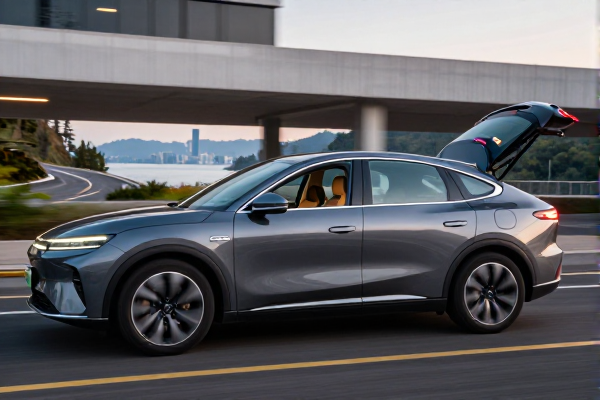
When Miko Marczyk is on a rally stage, every tenth of a second is a small war. This time, the battlefield could not have been more different: not gravel or tarmac, but a public road in Poland, with the enemy transformed into electron depletion. On June 17, 2025, the reigning European Rally Champion completed a verified 1,338-kilometer drive in an Audi A6 Sportback e-tron performance on a single charge. Guinness World Records has ratified the distance as a new electric-car range world record.
For Marczyk, the run was never about chasing a fast lap time. The objective, he explained during the verification process, was managing energy as carefully as he normally manages throttle inputs on a snowy Polish rally stage. The route took him across the country on normal roads, with the kind of real-world obstacles that laboratory tests don't offer: intersections, traffic flow, elevation changes and weather.
The difference between this record and a typical electric-car marketing stunt is the figure that matters most to engineers: 7.09 kWh per 100 kilometers. That is a stunningly low energy consumption number. Many mainstream EVs hover between 14 and 18 kWh/100 km in daily driving. Marczyk's run effectively halved that average, despite driving a mass-produced model with no stripped-out panels, no super-slick tires and no special aerodynamic modifications.
The math is straightforward. The A6 Sportback e-tron performance carries a 94.8 kWh usable battery. Multiply 1,338 km by 0.0709 kWh/km and the math lands almost exactly on that battery capacity — meaning Marczyk had managed to use nearly every electron on board. In U.S. terms, that's the equivalent of about 8.8 miles per kWh. Most efficient EVs on the American market are rated between 3.5 and 4.5 miles per kWh.
What made this long-distance success possible? The answer is not a single magic trick, but a combination of disciplined route strategy, low rolling resistance, aerodynamic efficiency and the car's 800-volt architecture.
The Audi A6 Sportback e-tron performance is not a stripped-down lab prototype. It is part of Audi's new PPE platform, with a rear-mounted motor producing 270 kW. Its official WLTP range is around 750 km. In real-world traffic, many owners would expect less. Marczyk's result therefore exceeded the official European figure by more than 78 percent.
That kind of gap invites a closer look at how the drive was conducted. While the route was not a downhill-assisted coast, it did favor steady speeds rather than aggressive acceleration. Marczyk is a rally champion, but this was not flat-out driving. Instead, the team used what racers call "energy saving" at the next level: low brake-energy waste, calculated coasting phases, gentle use of regenerative braking and speed choices that kept drag in an optimal window.
Crucially, the record attempt was not completed in a factory-controlled environment. The car carried additional road equipment, had standard gearing and used standard road tires. The weather factor, which can affect tire resistance and battery temperature, was not artificially controlled. Guinness's adjudication process relied on independent GPS data, battery-level documentation and witness verification.
The last few years have produced several official range records, but most have been achieved under conditions that feel far from a normal commute. Some involved hypermiling experts in enclosed test loops, some depended on extremely slow rolling speeds. What makes this Audi record stand out is not just the distance — it's the efficiency rate.
A consumption figure of 7.09 kWh/100 km implies that energy wastage was unusually low at every stage. It also highlights a less-publicized truth about modern electric cars: range is not a fixed number on a window sticker. It is an equation that changes with every road gradient, weather front and maneuver.
This is exactly the point that automotive engineers and independent efficiency analysts have been making for years. EPA range tests are useful for comparisons, but they do not capture real-world energy recovery, route planning and driver skill. Marczyk's run demonstrates that a determined driver, using standard traffic logic, can outperform not only the official estimate but the expectation of the car's own battery chemistry.
For ordinary Audi A6 e-tron owners, the lesson is more practical than heroic. Range anxiety is often based on worst-case assumptions about highway speed and cabin heating. Marczyk's record shows that an EV's achievable distance can vary by enormous margins, depending on how the driver anticipates energy use.
The 1,338-km mark will probably be challenged soon; Guinness range records tend to generate rival attempts. But the more durable significance of this achievement is the benchmark of 7.09 kWh/100 km. That number, more than the distance, is a challenge to the industry. If a production Audi can hold that average in mixed public-road conditions, then the same focus on energy efficiency that defines rallying could be the next big unlock for electric-car ownership.
For Marczyk, the record also adds another line to a career already defined by precision. He once needed to be first across a finish line by inches. This time, he needed to be first to the empty battery — and he stretched the journey farther than any previous verified electric-car drive. The Audi A6 Sportback e-tron performance, meanwhile, now carries a Guinness world record in its portfolio, proving that even inside a four-door liftback, the science of extreme efficiency remains remarkably alive.