Browse

Log in / Register
 Share


May 7, 2026 — Freelander has today set out its international distribution plan for the Freelander 8, mapping a controlled but ambitious global expansion for the electric SUV brand formed by Chery and Jaguar Land Rover. The plan identifies around 20 markets across Europe, the Middle East and Southeast Asia for the first phase of exports, with Norway selected as the launch market and deliveries scheduled to begin in the first quarter of 2027.
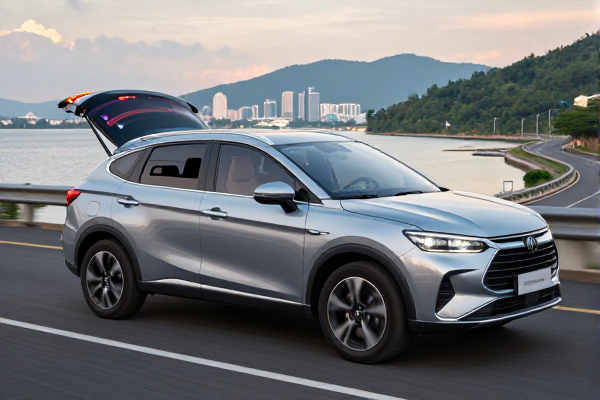
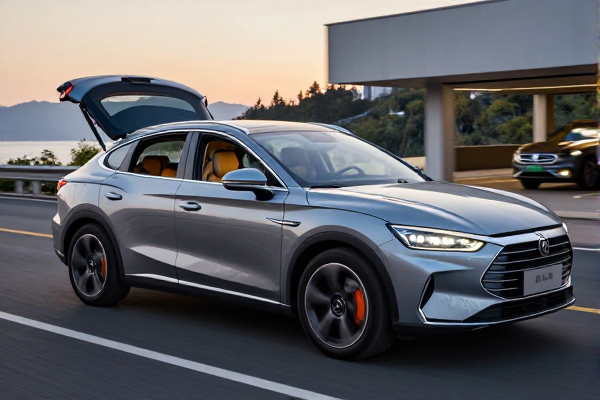
The Freelander 8 is more than just another electric SUV from China. It is the first vehicle to carry the Freelander name since Jaguar Land Rover and Chery revived it as a standalone EV marque in 2024. For Land Rover, the nameplate once belonged to the compact Freelander produced between 1997 and 2015. Now, it has been reborn on a new platform as an electric family SUV built in Changshu, Jiangsu province, at the Chery Jaguar Land Rover joint-venture plant.
Until this week, the brand had been quiet outside China. The domestic launch of the Freelander 8 generated press attention, but there was little clarity on how the vehicle would reach customers in Europe, the Middle East or Asia. That changed at a distributor briefing in Shanghai earlier this week, where Freelander presented the first detailed export blueprint.
The company did not announce a single, dramatic showpiece market. Instead, it chose a staggered approach. Norway comes first because of its mature EV charging ecosystem and strong consumer appetite for battery-powered family vehicles. Germany and France follow in the second wave, with the UK expected to arrive in spring 2027 after right-hand-drive engineering work is completed. The UAE, Saudi Arabia, Australia, Thailand and Malaysia are listed in the same early phase, with more countries to be added only after early delivery performance is reviewed.
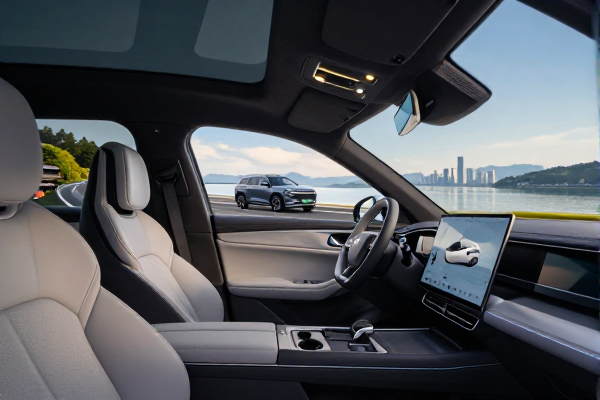
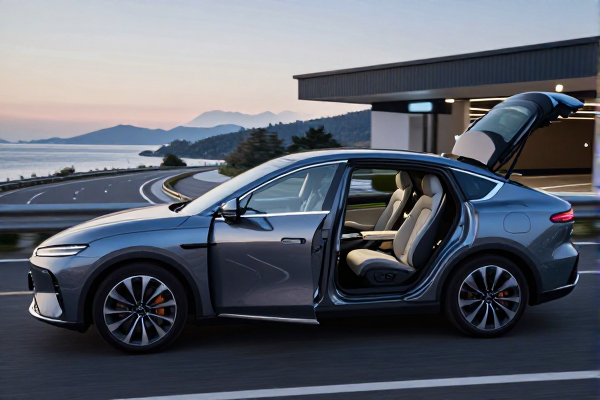
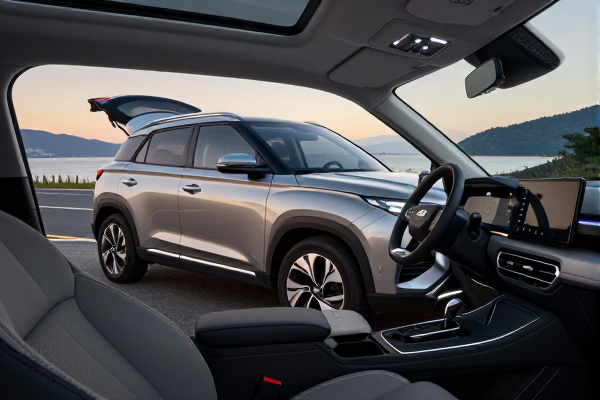
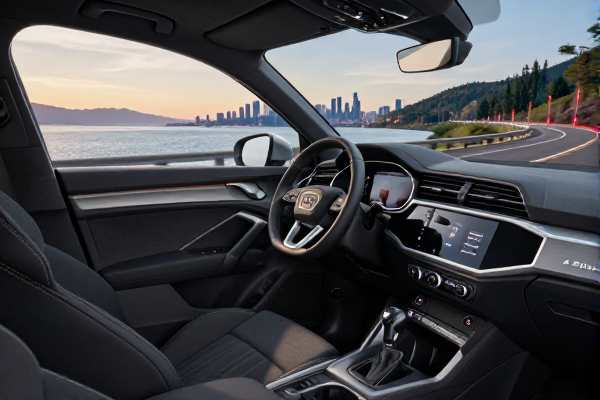
The Freelander 8 is positioned as a premium electric SUV rather than a budget offering. It is built on Chery’s E0X electric architecture, which already underpins several plug-in and battery-electric models in southeast Asia. The dual-motor all-wheel-drive version is expected to be the focus of export marketing, with a driving range that the brand says will exceed 550 kilometres under the WLTP test cycle. An 800-volt electrical architecture allows fast charging, and the interior is designed around three rows of seating, making it a direct competitor to the Ford Mustang Mach-E, the Kia EV9 and, to a lesser extent, the Volvo EX90.
Freelander’s international launch team says the vehicle has been tuned specifically for overseas customers rather than simply shipped out of China with the domestic specification. That means revised suspension settings for European roads, additional sound insulation for high-speed motorway driving, and a glass roof that is offered only in selected warm-weather markets. The company has also confirmed that both left-hand-drive and right-hand-drive versions will be homologated from the very first production year. That is a costly decision, but it signals that the brand is thinking about the whole global map, not just one or two easy export markets.
One of the most notable parts of the plan is what Freelander will not do. It will not, at least in the early phase, sell directly through a factory-owned digital platform in every country. Instead, it is relying on local distributors with established dealer networks, spare parts warehouses and maintenance workshops. The thinking is simple: an unfamiliar brand cannot win trust purely with online ads and pop-up showrooms. Customers need to be able to see the car, open the doors, sit in the third row and test drive it.
Freelander says it has already signed distribution agreements in France, Germany, the UAE and Thailand, with terms that are unusual for the industry. Rather than force distributors to take the entire stock of the first delivery batch, the agreements are described as “modest volume, high service” contracts. Dealers begin with manageable annual targets, roughly 1,500 to 2,500 units per market, and only receive access to additional supply after hitting customer-service benchmarks.
Additionally, Freelander plans to open regional parts distributions in Dubai and Amsterdam before the first cars are handed over. That decision addresses a common complaint from customers buying new EV brands: slow access to spare parts. Having parts already stored close to the buyer is not a glamorous headline, but it does more for owner confidence than a flashy product launch.
The timing of the announcement is significant. China’s EV export growth has become more complicated since the introduction of higher import duties on Chinese electric vehicles in the European Union. Freelander is not immune to that pressure. It has not announced a European assembly plant, so vehicles sold in Europe will still be built in China and will carry the additional tariff. The brand’s leadership reportedly accepts this as a short-term handicap, but argues that the Freelander 8 is not in the same low-cost segment as many Chinese imports. The model is meant to compete on packaging, charging speed and its connection to a known Western nameplate, not on the lowest possible sticker price.
Industry analysts see the distribution plan as unusually disciplined for a first-year export program. Some Chinese EV makers have tried to enter several continents at once, or have relied on opportunistic online sales that left early owners without reliable service networks. Freelander’s approach, by contrast, resembles the old-school automotive playbook: build the brand slowly, protect dealer margins and avoid flooding a market with cars that cannot be supported locally.
That discipline matters because the Freelander name opens doors, but it also creates expectations. A buyer old enough to remember the original Land Rover Freelander may be curious about the new model. A younger buyer, though, may not know anything about that history. For those customers, Freelander has to prove that it is a real, durable brand and not just a licence badge placed on a Chery SUV. The distribution plan, with its emphasis on physical presence and service readiness, is designed to answer that doubt.
The biggest risk is not engineering. It is consistency. Freelander’s retail network will initially be a mix of large dealer groups and smaller independent operators in different time zones and business cultures. Managing that without a Western headquarters is challenging. JLR, as the joint-venture partner, provides some institutional knowledge, but Freelander is not operating inside JLR’s own dealer network. The company has essentially chosen the harder path: create a new channel, with new standards, in markets where German and Japanese brands already have decades of trust.
Another risk is product placement. The three-row SUV segment is crowded and, in many European cities, the Freelander 8 will be a large vehicle. It will suit suburban families, but dealers will need to explain why this new Chinese-built SUV deserves attention over established European alternatives. That is a selling job that cannot be done with price alone.
Freelander’s short-term milestones are clear. The first vehicles must complete final type approval in Norway and the EU before the end of this year. Then production for export has to be separated from domestic demand at the Changshu plant. Finally, the Dubai and Amsterdam parts hubs must be operational ahead of the first deliveries. If those steps happen on schedule, the Freelander 8 could become one of the first Chinese-built EVs to succeed under a Western heritage nameplate across multiple continents.
There is no shortage of electric SUVs on the global market. With its distribution plan, Freelander is betting that service, continuity and physical dealerships will matter as much as range and charging speed. The plan is careful, deliberate and a little old-fashioned. For a brand that carries a name from another era, that may be exactly the right approach.