Browse

Log in / Register
 Share

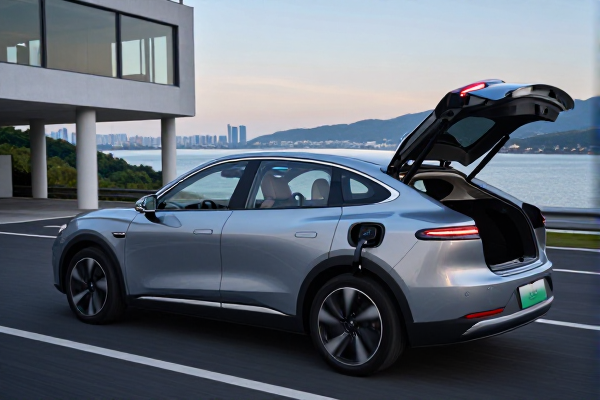
October 7, 2026 — An inventor from Wichita, Kansas, wants to remove one of the biggest headaches in electric vehicle ownership: the search for a charging station. His patent-pending PIT BULL GENERATOR KIT, now being introduced to potential licensees through InventHelp, is designed to charge an EV's battery while the car is moving or parked.
The inventor said he set out to create a practical charging method that could be deployed before the battery reached a critical level. Rather than planning a route around available chargers, a driver could simply let the onboard generator do the work. The payoff, he said, is time saved on trips where a charging-station detour would otherwise be required, plus more control over when and where the battery is topped up.
How the kit works
The kit is an onboard charging unit, not a replacement for the vehicle's existing powertrain. It produces electricity that flows into the EV battery, acting as a backup source when grid charging is unavailable or inconvenient. Since the generator can run while the vehicle is in motion, a driver on a long highway trip can add range without stopping.
That difference is central to the product's appeal. Most EVs rely on grid power, which means finding an outlet or a public charger. The generator kit turns the relationship around: instead of taking the vehicle to the power source, it brings the power source to the vehicle.
Charging while parked adds another benefit. Households without a garage or dedicated outlet often struggle with home charging, and public chargers may be far away. An onboard generator gives those drivers an alternative that does not depend on the electrical service at their residence.
Target market
The system is designed to fit both new and used electric vehicles. The inventor sees automakers and dealerships as the most natural partners, given their service facilities and technical expertise. A dealership could offer the kit as an installed option during the sale, giving hesitant buyers a concrete answer to range anxiety.
Fleet operators are another likely market. Commercial vehicles such as delivery vans and utility trucks come back to the depot with varying battery levels, and charging downtime costs money. A generator kit that keeps those vehicles on the road is an argument that fleet managers may find persuasive.
Infrastructure reality
The timing is notable. Public charging networks in the United States are expanding, fueled by federal programs that have earmarked billions of dollars for EV infrastructure. But the build-out remains uneven. Rural routes, remote job sites, and older urban neighborhoods still have thin coverage, and even well-served areas occasionally deal with broken or incompatible chargers.
Consumer surveys have repeatedly flagged public charging as a sore spot for EV owners. Research firms including J.D. Power have tracked how charger availability and reliability influence owner satisfaction and purchase intent. A device that reduces dependence on that network addresses the problem from the driver's side, rather than waiting for infrastructure to catch up.
Background on range extenders
The idea of an onboard generator for an EV is not new. The BMW i3 was offered with an optional range-extender engine, and the Chevrolet Volt relied on a gasoline engine to generate electricity for its electric drive system. Automakers have continued to explore the concept through patents and concept vehicles, though production examples remain scarce due to cost, weight, and packaging compromises.
The PIT BULL GENERATOR KIT takes an aftermarket path. It does not require automakers to redesign their platforms; it would be installed on cars that are already on the road. That approach could speed the product's route to market, though installation quality and vehicle-specific fit will ultimately determine its reputation.
Trade-offs and questions
The economics are worth considering. Home charging is the cheapest way to power an EV, but many drivers cannot access it. Public fast charging is convenient but pricier and sometimes crowded. The generator kit sits in the middle: it adds upfront cost, yet it gives the driver an electricity source wherever the road leads. For frequent long-distance travelers, that trade-off may make sense.
Environmental factors will also enter the conversation. A generator running on fuel creates emissions, which dulls the zero-emissions promise that draws many buyers to EVs. Some analysts see range extenders as a bridge technology, useful while chargers proliferate and battery packs grow. Others argue they will remain valuable for specific uses like towing, rural driving, and emergency backup. A licensee will have to weigh those perceptions in positioning the product.
InventHelp's involvement
The submission came through InventHelp's National sales office in Pittsburgh. InventHelp does not build or sell products directly; the company matches independent inventors with manufacturers, distributors, and licensees who can bring a concept to market. For an inventor without production capacity, that matchmaking step is often the difference between an idea and a tangible product.
At this stage, the invention is available for licensing or sale. Interested manufacturers and marketers should reference docket number 24-MHO-556 when contacting InventHelp. The mailing address is InventHelp, 100 Beecham Drive, Suite 110, Pittsburgh, PA 15205-9801, and the phone line is (412) 288-1300, extension 1368. More information about InventHelp's submission services is available on its website, InventHelp.com.
Caveats and outlook
As with any patent-pending invention, no independent performance data has been published. The design will need to be adapted to specific EV models, and real-world factors like weight, noise, emissions, and installation complexity will shape how practical it is for everyday drivers. Whether the kit becomes a niche accessory or a widely adopted option depends on the partner that licenses it.
The broader trend, however, is clear. Electric vehicle sales keep rising, and the market for accessories and add-ons is growing with them. Chargers will spread, but they will never sit on every corner. Products that give drivers more ways to keep their batteries full, whether through generators, trailers, or smarter apps, are likely to find a receptive audience. For the inventor in Wichita, the challenge now is finding a partner who can carry a patent-pending idea across the finish line.