Browse

Log in / Register
 Share

On Oct. 23, The Guardian published a set of reader letters that, read together, form a powerful opposition to Simon Jenkins’s call to replace Hammersmith Bridge with a new road bridge. Jenkins, known for his defense of historic architecture, had argued that the crumbling west London crossing was a glaring example of Britain’s inability to coordinate large infrastructure projects. His answer was straightforward: take down the old bridge and build a proper vehicle crossing. Readers had a different answer. Keep the bridge, but keep it car-free.
Hammersmith Bridge has been closed to motor vehicles for years. The Grade II* listed structure, built in the 1880s, developed serious structural cracks and was deemed too fragile for modern car traffic and heavy vehicles. Under a £55m refurbishment led by Hammersmith & Fulham Council, the main carriageway was brought back into use—not for cars, but for walking, cycling, and wheelchair users. More than 15,000 people now cross the bridge each day on foot or on two wheels.
The letters make clear that many locals see the current setup as a success, not a problem. Dr Richard Carter of Putney pointed out that more than half of households in Hammersmith & Fulham do not have access to a car. He also rejected Jenkins’s claim that the main cause of congestion is “London’s epidemic of roadworks.” The real issue, he argued, is that too many cars are trying to use a network designed for a different era.
Carter also dismantled the idea of replacing the bridge for motor traffic. Demolishing a Grade II* listed structure would be a huge, costly, and legally fraught exercise. And even if the money were available, he said, there is no effective business case for spending hundreds of millions to bring back polluting, dangerous and exclusive through-traffic. Rather than open the road to more cars, local transport policy should be reducing car dependence, for both environmental and health reasons.
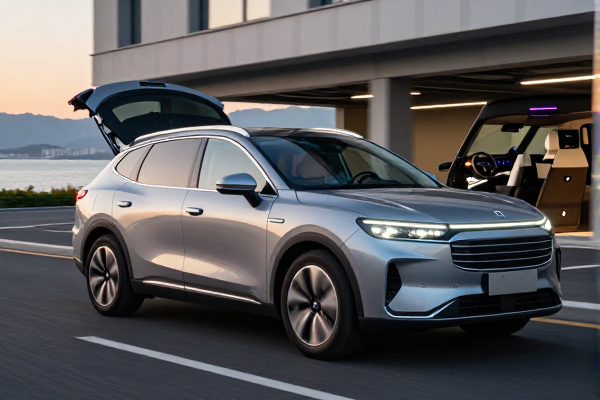
Several letters pointed out that a car-free bridge doesn’t have to mean an inaccessible bridge. The Barnes Hammersmith Electric Light Transit (BHET) community group has proposed a fleet of lightweight, autonomous electric shuttles to run across the bridge. This would provide a transit option for residents who cannot walk or cycle while preserving the bridge’s car-free status. The group says it is working with UK-based smart transit firm Ohmio UK and other partners to make the vision a reality.
Charles Campion, chair of BHET, was blunt: “There is no credible business case for spending hundreds of millions bringing back polluting, dangerous and exclusionary through traffic.” He noted that traffic on neighboring bridges and the wider road network has actually fallen since Hammersmith Bridge stopped carrying cars. Barnes’s local economy, he added, is booming, helped by the e-bike revolution and the calmer street environment near the bridge.
Campion framed the argument in terms of London Mayor Sadiq Khan’s target of a 27% cut in car traffic by 2030. A rebuilt car bridge would work directly against that goal. The priority, he said, should be to build on the bridge’s success as an active travel route, not unwind it.
Not every reader agreed. Julian Heddy of East Sheen argued that the years of waiting and dithering by London’s various authorities were indefensible. “No other capital city in Europe would allow such a prolonged truncation of a major transport artery,” he wrote. London’s fragmented governance—with the mayor lacking the powers that counterparts in Paris or Berlin have—meant the bridge became a symbol of paralysis. In Heddy’s view, a temporary vehicle bridge could have been put in place long ago. Instead, he said, citizens are forced to walk or pedal across a wonky Victorian structure out of misplaced nostalgia for a bygone engineering era.
The City Bridge Foundation also weighed in, but with a warning about money. The charity, which has been responsible for London’s bridges for nearly 900 years, maintains Tower Bridge, London Bridge, Southwark Bridge, Millennium Bridge, and Blackfriars Bridge. Its chairman, Paul Martinelli, made clear that the foundation’s endowment is earmarked for those five crossings and for charitable grants tackling inequality across London. It is not, he said, a general slush fund for every bridge project in the capital. Hammersmith Bridge falls outside its remit.
That matters because Jenkins’s column appeared to suggest that Bridge House Estates—the centuries-old endowment behind the foundation—could be tapped for the replacement. Martinelli rejected that reading. “Our endowment exists to meet these responsibilities in perpetuity,” he wrote. It cannot simply be redirected to pay for the restoration or replacement of Hammersmith Bridge.
For readers in the United States, the Hammersmith fight is more than a British curiosity. American cities face the same dilemma on aging bridges: repair a historic structure for pedestrians and transit, or tear it down and widen it for cars. The U.S. has tens of thousands of aging bridges in need of structural investment, and community groups are increasingly pressing states and cities to fix, rather than replace, heritage crossings. The Hammersmith model—a restored Victorian bridge serving active travelers, with electric shuttles as a complement—offers a case study in what a car-focused rebuild might cost in financial, environmental, and cultural terms.
As the debate moves forward, one clear majority has emerged in the letters pages: The bridge should be saved, but it shouldn't be handed back to the motorcar. The fight over Hammersmith Bridge is ultimately a fight over what cities want their streets to be. For now, west London is leaning toward people, not traffic.