Browse

Log in / Register
 Share

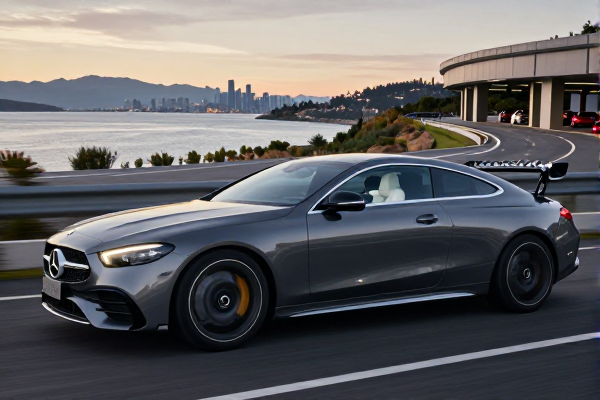
In the competitive realm of Formula 1, the Mercedes-AMG PETRONAS team leverages a cutting-edge simulator at their Brackley headquarters to refine car setups long before race day. However, a recent YouTube episode featuring reserve driver Frederik Vesti and simulation head Riccardo Musconi uncovered significant gaps in this virtual tool. Updated on May 23, 2024, this report examines how these simulator shortcomings are strategically advantageous, driving innovation and real-world data integration.
The primary role of the Mercedes simulator is to serve as a virtual proving ground, where engineers test correlations and finalize configurations for the W17 car. Valued at millions of dollars, this system aims to replicate track conditions with precision. Yet, as Vesti and Musconi revealed, its most notable flaw isn't technological inadequacy but an overly controlled environment that lacks the chaos of actual racing. This paradox highlights a critical insight: perfection in simulation can obscure real-world vulnerabilities, making imperfections essential for progress.
During Free Practice 1, Vesti experienced firsthand the simulator's blind spots, particularly with aerodynamic behaviors like front-wing recovery under braking. In the virtual world, such nuances are smoothed over by mathematical models, creating a "perfect environment" that fails to expose drivers to minor yet impactful issues. This sterility necessitates real-world testing, where unpredictable variables—from tire wear to track evolution—provide irreplaceable diagnostic data. As Musconi emphasized, the engineering team meticulously analyzes every discrepancy to bridge the digital-physical divide.
Physically, the simulator's hardware faces inherent limitations within the factory's structural constraints. The platform, capable of six degrees of freedom movement, cannot replicate the extreme G-forces of an F1 car without risking operational safety. Instead, Mercedes prioritizes minimizing latency, as even a 50-millisecond delay can prevent drivers from correcting oversteer, leading to spins. Vesti noted that rapid, small movements are favored over exaggerated motions to maintain correlation, underscoring how technical compromises shape the simulator's design.
To enhance driver focus, Mercedes intentionally simplifies the visual environment by removing distractions like advertisements. This stripping-down process ensures that pilots concentrate on micro-movements and feedback, rather than immersive graphics. Musconi explained that such adjustments are vital for accurate data collection, as overly busy visuals can impair a driver's ability to detect subtle changes in car behavior. This approach reflects a broader philosophy: simulation is about controlled experimentation, not full sensory replication.
Mercedes enforces a strict "95% rule" for simulator drivers, discouraging all-out speed in favor of consistency. Pushing for ultimate lap times often yields erratic data, complicating engineering analysis. Vesti detailed that drivers must stay within one-tenth of their average lap time to generate useful information, as deviations obscure minute adjustments like half a PSI in tire pressure. This discipline transforms the simulator into a reliable laboratory, where steady performance reveals the car's true envelope rather than fleeting, fluke-based improvements.
Adding a value-driven perspective, recent trends in F1 highlight a growing reliance on simulation across teams like Red Bull and Ferrari, who also balance virtual tools with on-track validation. According to a 2024 FIA report, advancements in AI and machine learning are pushing simulators to become more adaptive, yet the human element—drivers' intuitive feedback—remains irreplaceable. This industry shift underscores Mercedes' strategy: embracing simulator flaws fosters a hybrid model where data analytics and driver sensation converge for competitive edge.
Ultimately, the Mercedes simulator acts as a bridge between human intuition and numerical precision. Vesti summarized this synergy, noting that drivers articulate feelings while engineers interpret metrics, with the simulator mediating this exchange. By acknowledging its imperfections, the team turns limitations into opportunities for deeper learning, ensuring that every virtual session contributes to tangible on-track success. In Formula 1's data-driven era, this balanced approach may redefine how teams harness technology for racing excellence.