Browse

Log in / Register
 Share

On June 11, 2026, the Electric Vehicle Council (EVC) published its 10th annual State of EVs report for Australia. The headline: plug-in vehicles accounted for 25.8% of new car sales in the first half of 2026, nearly double the share from a year earlier. But the report also warns that public charging remains the weakest link, with infrastructure described as diverse, complex, fragmented, and under-funded. For US buyers and policymakers watching global EV trends, the Australian data offers a clear warning: demand can outpace charging deployment.
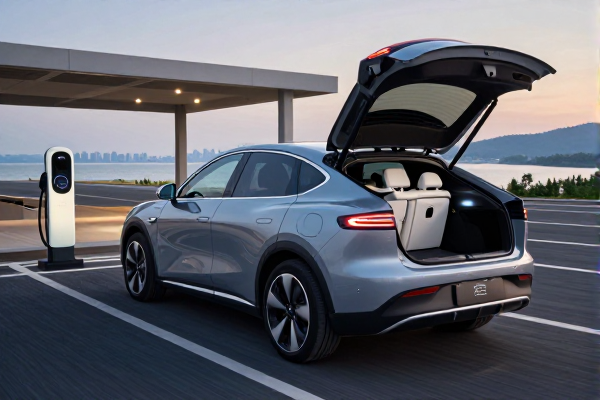
Between June 2025 and June 2026, Australia’s public charging count jumped sharply. The EVC counted 4,268 public charging locations — 235% more than in June 2025 — and 11,602 individual charge points, a 175% increase. Those numbers look impressive in isolation, but the report cautions that the country needs substantially more investment, and not just in fast chargers.
Most EV charging happens where vehicles already sit, the report says: at homes, apartment blocks, workplaces, destinations, kerbsides and depots. That means a one-size-fits-all fast-charger rollout will not solve the practical gaps. The EVC calls for a nationally coordinated charging roadmap and scaled infrastructure deployment, rather than piecemeal projects.
The warning echoes earlier comments from the NRMA. In December 2025, spokesperson Peter Khoury told CarsGuide that Australia was “nowhere near” having enough public charging. He highlighted the lack of off-grid energy sources in many rural and regional areas, requiring new energy generation at those sites. The same dynamic appears across many US states, where rural charging deserts remain a barrier.
The EVC’s report also calls for policy changes. First, it wants targeted equity-based policy so lower-income Australians can access EV running-cost savings. The council estimates a typical driver saves about A$3,000 annually on fuel and maintenance, and that figure does not include the jump in fuel prices seen in 2026.
Second, the EVC wants the federal government to update the New Vehicle Efficiency Standard (NVES) for cars sold beyond 2029. The NVES penalises high-CO2 vehicles and gives manufacturers a clear compliance framework. Carmakers need long lead times to design vehicles, so the EVC argues the rules must be set soon to align with Australia’s 2035 emissions targets.
Third, the council is watching road-user charges. The state of New South Wales plans to introduce a road-user charge from 2027 to replace lost fuel excise revenue. The EVC warns that if the charge is designed poorly, it could slow EV uptake. A national road-user charge, the report says, should be structured so it does not discourage drivers from going electric.
The report shows a surge in consumer acceptance. Fully electric and plug-in hybrid cars were sold at a pace of one every 100 seconds in early 2026. Combined sales reached 157,957 vehicles in the first half of 2026, up 177% from the same period in 2025. Battery-electric and plug-in hybrid models now represent 25.8% of new cars sold up to June 2026, compared with 12.1% a year earlier.
Choice is expanding too. There are 196 full-EV and PHEV models available in Australia, up from 153 in 2025. The International Energy Agency considers Australia’s EV uptake now in line with the global average. At the budget end, BYD launched the Atto 1 in Australia at A$19,990 drive-away until 15 December 2026, giving the market its cheapest electric car yet.
Cost-of-living pressure and volatile fuel prices are the main motivations, the report says. “So, at a time when fuel prices are fluctuating and cost-of-living continues to bite, it’s no surprise that EVs have become a popular choice,” EVC says. “As of June 2026, drivers have never had a greater choice of EVs in Australia.”
For an American audience, Australia’s rollout is more than a distant data point. The US faces a similar patchwork. Federal programs such as the National Electric Vehicle Infrastructure (NEVI) formula program have begun to fund charging corridors, but deployment has been uneven across states. Utilities, local governments and private networks still operate with different standards, permitting rules and payment systems. Australia’s 4,268 public locations across a vast country show how quickly headline counts can mask access gaps.
The EVC’s emphasis on kerbside, apartment and destination charging is also relevant to US cities. A large share of US households lack dedicated off-street parking, meaning home charging is not available to every buyer. The Australian report reinforces the view that public policy must focus on “charging where people park,” not just on highway fast chargers.
There is also a road-user charge debate unfolding in the US. Several states are experimenting with mileage-based fees as EV sales rise and fuel-tax revenue falls. Australia’s experience — specifically the NSW proposal — shows how such fees can become a political flashpoint unless they are framed as a replacement for fuel duties rather than a penalty on EVs.
Finally, the cost-of-living angle applies directly. With US fuel prices volatile and EV prices falling, running-cost savings are a stronger selling point than before. But those savings depend on charging reliability. If an American buyer cannot charge at home or access dependable public charging, the total cost equation weakens.
Australia’s 10th State of EVs report offers a clear message: electric-car sales can grow quickly, but charging infrastructure cannot be an afterthought. The country is buying EVs faster than ever, yet the charging network remains uneven and under-coordinated. For US policymakers and automakers, the lesson is that a national, deliberately planned charging system is essential to sustain the EV transition. Without it, the next barrier to adoption will not be the car itself — it will be where to charge it.