Browse

Log in / Register
 Share

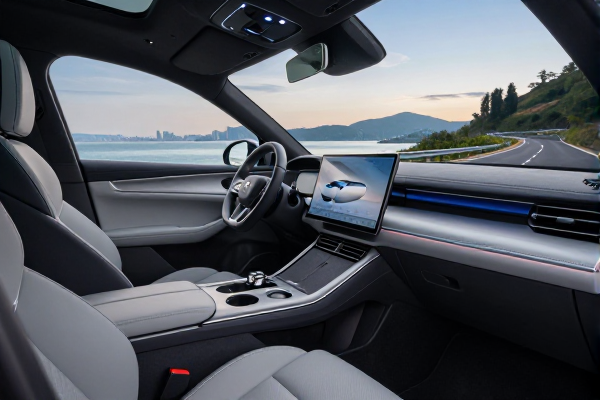
May 9, 2026 — The modern car has become a showcase for technology. Gesture controls, automated parking, and built-in voice assistants are often the first thing a salesperson demonstrates. But in daily driving, many of these features turn out to be expensive extras that owners rarely touch. Here are five of the most impressive — and most ignored — modern car features.
Waving a hand to turn up the radio or answer a call sounds futuristic. It was one of the most talked-about features when BMW introduced it, and similar controls have appeared on other premium models. In real life, though, gesture control tends to get switched off shortly after the first road trip.
The problem is simple: a physical knob or steering-wheel button works without looking. A gesture requires the driver to aim a hand at the camera, wait for the system to recognize the movement, and hope it doesn't confuse a wave with a command. Drivers often shrug and say it feels less natural than a rotary dial.
There are moments when gesture control is useful, such as quick volume changes. But owners tend to forget the exact fingers-and-waves recipe after a few days. Add the occasional accidental trigger — skipping a song while talking with your hands — and the feature loses its appeal.
Even automakers that rushed to add gesture controls seem aware of that. The trend in recent cabin designs has been to bring back physical shortcut buttons for frequently used tasks, or at least to place the most common controls where they cannot be missed.
Cameras and parking sensors are used every day. A system that takes over the steering wheel to slot the car into a tight spot? That is a different story. Self-parking is usually demonstrated once and then forgotten.
The feature needs clear markings, enough space, and a driver patient enough to watch the car creep into position. For many people, parallel parking by hand is faster. The system also asks the driver to manage the brake, which makes some owners feel like they are still doing the work — just more slowly.
Remote parking, where the owner stands outside the car and activates it with a smartphone, is even more rarely used. It can impress friends in an empty parking lot, but it takes time and requires the car to have a good connection, clear surroundings, and a driver who trusts the software completely.
Automaker research and owner forums show that parking assist features are seen as a nice safety net, not as a daily tool. Drivers appreciate the sensors and cameras, but most stop using the automated parking function after the first few attempts.
Every new car seems to come with a voice assistant that can change the climate, open the windows, or find a charging station. The idea is to keep the driver’s eyes on the road. In practice, many owners use it only for phone calls — or turn to their phone’s assistant instead.
There are several reasons. Native voice assistants have improved, but they still misunderstand names and addresses. They often need a very specific phrase, while drivers generally speak the way they would talk to a person. If the system does not understand a simple instruction, the driver stops bothering.
Another issue is speed. By the time the assistant processes the command, the driver has already reached for the screen. That is not a small problem: when a feature is slower than the old method, it rarely becomes a habit.
At CES in January, a number of automakers showed new AI-powered voice assistants with more natural conversation. But the interesting part is that many of these systems rely on smartphone integration rather than the car’s own hardware. That is another sign that drivers prefer to use a trusted assistant they already have.
Adaptive cruise control has become genuinely popular, especially on long trips. It maintains a safe distance and saves the driver from constantly adjusting the speed. Automatic lane changing is a different kind of feature. It takes the car from one lane to the next without the driver touching the wheel, but many owners do not use it.
The reason comes down to trust. Drivers like assistance that works in the background, but they are less comfortable when the car makes a driving decision on its own. When the system activates the indicator and moves into the adjacent lane, the driver still watches the mirror and often questions the timing. In the end, it feels easier and more natural to change lanes manually.
Studies on advanced driver assistance systems, including surveys by AAA and J.D. Power’s Tech Experience Index, have found that owners value support features but prefer to stay in control. Automatic lane changing does not fail to work; it simply fights the driver’s instinct to judge traffic personally.
For that reason, automakers have started making lane change assistance more cooperative. They now wait for the driver to confirm before making the move. That is a sensible way to handle it, but it also changes the feature from something "automated" into something that is basically a prompt for the driver to act.
Almost every automaker now has a smartphone app for remote locking, climate starting, and vehicle status. Owners download the app when they take delivery, play with it for a few days, and then stop opening it unless something goes wrong.
The main complaint is that the app duplicates what the key fob can do. Most drivers use the fob because it is already in their hand and works instantly. A phone app usually takes longer to connect, needs to be stored somewhere safe, and can freeze at the worst moment.
There is also the subscription angle. Some features inside the app require a recurring payment, and many drivers find it hard to justify paying for something they used to get free in the car. Rather than build a daily habit, they simply ignore the app.
That does not mean connected apps are useless. They are excellent for checking whether the doors are locked, warming the car in winter, or locating a car in a large parking lot. But those are occasional tasks, not daily routines. So the app becomes a backup tool rather than a feature drivers think about.
Look at all five features and the same pattern appears. Each one is clever, but each one asks the driver to change a habit. A knob is familiar. A wave of the hand is not. Parking by hand is something drivers learned years ago. Letting a car do it requires learning a new rhythm.
The new technology on cars is not going away. The next wave of cabins will use more screens, more artificial intelligence, and more automation. The features that will actually survive are those that save time without adding a learning curve. For many drivers, the simplest controls are still the most modern thing in a car.