Browse

Log in / Register
 Share


April 26, 2026
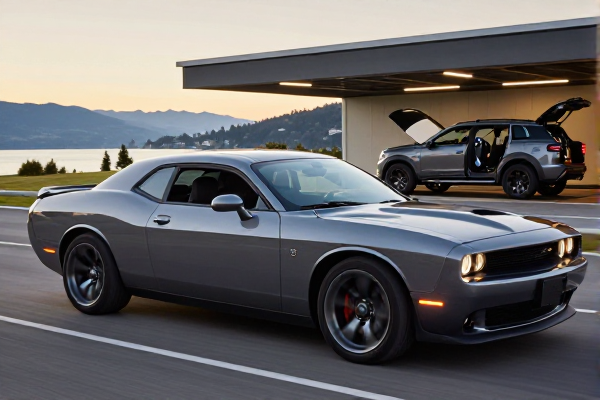
Dodge has finally detailed the 400-volt propulsion system underneath its all-electric Charger Daytona range. The production setup is built into the STLA Large platform and pairs a 100.5 kWh battery with a 550 kW drive system. In Scat Pack form, it produces 670 horsepower, with a factory-measured 0-60 mph time of 3.3 seconds and an 11.5-second quarter-mile. The component breakdown yields much more than a spec sheet—it shows how Dodge tuned the EV system around muscle-car priorities.
The 400V choice is deliberate. Engineering with a lower base voltage keeps the high-voltage components cheaper to source and easier to package than an 800V layout. But it also means the drivetrain has to move more amperage to reach the same power. Simple math: 550 kW at 400V equals roughly 1,375 amps on the cable side. That number explains the oversized busbars, thick charge wiring, and aggressive cooling strategy central to the Daytona's design.
The battery pack is where the performance story begins. Dodge specified a liquid-cooled pack with cell-stack cooling plates that manage heat down at the cell level. The thermal design is aimed at repeatability. Instead of offering one impressive launch then pulling power, the Scat Pack holds its calibration for back-to-back runs. That matters to anyone who actually races at a strip or enjoys frequent hard pulls.
Traction comes from a dual-motor, all-wheel-drive system. The front motor helps plant the car during hard launches, while the rear motor carries the bulk of the load under normal driving. A feature called PowerShot temporarily lifts torque limits for a short burst, magnifying the sensation of raw acceleration. The combined result is a quick, predictable surge—not the one-dimensional instant torque that many EVs deliver.
Dodge describes this system as the foundation for the full Charger Daytona family, not just the flagship. The 550 kW rating represents the top-tier capability; lower trims will use a detuned version of the same propulsion components. That approach mirrors traditional muscle-car lineups, where the engine block remains the same across trims but calibration and hardware vary.
Platform integration deserves a closer look. STLA Large allows the battery tray to sit fully inside the floor pan, so the Daytona doesn't gain a high seating position or awkward hump. The aero bodywork and widebody stance are carried over from the concept, but the propulsion package adds only minimal structural changes. For Dodge, that means the electric drivetrain can be engineered without compromising the classic muscle-car proportions.
On the charging side, the 400V system keeps things simple for everyday owners. Most public DC fast chargers in the U.S. are built for 400-500V, meaning the Daytona can use them without needing a complex booster or voltage splitter. While 800V vehicles can hit higher peak rates on certain electrified stations, the real-world charging curve of the charger matters more than the sticker voltage. An outstanding 400V cooling system can often achieve nearly the same practical charging speed as a mediocre 800V system.
Competition in the high-performance EV segment already includes the Tesla Model S Plaid and Lucid Air Sapphire, but those cars aim at luxury buyers. Dodge is betting that noise, attitude, and brand heritage matter more than raw lap times. The Charger Daytona's 11.5-second quarter-mile puts it in serious company, but the experience is what Dodge is actually selling—a four-seat machine that still looks and sounds like a proper American muscle car.
Dodge has not leaned heavily on range publicity with this latest release, and the emphasis on propulsion hardware shows where its priorities lie. The company wants current Hemi fans to understand that the electric system can take punishment, hold its performance, and still deliver the kind of acceleration numbers that built the Dodge brand. The 400V architecture is a means to that end, and the engineering details back up the claim.
As the first all-electric Charger Daytona models reach more owners, the 400V propulsion system will face a different kind of testing—real-world driving on rough highways, summer traffic, and the occasional stoplight challenge. Everything Dodge has revealed points to a system built for that abuse. The new electric muscle car range isn't just a concept anymore; it's rolling out with tangible hardware, real performance figures, and a platform designed to carry the nameplate forward.