Browse

Log in / Register
 Share

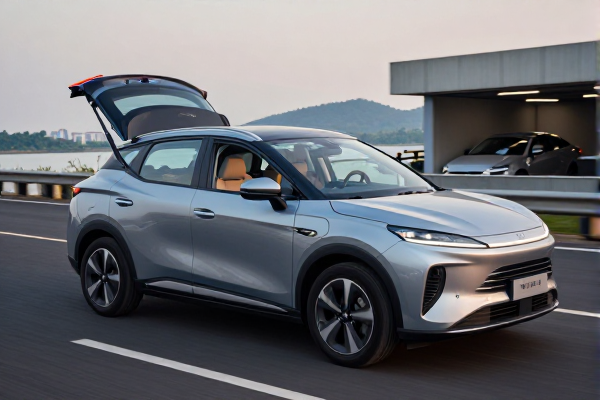
As of August 2026, Delhi’s latest Electric Vehicles Policy has taken effect, mandating a phased shift to electric three-wheelers, two-wheelers, and light goods vehicles. The policy is one of the most aggressive in India, combining purchase incentives with registration deadlines. Yet a close look at its design and the broader mobility landscape reveals that swapping an internal combustion engine for a battery is not the same as transforming a transportation system. For US cities and states pushing similar zero-emission vehicle mandates—from California’s 2035 ban on new gas cars to New York’s electrification of ride-hailing fleets—Delhi’s experience offers a sobering preview of what techno-centric policies can miss.
Delhi’s policy treats vehicle electrification as the primary lever for cleaner air. It correctly identifies that two- and three-wheelers, along with goods vehicles, account for a large share of the city’s winter pollution. But the policy leaves untouched the deeper structures that drive vehicle demand and urban inequality. An electric SUV occupies the same road space, creates the same congestion, and poses the same safety risks to pedestrians and cyclists as a petrol SUV. Its tires, brakes, and road abrasion still generate particulate matter. According to the OECD, non-exhaust PM2.5 emissions from heavier, longer-range EVs can be 3–8 percent higher than from comparable conventional vehicles, even with regenerative braking.
The same logic applies in the United States. A 2025 study by the Union of Concerned Scientists found that in cities like Los Angeles and Houston, the shift to EVs alone will not reduce traffic congestion or the health impacts of road dust. Vehicle miles traveled continue to rise. In 2025, US vehicle registrations grew by 2.1 percent, with SUVs and light trucks accounting for nearly 80 percent of new sales. Electrifying these larger vehicles does little to address the spatial and social costs of car dependence.
An EV has no tailpipe, but its energy and material supply chain remains deeply connected to pollution and exploitation. The Central Electricity Authority of India reports that coal supplied roughly 70 percent of the country’s electricity through early 2026. Until the grid decarbonizes, the emissions removed from Delhi’s streets are partly shifted to coal-mining regions and power-plant communities. Similarly, battery production links clean vehicles to landscapes suffering water depletion, land conflict, and unsafe labor conditions. The International Energy Agency estimates that over half of current lithium and copper production is concentrated in areas facing high water stress, including lithium mining regions in Australia and South America and much of Chile’s copper belt.
The United States faces analogous challenges. The Inflation Reduction Act’s tax credits for EV purchases have spurred a surge in domestic battery manufacturing, but environmental justice groups have raised concerns about lithium extraction in Nevada and the Salton Sea region, where toxic brine processing and water use threaten local ecosystems and Indigenous communities. A 2026 report from the Environmental Defense Fund highlighted that without strict supply chain regulations, the clean energy transition