Browse

Log in / Register
 Share

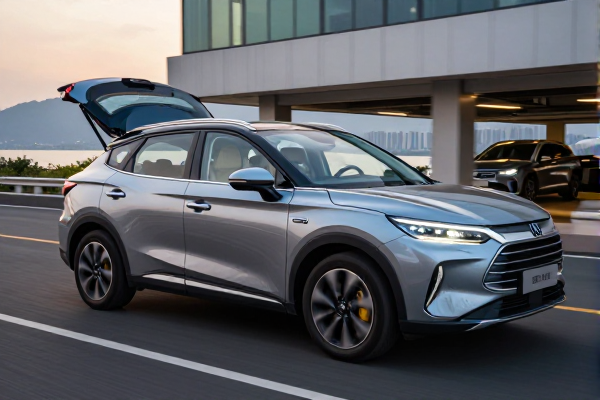
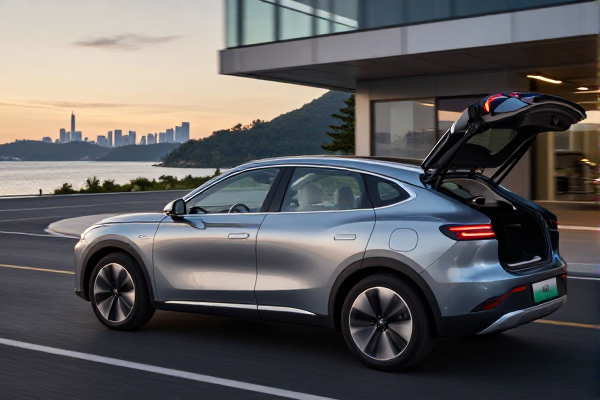
BEIJING – Chinese automakers are stepping back from the all-touchscreen cockpit, restoring the physical buttons and knobs they helped banish, as regulators in Beijing push to reduce digital distractions. The clearest sign yet came this week when Chery Automobile unveiled its Omoda X SUV, a model whose center console brings back ordinary switches for climate and seat ventilation. (Updated Oct. 27, 2026)
Chery leads the tactile comeback
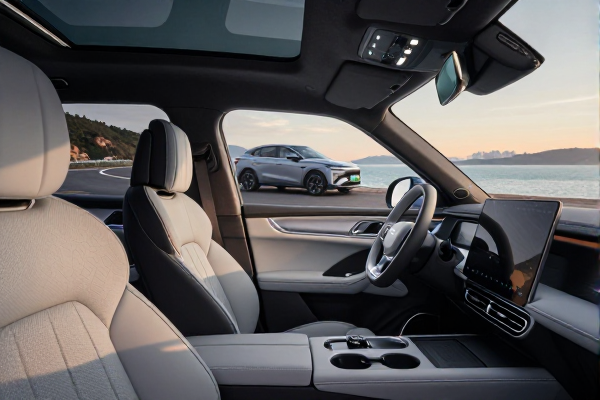
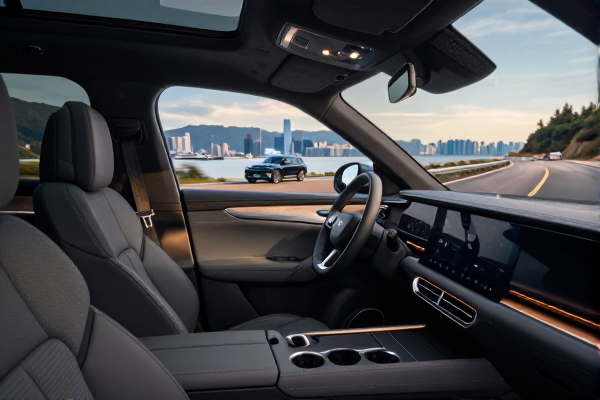
At the Omoda X launch, Chery turned the center console into a talking point. The new crossover features dedicated physical switches for air conditioning and ventilated seats — functions that many rivals, including some of Chery's own models, have moved into touchscreen menus.
Li Yehan, a brand manager for Chery, said the decision is rooted in usability and safety. "Why should anyone scroll through a submenu just to lower the cabin temperature?" he asked. A physical switch, he argued, works instantly and requires no eyes-off-the-road hunting. For older drivers in particular, a familiar knob is less intimidating than a software layer hiding behind a glass panel.
BYD and Geely follow suit
Chery is not alone. BYD, China's largest electric-vehicle maker, has reintroduced hard buttons for audio volume and climate settings in its latest Tang SUV. Geely Automobile Holdings, one of the country's biggest private automakers, has likewise increased the number of rotary dials in the center console of its new Galaxy TT sedan. Both companies spent years competing on ever-bigger displays, and their latest launches suggest that the race to eliminate buttons has lost its appeal.
The shift comes as Chinese showrooms fill with technically dazzling EVs from startups such as NIO, Xpeng, and Li Auto. Each new model seemed to add another screen or gesture control, pushing the cabin toward the minimalist style popularized by Tesla's Model 3. But the design direction also generated growing complaints: steering-wheel touchpads, buried climate menus, and screens that demand multiple taps for simple actions drew criticism from drivers and reviewers alike. At auto shows in Shanghai and Beijing over the past year, several manufacturers have started highlighting "restored physical controls" as a selling point rather than a concession.
The regulatory hand is pushing in the same direction
Industry preference aside, Beijing is now making the case for physical controls in the form of new rules. The Ministry of Industry and Information Technology (MIIT) earlier this year proposed revising national vehicle standards so that safety-critical functions — such as gear selection and headlight operation — must remain physical, not digital. The new standard is slated to take effect in July 2027, leaving automakers less than a year to adapt their next-generation interiors. Automakers that have already moved to screen-only control panels will have to decide whether to redesign current models or wait for the next full generation; either way, the deadline is firm.
Regulators' concern over screens is not theoretical. Displays can freeze, lose power, or become less legible in direct sunlight. And unlike a familiar knob, a screen demands visual engagement, pulling the driver's eyes away from the road during critical moments. The same logic has already reshaped exterior design: flush-mounted door handles, long touted as an aerodynamic feature, triggered a wave of recalls across China when they malfunctioned, and regulators have pushed manufacturers to reconsider them.
External light displays face a ban
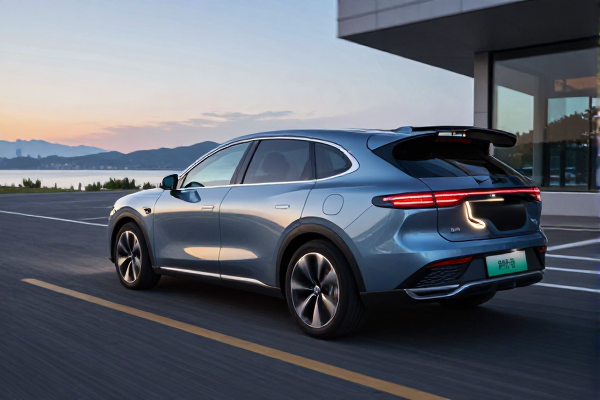
On October 20, the MIIT went further, publishing a standard that prohibits exterior lights from displaying text. The rule is intended to stop automakers from adding features that could distract other road users. The most prominent affected feature comes from SAIC Motor's IM Motors brand: owners of its EVs can light up the rear bumper with custom messages. Some have used it to display live gasoline prices to drivers of combustion-engine cars, a provocation that became popular on social media. Under the new standard, that stunt would be banned. Bright messages on a rear bumper can hold another driver's gaze for seconds at a time — at highway speed, that is a long distance spent with reduced attention.
Europe is retreating from screens, too
The Chinese shift mirrors a broader industry reassessment. By putting too many functions behind screens, "the car industry might have gone a little bit too far," Ola Kallenius, CEO of Mercedes-Benz Group, told reporters in July. Mercedes has begun reinstating conventional buttons across its newest European models, a striking reversal for a brand that once made 56-inch dash-spanning displays a flagship feature.
The same lesson was already playing out elsewhere. Volkswagen's haptic-touch interfaces, rolled out across its mainstream models in the early 2020s, drew sustained criticism in Europe and North America before the automaker backtracked in later facelifts. The Chinese experience essentially repeats that cycle at a much larger scale, amplified by intense competition among EV brands eager to outshine one another on technology.
Why U.S. drivers are watching closely
The debate is not limited to China. In the United States, J.D. Power's annual Tech Experience Index has consistently identified infotainment systems and touchscreens as a primary source of new-car owner complaints, with recurring frustrations over menu complexity, system lag, and occasional freeze-ups. AAA's test-track research has found that everyday display-based tasks, such as selecting music or entering a destination, can occupy a driver's visual attention for far longer than U.S. safety guidelines recommend. NHTSA has suggested that any single in-car task be completable within about 15 seconds of cumulative glance time — a threshold AAA says many touchscreen operations miss by a wide margin.
Automakers in the U.S. have been slower to go all-in on screens. Models like the Toyota Camry and Kia EV6 keep physical radio and climate controls alongside their displays, an arrangement that many buyers say they prefer. For American consumers comparing their options, the Chinese experience offers a preview of what happens when that restraint disappears.
The future is a hybrid cabin
The direction set by Beijing may become a template for exports as well. Chinese EV brands are expanding into Southeast Asia, Europe, and Latin America, and the cabins they ship will increasingly resemble the hybrid layout debuted in the Omoda X: screens for navigation and entertainment, switches for the functions drivers use every trip.
Voice assistants, once pitched as the replacement for buttons, have not lived up to that promise. Misrecognition, background noise, and slow responses have left many drivers reaching for a physical control — when they can find one. Automakers are learning that voice, screens, and switches are complements, not substitutes.
For automakers, the return of buttons is a differentiating feature in a market where software-heavy interiors have become common. For drivers, it is a return of something more basic: the ability to adjust the temperature or pick a radio station without taking their eyes off the road.