Browse

Log in / Register
 Share


On August 5, 2025, luxury automaker BMW is facing a growing backlash from owners after a pop‑up advertisement for Sony Pictures’ upcoming film Spider‑Man: Brand New Day appeared on the Control Display screens of thousands of eligible vehicles. The activation, which began July 27 and runs through August 10, affects BMW models with Operating Systems 7, 8, 8.5, 9, or X built after July 2020 in more than 70 countries. What was intended as a branded partnership has instead fueled a fierce debate over who controls the digital cockpit after a car is sold.
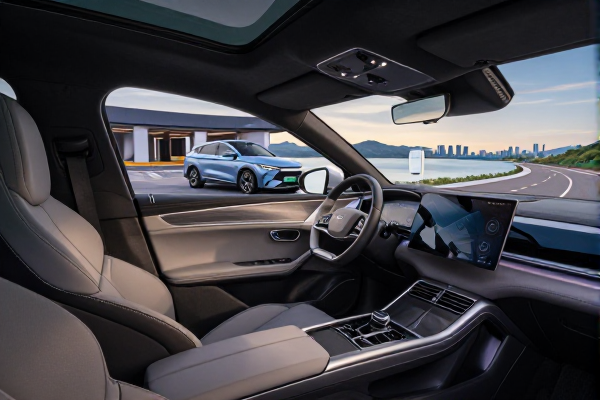
When an eligible BMW owner starts the engine, a Spider‑Man banner initially appears on the main infotainment screen. Tapping the banner triggers a full‑screen animation that includes stylized Spider‑Man graphics, a theme song, and synchronized ambient lighting (on compatible vehicles). The experience is delivered through BMW’s “Festive Animations” feature—a tool previously used for seasonal events such as Christmas and Halloween. Unlike a simple static image, the animation captures the driver’s attention for several seconds, prompting complaints that it distracts from safe driving and violates the expectation of a commercial‑free dashboard.
Within days of the campaign’s launch, BMW owners took to forums like BimmerPost, Reddit, and X (formerly Twitter) to vent their frustration. Many called the pop‑up an “unwanted intrusion” and questioned whether a luxury vehicle should be a private sanctuary. One owner wrote, “I paid $80,000 for a car, not for a billboard.” Another said the animation made him feel like “a captive audience” in his own vehicle. The controversy quickly escalated beyond BMW circles, with digital rights advocates and automotive journalists weighing in.
In response to the outcry, BMW confirmed to The Autopian that the animation is part of a larger brand partnership with Sony Pictures. The company noted that “a few of our vehicles, including the BMW iX3, were in the film, and a special edition iX3 was featured on the red carpet during last night’s premiere in Los Angeles.” However, the automaker did not offer an opt‑out mechanism for the advertisement, explaining that the Festive Animations feature is designed to be a “delightful surprise” and that the Spider‑Man activation is a limited‑time promotion. Nonetheless, critics argue that the lack of a clear opt‑out path violates the spirit of user consent.
To understand the broader implications, we spoke with Dr. Elena Torres, a digital rights and connected‑car policy researcher at the Center for Automotive Innovation. “This is a watershed moment for the industry,” she said. “BMW’s decision to push a third‑party ad into the driver’s primary display—without a toggle—raises serious questions about data ownership and the right to control one’s own digital environment. Automakers are increasingly treating in‑vehicle screens as digital real estate they can monetize after the sale. That conflicts with the traditional idea that a car is a personal space.”
Dr. Torres also pointed out that the legal framework for connected‑car advertising is still nascent. “The Federal Trade Commission has guidelines on deceptive and unfair practices, but an in‑dashboard ad that cannot be dismissed without stopping the car could be considered a safety hazard. We may see consumer advocacy groups file complaints.”
The BMW controversy is not an isolated incident. Tesla has experimented with video streaming and games on its center screen, while Ford and General Motors have explored location‑based alerts. However, a full‑screen animation that plays automatically, even if triggered by a tap, is a more aggressive commercial move. Many observers argue that the practice undermines the luxury experience: if a $100,000 vehicle can be used as a promotional channel, what prevents automakers from selling ad space to any brand?
The situation also highlights a growing tension between automakers’ desire for recurring revenue (via subscriptions, data monetization, and in‑car ads) and customer expectations of ownership. Unlike a smartphone, which users accept as an ad‑supported device, a car is typically seen as a one‑time purchase where the owner retains full control over the cabin environment.
As of this writing, BMW has not announced any changes to the campaign. The company’s official stance remains that the Spider‑Man animation is a “celebratory partnership” and that it will end on August 10. However, the uproar may force the automaker to reconsider future use of Festive Animations for commercial purposes. Several owners have started a petition on Change.org demanding that BMW provide a permanent opt‑out for all in‑vehicle animations. The petition has already gathered over 5,000 signatures.
Additionally, the episode could prompt regulators to examine whether connected‑car advertising violates existing telematics or distracted‑driving laws. In the European Union, where the General Data Protection Regulation (GDPR) already imposes strict limits on data processing, pushing unsolicited commercial content into a vehicle’s display could be challenged under ePrivacy rules. In the U.S., the National Highway Traffic Safety Administration (NHTSA) may take interest if the ad is deemed to