Browse

Log in / Register
 Share


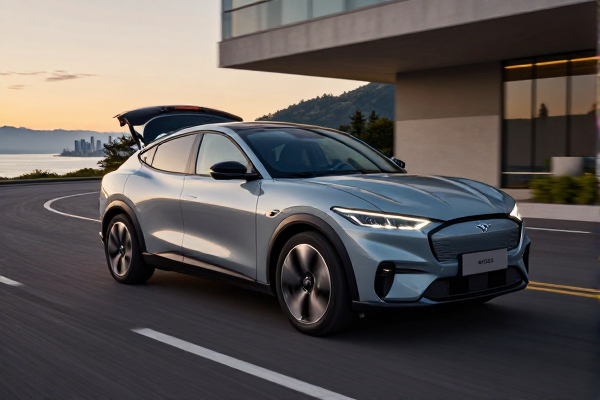
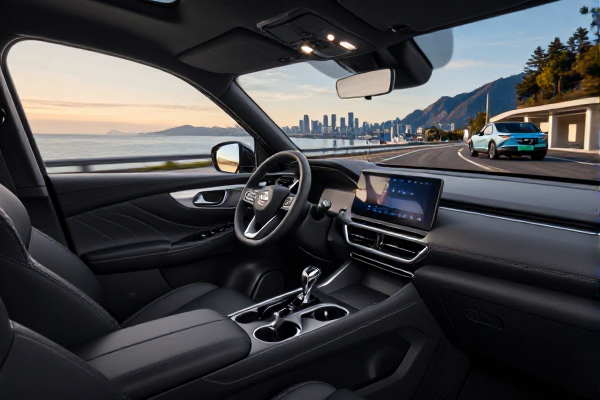
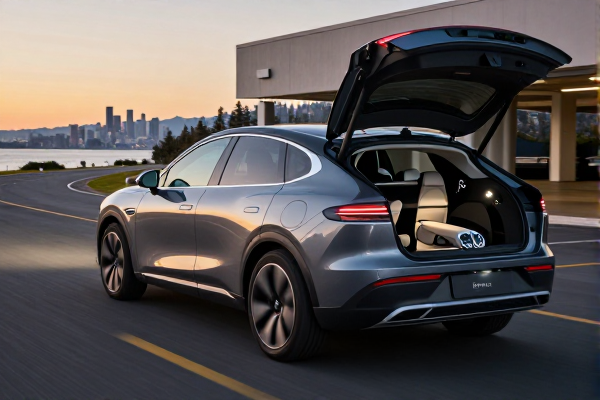
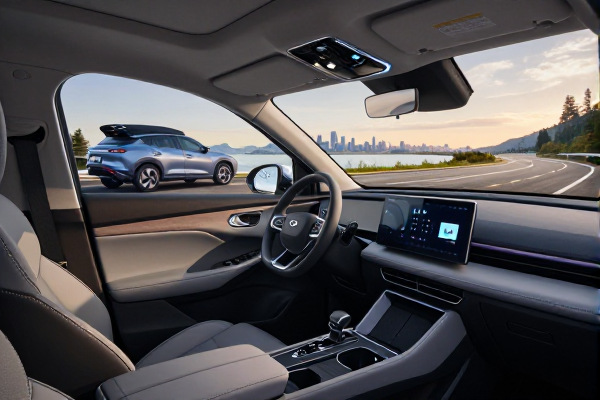
Bentley is keeping its first electric vehicle free of combustion hardware. CEO Frank-Steffen Walliser told journalists in early July that the upcoming "Urban SUV" will arrive before the end of this year as a battery-only model, with no gasoline engine, range extender, or plug-in hybrid derivative in the works. Walliser framed the decision as both an engineering necessity and a strategic bet on attracting luxury buyers who want a clean-sheet EV rather than a compromised one. (Written July 10, 2025.)
Key facts
Walliser: "No intention" of adding an engine
During a media roundtable, Walliser was asked whether the Urban SUV could eventually gain an internal-combustion option, as some rival EVs have. His answer left no room for interpretation.
"We are targeting and looking for new customers — that's in addition to our current business," he said. "I strongly believe we have a very interesting offer, and we have no intention of adding an ICE engine or plug-in hybrid drivetrain. First, it's technically not feasible, and second, it's not part of our strategy."
The "not feasible" line is easy to gloss over, so it's worth unpacking. Bentley's first EV uses the Volkswagen Group's Premium Platform Electric (PPE), a dedicated battery-electric architecture. The floor pan is sculpted around the battery pack, the crash structure leaves no room for a transmission tunnel or fuel tank, and the cooling and mounting systems assume electric motors at the axles. Fitting a combustion engine would force a near-total redesign of body and chassis — effectively creating a different vehicle. Bentley isn't pretending otherwise.
A fast-charging foundation shared with Audi and Porsche
PPE is the same foundation that carries the Audi Q6 E-Tron and Porsche Macan Electric. Both are 800-volt designs that can charge at more than 260 kW, and both give Bentley a proven starting point for its own EV.
Walliser repeated a key figure at the roundtable: the Urban SUV should recover about 100 miles of range in roughly seven minutes at a high-power charger, performance he described as "extraordinarily good." Few production models can match that pace today, and the estimate aligns with the ceiling of what PPE's 800-volt technology can deliver. Battery capacity, driving range, power output, and price remain unannounced.
Positioned to add customers, not replace the lineup
The "Urban SUV" name points to a crossover pitched at city and suburban luxury buyers. Walliser is explicit that its job is to attract new customers while Bentley's core models — Continental GT, Flying Spur, and Bentayga — continue on with combustion engines.
That positioning also protects the brand. Bentley has spent two decades rehabilitating its image as a maker of indulgent, fast grand tourers; the first EV has to feel like part of that story, not like a compliance carve-out.
Bentley swims against an industry tide
The timing is notable. Around Bentley, the broader industry is retreating from pure-EV commitments. General Motors, which once signaled an all-electric passenger-car future, reversed course and is folding plug-in hybrids back into its product plans. Ford delayed several EV programs and redirected its next generation of large three-row SUVs toward hybrid powertrains. Mercedes-Benz scrapped its EV-only pledge for major markets, acknowledging combustion will linger into the next decade. And the Ram 1500 Ramcharger pairs an electric drivetrain with a gasoline generator for buyers who want both.
Bentley's answer is the opposite: no hybrid, no range extender, no second powertrain. Walliser argues the Urban SUV is a stronger product because it doesn't hedge.
There is also a competitive window. Among established ultra-luxury names, Rolls-Royce has the electric Spectre but no EV SUV, and Lamborghini's first full EV is planned for later this decade. Bentley's Urban SUV could define the segment before the field converges. Inside the VW Group, neither the Q6 E-Tron nor the Macan Electric plays in Bentley's prestige bracket, so the Urban SUV won't be cannibalizing platform-mates.
A difficult sales year, and a long-term bet
Bentley can use a new entry point. The company delivered 10,557 cars globally in 2024, down more than 20 percent year over year, with softer demand in China leading the decline. The United States remains Bentley's largest market, and an electric SUV goes right at the body style American buyers favor most. Premium EV registrations in the U.S. have also held up better than mainstream electric model sales — a signal that wealthy shoppers remain open to switching if the product is convincing.
The Urban SUV is the first step of a revised road map, too. Bentley had targeted a fully electric lineup by 2030; under Walliser, that horizon has moved to 2035. The long-term program, known internally as Beyond100, includes roughly £2.5 billion in investment and a re-equipping of Bentley's Crewe site for EV production.
What to watch between now and the reveal
Bentley says the Urban SUV is still in testing, and the full reveal is expected before the end of the year. The months ahead should bring final specifications — battery size, range, charging curve, and the key question of starting price. The stakes are real: price it too close to the Macan Electric or Q6 E-Tron and the halo weakens; price it so high that it drifts into Bentley's own extremes, and the volume story collapses before it starts.
Another detail to watch is the market itself. The Urban SUV will arrive into a U.S. environment where federal EV incentives are uncertain and charging infrastructure is still catching up with sales. Those outside factors could shape early demand more than any specification sheet.
Walliser, for now, sounds unbothered. By ruling out an engine from day one, he is betting that a true luxury electric SUV — engineered as such rather than converted — is exactly what the premium market wants. If the seven-minute charging figure holds in production, the Urban SUV will have the credibility to back up that confidence.