Browse

Log in / Register
 Share

Published: May 9, 2026
Two very different Buicks are competing for the same $3,000 this week, and that alone makes for an interesting comparison. One is a 1977 Electra Limited Park Avenue, a rear-drive, body-on-frame full-size sedan from the end of Detroit’s truly enormous car era. The other is a 1992 Riviera, a front-drive personal luxury coupe with 211,000 miles on the clock and a recent 2,000-mile road trip under its belt. Same money, same badge, but two very different ideas of what a Buick should be.
If you have been looking for a cheap classic, this is one of those rare moments where the hardest choice is between tradition and practicality. The 1977 car promises old-school comfort and curb appeal. The 1992 car promises something you can get into and drive without holding your breath.
| Car | 1977 Buick Electra Limited Park Avenue | 1992 Buick Riviera |
|---|---|---|
| Engine | 403 cu in Oldsmobile V8 | 3.8L Buick 3800 V6 |
| Drivetrain | 3-speed automatic, RWD | 4-speed automatic, FWD |
| Miles | 97,000 | 211,000 |
| Location | Downers Grove, IL | Clarkston, MI |
| Asking Price | $3,000 | $3,000 |
| Status | “It runs” | Runs and drives well |
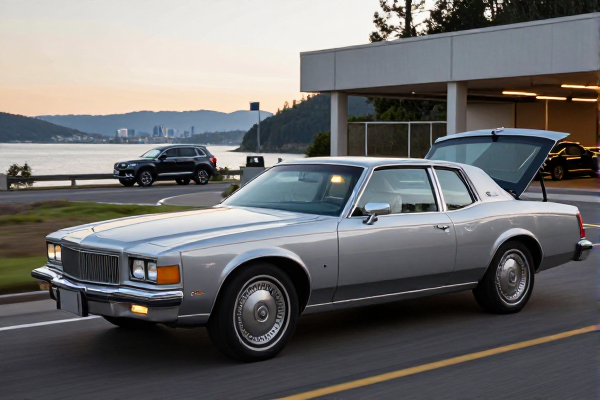
The 1977 Electra is a land yacht that remembers a time when more chrome was the answer. Buick had downsized its full-size lineup for 1977, which made the car shorter than the previous year’s model, but “downsized” is relative when the result still looks like something that should have its own postal code. The Park Avenue package adds a long list of luxury touches, and the name itself still sounds expensive.
Under the hood, this Electra uses a 403 cubic inch V8 that actually came from Oldsmobile. GM’s engine sharing caused some grumbling in the 1970s, but today nobody really cares—the 403 is a decent, durable engine. What it is not is fuel-efficient. Expect something close to 11 miles per gallon, which sounds bad until you remember that the previous generation’s 455 V8 often returned closer to eight.
The seller’s description is refreshingly honest: “It runs.” That is not a detailed mechanical history, but for a 1977 car, even that simple statement is enough to keep the dream alive. The odometer shows 97,000 miles, which is not high for a nearly 50-year-old Buick, and the body appears largely straight with only minor paint blemishes. The vinyl roof is showing its age, and the chrome still has some shine left.
The interior is where this car earns a lot of its appeal. The seats are soft, wide, and more comfortable than many modern living room sofas. This car has five ashtrays and no cupholders, which says everything about 1970s priorities. The upholstery looks good, the dash has that wonderful 1970s stereo-and-air-conditioning control layout, and the general feeling is one of isolated, wafty luxury.
There is also the styling, which is pure 1970s Detroit. The opera lights on the C-pillars, the rectangular “Ventiports” that replaced the earlier round ones, and the sporty Rally wheels all give it a confident look. It is not a subtle car. That is exactly the point.
The Riviera is a nameplate with a much longer story than the Electra. It began as a trim level on the 1949 Roadmaster and became its own model in 1963, running through eight generations and nearly 50 years. The 1992 car in this comparison is a seventh-generation Riviera, which got a significant restyle in 1989 to make it look less like a Regal coupe and more like its own distinct thing.
This Riviera’s mechanical story is hard to dislike. It has the Buick 3800 V6, an engine that has earned a reputation for going far beyond 200,000 miles when cared for. This one already made it there and, according to the seller, recently completed a 2,000-mile road trip without complaint. That is not the kind of history you see with many low-priced classics.
The seller also says it runs and drives well, which is more confidence-inspiring than the Electra’s vague “it runs.” The 3800 pairs with a four-speed automatic and front-wheel drive, making it a modern-feeling car by comparison. Fuel economy is far friendlier, too—highway trips could plausibly return upper-20s, which matters if you actually plan to drive the car.
Naturally, there are caveats. The ABS warning light is on, which the seller notes appears to be a common issue on Rivieras and Toronados. The brake system has some new components, but the car’s anti-lock function is likely gone for good because a control unit is no longer manufactured in some cases. That is not a dealbreaker at $3,000, but it is a cost to remember.
The cabin is a mix of 1992 high tech and traditional American luxury. There is a digital instrument cluster, acres of fake woodgrain, and a cozy personal-coupe cabin built for two plus occasional rear passengers. Unfortunately, not everything works. The power locks are dead, the passenger window goes down only partway, and the car is missing the keys for the door locks and the trunk. The missing keys are an easy fix—a locksmith can rekey the cylinders quickly—but the fact they were not dealt with before a sale is a small red flag about follow-through.
Outside, the dark blue paint looks solid with a few clearcoat failures. The aftermarket Dayton wire wheels are a matter of taste; some buyers will love them, and others will immediately start shopping for replacement wheels. Either way, the Riviera has a genuinely distinctive shape, and it is rare to see one in this condition at this price.
Neither the Electra nor the Riviera is a blue-chip investment. The classic-car market has cooled off after the boom years, and $3,000 buys a driver-grade Buick rather than a trailer queen. For the Electra, the biggest barriers are fuel bills and the sheer size of the car. A car built for highway cruising can be cumbersome in a modern city. For the Riviera, the biggest hurdle is age-related electrical quirks and the perception of high mileage.
That said, both cars occupy a sweet spot in today’s used-classic market. They are old enough to feel special, but they are not so sought after that the price is inflated by auction mania. More importantly, both are supported by established parts networks. Old GM cars have a loyal following, and finding a mechanic willing to work on a carbureted V8 or a 3800-powered coupe is easier than finding a specialist for many European classics.
If you want a weekend-only cruiser that makes every gas station stop a conversation, the 1977 Electra is hard to beat. The low mileage, the massive interior, and the old-school ride quality are all part of that choice. It will float down the highway in the way only a genuine land yacht can. Just be ready for the reality of single-digit mileage at times and a vehicle that will test your patience in tight parking lots.
If you want something you can actually use with less fear, the 1992 Riviera is the smarter choice. It is quicker, more efficient, repairs are simpler in many ways, and the 3800 V6 still has a strong support network. The missing keys and electrical gremlins are annoying, but they are both understandable at this price, and they are far easier to live with than a carburetor problem or a dead 455 V8.
Neither car is going to win an autocross event. Neither is going to be the cheapest thing to own. But as a choice between two $3,000 Buicks, this comparison is about the kind of classic-car experience you want. The Electra is a comfortable memory of the 1970s. The Riviera is a realistic piece of 1990s American car culture that can still be driven every day.
Pick the one that fits your garage, your fuel budget, and your tolerance for quirks. At the end of the day, you are getting a real Buick with real character for not much money—and that is a good place to be.