Browse

Log in / Register
 Share
Share
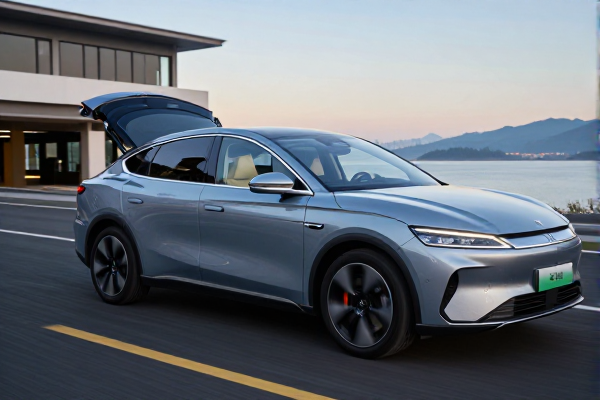
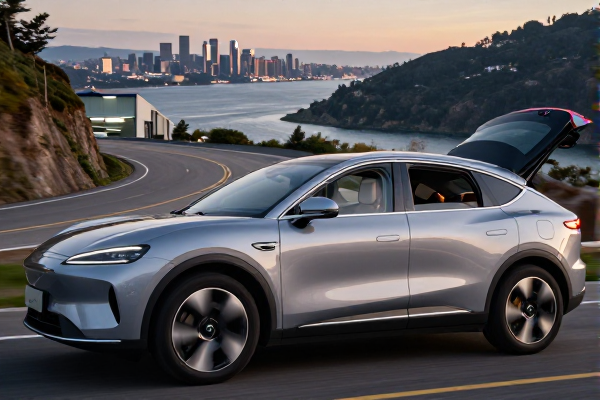
Updated October 18, 2025 — India's road transport minister, Nitin Gadkari, says he has been invited to the October launch of a Toyota Innova that runs on 100% ethanol — a flex-fuel hybrid he claims could deliver running costs equivalent to petrol at roughly ₹25 a litre. The minister made the remarks at an event in Delhi, according to a September 23 report in Business Today, and they arrive in the middle of India's intensifying debate over E20 petrol.
Gadkari has pushed ethanol for years, and his latest comments were built on the same argument: more ethanol means fewer crude imports, better farmer incomes and cleaner tailpipe emissions. At the Delhi event, he said ethanol is already in use across 19 countries and claimed that complaints linked to high-ethanol fuel have stopped coming in. Business Today quoted him as saying the Toyota Innova would run on 100% ethanol and use an electrified powertrain.
The ₹25-per-litre claim deserves context. Indian ethanol prices are set administratively, with different rates for different feedstocks, and the equivalent-petrol calculation appears to factor in the hybrid system's efficiency. It is not a retail pump price for neat ethanol, which is rarely sold to passenger-car drivers in India today.
Toyota India has not posted a commercial launch date on its website, so a degree of caution is warranted. Still, the company has been building toward this for years.
In August 2023, Toyota Kirloskar Motor unveiled an Innova Hycross-based electrified flex-fuel prototype in Delhi. It paired a flex-fuel engine with a strong-hybrid electric powertrain and was designed for ethanol blends well beyond E20. Toyota said at the time that additional calibration, homologation and certification were needed. Those are precisely the steps that would have to be completed before any October debut.
Gadkari's "60 percent electricity" line is worth unpacking. Toyota's strong-hybrid system, under specific test conditions, can keep the petrol engine off for about 60% of the time and cover roughly 40% of distance in electric-only mode. That translates into a meaningful efficiency gain in city traffic — the same conditions where high-ethanol blends otherwise lose the most ground.
Pure ethanol carries about a third less energy per litre than petrol, so a conventional vehicle running on E100 would need substantially more fuel by volume. The hybrid offsets part of that penalty through regenerative braking and engine-off electric driving, but it does not eliminate it. Official mileage figures, when they come, will be closely watched.
The architecture also explains why Toyota, known for conservative engineering choices, would bring an ethanol-powered car at all. A strong-hybrid platform lets the engine operate in a narrow, efficient band much of the time, and ethanol's high octane rating suits higher compression. The technical fit is better than it might appear on paper.
India began introducing E20 fuel at selected petrol pumps in April 2023, ahead of a 20% blending target set for 2025-26. Automakers, through SIAM, have worked on making new models E20-compatible, and availability has since expanded to thousands of outlets. But the transition has not been quiet: some industry voices have raised concerns about warranty coverage, cold-start behavior and the fuel-economy penalty of higher ethanol blends, while the government insists the switch is essential for energy security.
Feedstock is the other half of the story. New Delhi has widened the permitted list of ethanol sources over the past decade — sugarcane products, damaged foodgrain, maize and surplus rice are now all included. The petroleum ministry puts ethanol production capacity at roughly 2,000 crore litres by 2026, up from 421 crore litres in 2014. Gadkari told the Delhi audience that the maize-to-ethanol program alone has brought ₹45,000 crore to farmers in Uttar Pradesh and Bihar — a claim that, if accurate, would rank ethanol policy among the larger farm-income measures in recent years.
US motorists have lived with ethanol for decades, and the experience is a useful benchmark. The Ford Model T could run on ethanol back in 1908; modern flex-fuel vehicles from Ford, GM and Stellantis can burn E85, though most never do. The US produces roughly 15 billion gallons of ethanol a year, and more than 98% of gasoline sold in the country contains at least 10% ethanol, per the U.S. Energy Information Administration.
The infrastructure, however, never caught up. Industry estimates put E85 availability at roughly 5,000 of about 145,000 US stations, so most flex-fuel owners simply fill up with E10. Federal programs such as the USDA's Higher Blends Infrastructure Incentive Program have funded new high-blend pumps, and the EPA finalized rules in 2024 to permit year-round E15 sales starting in 2025. Low-level blends still dominate the market.
For US drivers, the arithmetic on E85 has rarely been compelling. When E85 sells at a 20-30% discount to regular unleaded but delivers 20-30% fewer miles per gallon, the savings tend to wash out. India's approach changes that equation by mandating ethanol production, pricing the fuel administratively, and now pairing it with a hybrid that recovers some of the mileage penalty. Whether that formula survives real-world conditions — cold winters, high-altitude driving, long highway stretches — remains an open question.
India is following a different path from the US: blending targets set by the center, feedstock policy designed to scale supply, and now a flagship vehicle engineered for near-pure ethanol. Brazil is the only country that has made this work at scale, with flex-fuel cars running on anything from E20 to E100 for two decades.
If the Innova launch happens this month, three things are worth tracking. First, the price — an electrified flex-fuel SUV will not be cheap by Indian standards. Second, the availability of E100 at retail, because a high-ethanol vehicle is useless without a fuel supply chain to match. Third, whether Suzuki, Hyundai and other major players in India's passenger-vehicle market respond with high-ethanol models of their own.
Gadkari's announcement may also ripple into the US conversation. American automakers largely abandoned flex-fuel marketing years ago, and E85 has slipped into a niche. A mainstream hybrid SUV running on 100% ethanol in India does not prove the US should follow, but it underscores that the engineering was never the hard part. Distribution, pricing and policy are.
For now, the minister's calendar says October. Toyota's website does not. Somewhere between those two statements sits a launch that, if confirmed, would be the first mainstream 100%-ethanol car in a major market in the modern hybrid era.