Browse

Log in / Register
 Share

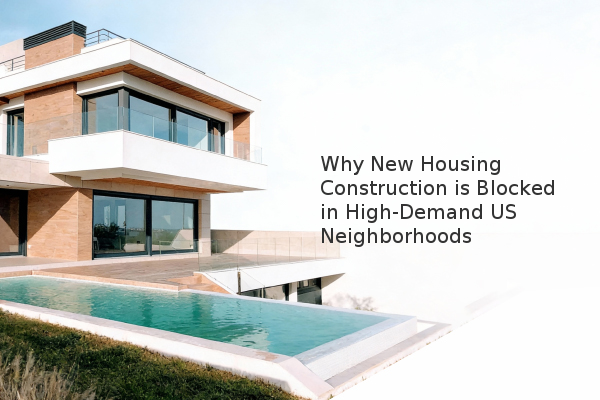
In high-demand US neighborhoods like Venice Beach, California, the primary barrier to new housing construction is a combination of restrictive zoning regulations and significant community opposition. Despite booming local economies and soaring home prices, these areas have seen a net loss of housing units over the past two decades. This scarcity directly fuels an affordability crisis, with home prices in the most restrictive neighborhoods increasing nearly five times faster than the national average. Addressing this crisis requires a fundamental shift in zoning laws to allow for denser development beyond just central downtown cores.
Resistance to new development often stems from residents' desire to preserve neighborhood character and avoid increased congestion. In established, low-rise neighborhoods with historical architecture, new projects are frequently seen as threats to the area's identity and scale. Community groups may organize to block proposals, citing concerns about congestion on roads and public transit, as well as the loss of sunlight and views. This opposition can manifest in lengthy appeals processes that delay projects for years, increasing costs and causing developers to abandon plans. Based on experience assessment, even projects on city-owned land aimed at providing affordable housing can face stiff resistance from current homeowners who fear changes to their community.
Zoning regulations are local laws that dictate what can be built and where. In many desirable urban enclaves, these rules have become more restrictive over time, effectively freezing the housing supply. An analysis of Venice Beach found that the total number of housing units permitted under current zoning is half what it was in the late 1950s. These regulations often limit building height and density, preventing the construction of apartment buildings that could accommodate more residents. When development is concentrated only in a city's downtown core, the surrounding neighborhoods—where the majority of land is located—are effectively closed off to new supply, intensifying price pressures across the entire metropolitan area.
The direct economic impact of limiting new housing is a severe affordability crisis. When housing supply fails to keep pace with job growth and population demand, prices and rents escalate rapidly. For example, while the Venice Beach ZIP code added 4,000 new jobs, it lost approximately 3,800 residents and hundreds of housing units over a 15-year period. This imbalance caused home prices to triple, far outpacing national gains. The situation makes it virtually impossible to build affordable housing without significant subsidies, as land prices become prohibitively high. This often leads to the displacement of middle-income residents and a growing homeless population, as the neighborhood becomes accessible only to the very wealthy.
To mitigate this crisis, cities must consider rewriting zoning rules to allow for more diverse housing types in more neighborhoods. While preserving historical character is important, a balance must be struck to accommodate growth. Policymakers should focus on streamlining approval processes to prevent project delays that deter developers. Ultimately, expanding housing supply in a thoughtful, planned manner that includes infrastructure improvements is the most predictable path toward stabilizing housing costs for all residents.