Browse

Log in / Register
 Share

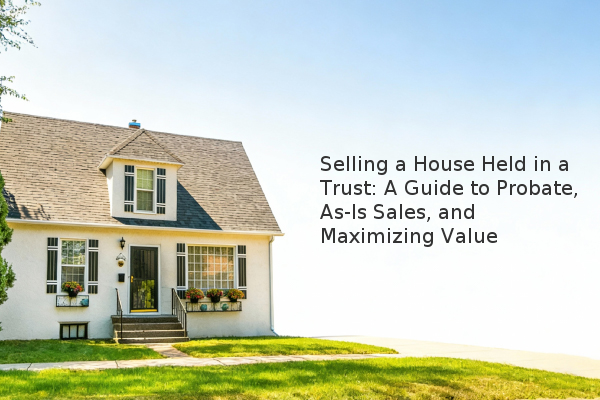
Selling a house held in a trust after a parent's passing involves a specific legal and financial process, often culminating in a quick, as-is sale to maximize efficiency. The primary goal is to liquidate the asset for the trust's beneficiaries, frequently attracting investors or developers seeking land value. Understanding the steps, from trust verification to market positioning, is crucial for a smooth and successful transaction.
When a property is sold "as-is," the seller, in this case the trust (a legal entity that holds assets for beneficiaries), makes no guarantees to make repairs or offer credits based on the home's condition. This is a common strategy for trust-owned properties, especially those that are older or have been occupied by elderly parents. The executor or trustee aims for a straightforward sale, avoiding the time and expense of renovations. For buyers, an as-is purchase often means a lower purchase price but carries the risk of unforeseen repair costs. It is always recommended to conduct a thorough inspection contingency before proceeding.
A key advantage of a living trust is that it often allows the property to bypass the complex and public probate process—the court-supervised procedure of validating a will and distributing assets. If the property is correctly titled in the trust's name, the trustee has the authority to manage and sell it according to the trust's terms without court approval. This typically results in a faster, more private sale. However, the specifics depend on state law and the trust's documentation. It is essential to consult with an attorney to ensure all legal requirements are met before listing the property.
Often, the true value of an older trust-owned property is not the structure itself but the land it sits on. This is particularly true in prime neighborhoods where land is scarce. A developer may purchase the property as a teardown, with the intention of demolishing the existing home to build a new, larger residence, often called a spec home (a house built speculatively, without a specific buyer, for resale). The financial upside for the trust can be significant, as the sale price is based on the property's development potential rather than its current appraised value.
| Factor | Impact on Property Value | Example Scenario |
|---|---|---|
| Location Desirability | High | A corner lot in an established, affluent neighborhood. |
| Lot Size | High | A generous lot suitable for a larger footprint home. |
| Current Home Condition | Low to Moderate | An older home requiring significant updates or a teardown. |
| Nearby Comparable Sales | High | Recent sales of new construction homes at high price points. |
Based on our experience assessment, a trustee should follow a clear process to ensure a compliant and advantageous sale. First, review the trust documents thoroughly to understand the powers granted to the trustee and any instructions regarding the sale. Next, obtain a professional appraisal to establish a fair market value, which is crucial for fulfilling your fiduciary duty to the beneficiaries. Then, hire a real estate agent experienced in trust and probate sales; their expertise in marketing and navigating these transactions is invaluable. Finally, price the property strategically, considering its as-is condition and the value of the land to attract the right type of buyer, whether an end-user or a developer.
The decision to sell a family home held in a trust is often driven by practicality rather than emotion. By focusing on the legal framework, understanding the target market, and pricing the asset based on its highest and best use, trustees can effectively honor their responsibilities and maximize the financial return for the trust's beneficiaries. The most critical steps are securing professional legal advice and partnering with a knowledgeable real estate agent.