Browse

Log in / Register
 Share
Share
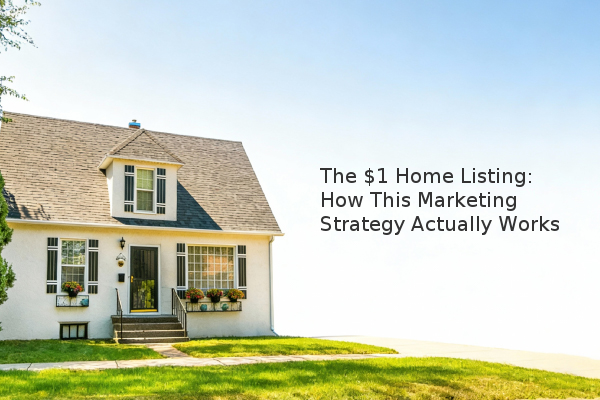
Homes listed for just $1 are not selling for a single dollar; instead, this unconventional pricing strategy is a deliberate marketing tactic designed to generate maximum buyer interest and let the market determine the final sale price. In a market characterized by high prices and low inventory, this approach widens the buyer pool, often sparks bidding wars, and can lead to six-figure sales that accurately reflect a property's true market value. For sellers, it eliminates the common fear of under-listing a property.
The strategy circumvents traditional pricing debates between agents and sellers. By listing at $1, the focus shifts from setting an arbitrary price to creating a transparent bidding process. Brendan DaSilva, a real estate agent in New Jersey, used this method for a three-bedroom home. Instead of arguing over a list price, he received numerous offers, ultimately accepting one for approximately $550,000. This outcome was in line with comparable sales, or "comps," in the neighborhood, demonstrating that the market efficiently established a fair value. The initial $1 price tag generates significant online views and attracts a broad range of prospective buyers, creating competitive tension that often drives the final price upward.
For sellers, the primary benefit is the elimination of underpricing anxiety. The market, through competitive offers, directly reveals what buyers are willing to pay. For buyers, the process can be more inclusive. Linda Thell, another New Jersey agent using this strategy, emphasizes its non-discriminatory nature. By setting a deadline far in the future, it "allows everyone a chance to make an offer" without the pressure of an immediate "highest and best" bid request. This gives buyers ample time to view the property, conduct due diligence, and submit an offer they are comfortable with, reducing the stress often associated with heated multiple-offer situations.
Yes, the core principle of this strategy is that the market ultimately decides a home's value. A list price is merely a suggestion. As Thell notes, "If it's overpriced—say it's $1 million, but the house is really worth $800,000, well, it's going to sell for $800,000." The $1 listing price simply accelerates the process of discovering that true market value by encouraging maximum participation. The final sales price from the competitive bid process is typically a strong indicator of the property's current worth, as seen in DaSilva's sale, which was consistent with other nearby homes listed conventionally between $479,000 and $519,000.
Key Takeaways for Consumers:
Based on our experience assessment, while this approach can yield excellent results, its effectiveness depends on local market conditions and the property's unique characteristics.