Browse

Log in / Register
 Share

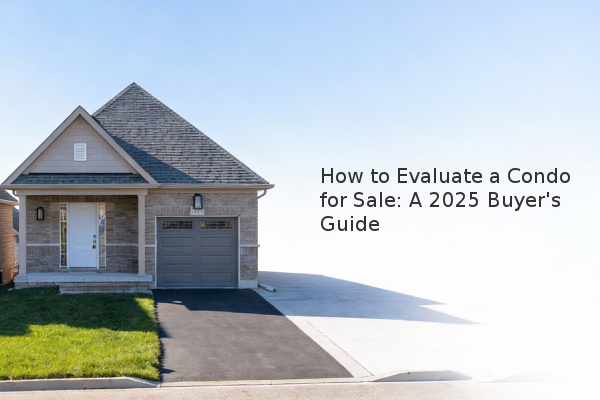
Buying a condo for sale requires a different set of evaluation criteria than purchasing a single-family home. The core considerations extend beyond the unit itself to include the financial health of the homeowners association (HOA), the building's rules, and shared amenities. Based on our experience assessment, a thorough review of the HOA's reserves, covenants, conditions, and restrictions (CC&Rs), and monthly fees is just as critical as the property's condition and price to avoid unexpected costs and lifestyle conflicts.
A condominium, often called a condo, is a type of housing where individuals own their specific unit within a larger building or complex. The common areas, such as lobbies, pools, gyms, and landscaping, are owned collectively by all unit owners through a homeowners association. This structure differs significantly from a single-family home, where the owner has sole responsibility for the entire property and land. Understanding this shared ownership model is the first step in evaluating any condo for sale.
The financial stability of the HOA is arguably the most important factor. Before making an offer, you must review the HOA's financial documents. Look for a healthy reserve fund, which is money set aside for major repairs like a new roof or elevator modernization. An underfunded reserve can lead to special assessments, which are large, unexpected fees charged to all owners to cover a project's cost. Monthly HOA fees are also crucial; compare them to similar buildings and ensure you understand what they cover, such as water, trash, insurance for the building structure, and maintenance of common areas. High fees are not inherently bad if they provide excellent amenities and services, but they must fit your budget.
| HOA Document to Review | Why It Matters |
|---|---|
| Reserve Study | Assesses the condition of major common elements and projects future repair costs and funding needs. |
| Annual Budget | Shows the HOA's planned income and expenses, revealing the association's financial management. |
| Meeting Minutes | Can reveal discussions about upcoming special assessments, ongoing litigation, or major repair projects. |
Every HOA operates under a set of rules known as CC&Rs (Covenants, Conditions, and Restrictions). These documents govern what you can and cannot do with your property. They may include restrictions on renting out your unit, pet policies (including size and breed limits), noise ordinances, and regulations on exterior decorations. For some buyers, these rules provide a desirable sense of order and community; for others, they may feel restrictive. It is essential to read the CC&Rs thoroughly to ensure the community's lifestyle aligns with your expectations before you commit to a condo for sale.
While a standard home inspection is necessary to evaluate the condition of the interior of your unit, a condo for sale often requires a broader assessment. The inspector will check the unit's systems, but you should also inquire about the condition of the building's major components. Ask about the age and condition of the roof, plumbing, and electrical systems for the entire building. The inspector may not be able to assess these directly, but their questions, combined with the HOA's reserve study, will help you gauge the risk of future shared expenses. This due diligence can prevent you from buying into a building facing imminent, costly repairs.
Before purchasing a condo, focus on the HOA's finances, rules, and the building's overall condition. This approach will help you find a property that is not only a good personal fit but also a sound financial investment. Always review all governing documents and seek clarification on any points you do not understand to make a fully informed decision.