Browse

Log in / Register
 Share

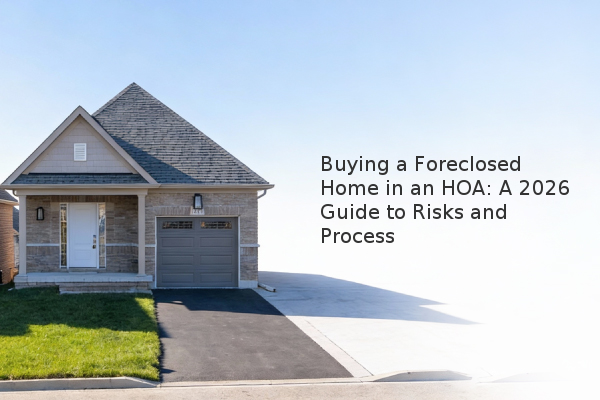
Purchasing a foreclosed home within a homeowners association (HOA) can offer significant savings but introduces unique complexities regarding fees, legal rights, and community rules. The core challenge is navigating the dual layers of a foreclosure purchase and mandatory HOA membership. Success requires thorough due diligence on the HOA's financial health, understanding state-specific redemption laws, and budgeting for potential back dues and special assessments. This guide outlines the critical steps and considerations for this specific type of real estate transaction in 2026.
Buying a foreclosed property in an HOA community differs from a standard foreclosure purchase because you are acquiring obligations to a shared ownership structure. A homeowners association (HOA) is an organization that makes and enforces rules for a community of properties; when you buy a home in an HOA, you automatically become a member and are subject to its covenants, conditions, and restrictions (CC&Rs). The foreclosure process can be initiated by the primary mortgage lender or, in some cases, by the HOA itself for unpaid dues. This means you must investigate two entities: the seller of the foreclosed property (e.g., a bank) and the HOA. Critical first steps include reviewing the HOA's CC&Rs, financial statements, and meeting minutes to assess its stability and rule strictness.
Weighing the advantages and disadvantages is essential for an informed decision.
Potential Benefits:
Potential Drawbacks:
Accurately pricing a foreclosed HOA property requires looking beyond the listing price. Key factors include repair costs, outstanding HOA debts, and comparable sales ("comps") of similar non-foreclosure homes in the same community. A knowledgeable real estate agent can run a comparative market analysis (CMA) and help you interpret HOA documents. If you are proceeding without an agent, you can research recent sales through county tax records. A professional home inspection is highly recommended, even for "as-is" sales, to uncover potential issues with the roof, foundation, or major systems. Based on our experience assessment, creating a budget that includes the purchase price, estimated repair costs, and any confirmed back dues provides a realistic total investment figure.
| Due Diligence Step | Purpose | Source of Information |
|---|---|---|
| Home Inspection | Identify needed repairs and estimate costs. | Licensed Home Inspector |
| HOA Financial Review | Assess HOA's fiscal health and risk of special assessments. | HOA Management Company |
| Lien Search | Uncover any outstanding monetary claims against the property. | County Recorder's Office |
| CC&Rs Review | Understand community rules and restrictions. | HOA Governing Documents |
A critical legal consideration in many states is the "right of redemption," a period after the foreclosure sale during which the former homeowner can reclaim the property by paying the sale price plus additional costs. This right exists even after the sale is completed. In states like California and Texas, this redemption period can last up to 180 days. What this means for you is profound risk: you could invest in inspections and repairs only to lose the property. The rules vary significantly by state, and the right of redemption may not apply if the foreclosure was conducted by a first-lien mortgage holder versus the HOA. Always consult with a qualified real estate attorney to understand the specific redemption laws in your state before bidding on or purchasing a foreclosed HOA property.
Purchasing a foreclosed home in an HOA requires a meticulous and cautious approach. The potential for a good deal is real, but it is balanced by distinct risks. The most critical steps are conducting exhaustive due diligence on the HOA's finances, obtaining a professional inspection, and seeking legal counsel on state-specific redemption laws. By understanding these layers of complexity, you can make a more informed and confident decision in the 2026 market.