Browse

Log in / Register
 Share


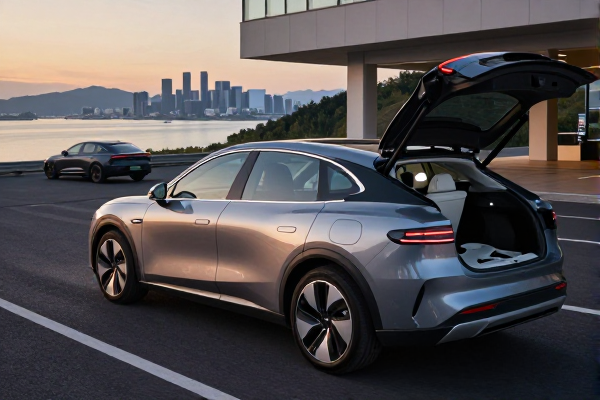
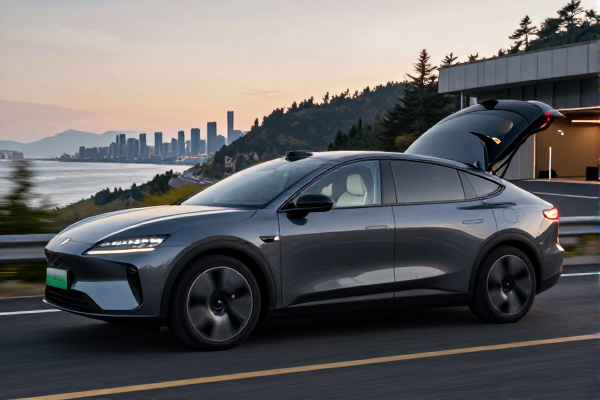
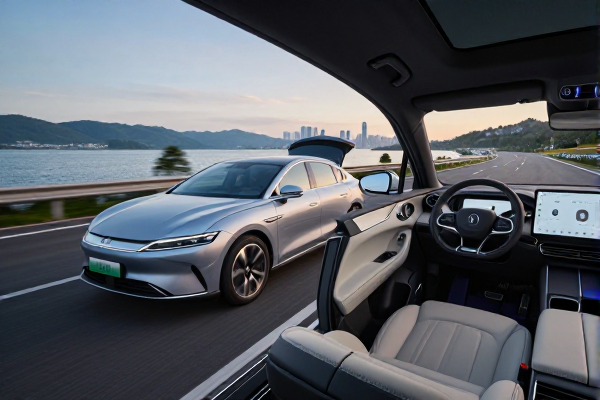
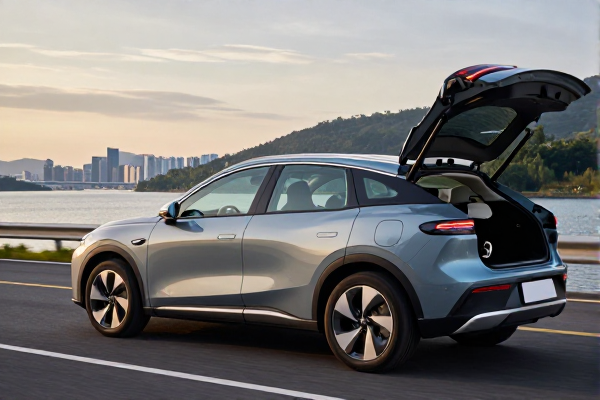
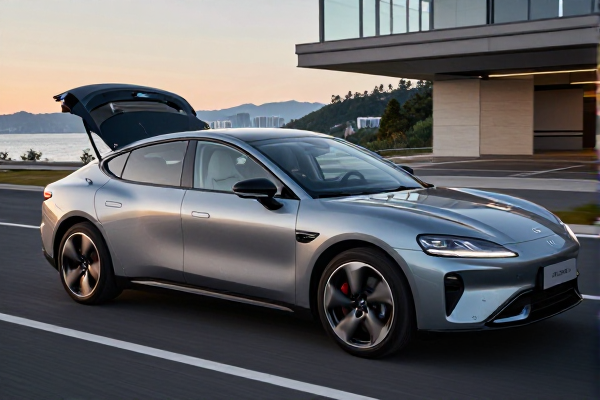
XPeng has started sending the Mona L05 to customers outside China before the model has even officially gone on sale in its home market. As of May 7, 2026, that makes the L05 one of the rare Chinese-built crossovers designed from day one for global roads, not retrofitted for export months after a domestic launch. The move is a deliberate bet: instead of using the Mona nameplate purely as a low-cost domestic volume builder, XPeng is turning it into a global product from the first production run.
The timing is tightly linked to XPeng’s sales targets. The company delivered 41,256 vehicles in September, its best month of the year and a 5.5% improvement over August, but that was still down 0.78% compared with the same month a year earlier. Over the first nine months of the year, total deliveries came to 284,367 units, a 9.2% year-on-year decline. Chairman and CEO He Xiaopeng told investors in August that the brand wants 60,000 monthly deliveries during the fourth quarter, leaning heavily on the new G9L and this Mona L05. Closing that gap means selling wherever buyers can pay, which helps explain why the L05 is landing in overseas markets before the domestic launch event.
That export push required more engineering work than the usual China-first development cycle. XPeng developed left-hand-drive and right-hand-drive versions of the L05 at the same time, then deployed 660 test vehicles across 25 countries and regions to handle calibration. The list includes high-speed cabin noise runs on unrestricted German Autobahn sections, powertrain testing in Mexico’s high-altitude air, and thermal validation from 50°C in the United Arab Emirates down to -25°C in Norway. For anyone who has driven an early-export Chinese EV with noisy A-pillars or overly light steering, that is exactly the kind of homework that needs to be done before the first customer gets the keys.
The L05 is also a bigger car than the name suggests. It slots above the Mona L03, which arrived in July, and it is the third model in the Mona series. In China, the L05 is positioned below XPeng’s G6, yet the numbers tell a different story. The L05 measures 191.7 inches long, 76 inches wide, and 64.4 inches tall, with a 115.7-inch wheelbase. That makes it 4.61 inches longer than the XPeng G6 and gives it an extra 1.97 inches between the axles. It also lines up against the Tesla Model Y, which is 188.6 inches long and 75.6 inches wide, though the L05 is slightly shorter than the long-wheelbase Model Y variant. Inside, those extra inches pay off in a five-seat cabin with a standard trunk volume of 24.8 ft³ before the rear bench is folded.
XPeng is covering multiple customer preferences by offering five L05 variants split between pure battery-electric and extended-range electric powertrains. Both layouts drive the rear wheels through a single electric motor producing 183 kW, or about 245 hp, which is adequate for a family crossover weighing roughly two tonnes. The pure-electric version uses a 71.1 kWh LFP battery and carries a CLTC rating of 382 to 410 miles depending on wheel size. The EREV version swaps the big battery for a 37.2 kWh LFP pack, good for 193 miles on the CLTC cycle, or around 155 miles under WLTP. A 1.5-liter naturally aspirated four-cylinder petrol engine acts as a generator, pushing the official combined CLTC range to 814 miles.
Official range numbers deserve a skeptical look, but a recent endurance test by Chinese automotive outlet BiAuto (Yiche) suggests the L05 is not far off in everyday conditions. The test drove a Mona L05 EREV from Guangzhou to Wenzhou and managed 742 miles on a full charge and a full tank before the car stopped, which works out to 94.77% of the claimed figure. The pure-electric leg at the start was especially strong: the crossover covered 157 miles on battery power alone with an efficiency of 11.7 kWh per 62 miles before the petrol generator kicked in. Over the full 23-hour, 14-minute drive, the car averaged 2.5 kWh per 62 miles and burned 0.131 ft³ of fuel per 62 miles.
The fine print matters. The test car was locked into an ultra-power-saving mode, most non-driving functions were switched off, the climate control was held at 24°C, and speeds stayed between 31 and 50 mph. That is not how most people drive a modern car, especially on a cold European motorway with the heater running. At 75 mph in winter, the battery and fuel tank will drain much faster. Still, pulling more than 620 miles out of the system in a real-world setting is a strong validation of the underlying hardware.
XPeng also used the L05 export news to tease the European debut of its Turing AI driver-assistance suite. The system is based on the company’s second-generation Vision-Language-Action architecture, with up to 1,500 TOPS of effective computing power. Vision-based autonomous systems are maturing quickly, and the hardware here is impressive on paper. But XPeng has not given Europe a specific rollout date, which is sensible: getting regulators to approve automated navigation features takes more time than loading cars onto a ship.
Safety claims in the marketing material need a similar dose of caution. The L05 comes with seven airbags, multiple layers of underbody battery shielding, and a passenger cell built around 2,000 MPa-class hot-formed steel. XPeng’s promotional pages show C-NCAP 2024, Euro NCAP 2027, and ANCAP 2027 logos, and the company says the car was engineered to reach five-star benchmarks in China, Europe, and Australia. That is encouraging, particularly because the 2027 Euro NCAP and ANCAP protocols will place heavy emphasis on driver monitoring and physical controls for core functions. But those are internal development targets, not official crash-test certificates.
What really puts pressure on legacy automakers is the price. Pre-sales in China opened on October 15 at RMB 169,800, which is roughly $24,000 depending on the exchange rate, and the top version is RMB 191,800, or about $27,000. Even after shipping, import duties, homologation, and dealer margins, which typically add a hefty premium by the time a Chinese EV reaches Europe, the L05 should still undercut most mid-size crossovers by thousands of dollars. XPeng has not yet confirmed which of its 65 target markets will get the BEV, the EREV, or both. But for buyers outside big cities with patchy fast-charging networks, a nearly five-meter family wagon that can handle a 155-mile daily school run on cheap home electricity and then cover a 620-mile holiday drive is a very difficult package to ignore.
The export-first approach also gives U.S. observers a useful yardstick for how fast Chinese EV engineering is closing the gap. The L05 will not appear in American showrooms because of trade barriers and tariffs, but the fact that XPeng is tuning the car for German highways, Mexican altitude, and Norwegian cold before its domestic launch says a lot about the company’s ambitions. The bigger question is whether the Mona L05 can help XPeng hit that 60,000-unit monthly target. Early signs are good, but the fourth quarter will be the real test.