Browse

Log in / Register
 Share

July 12, 2023 — In a strategic push to re-establish its presence, Chinese electric vehicle (EV) manufacturer Xpeng has announced plans to deploy its advanced humanoid robots, named IRON, within its Australian dealership network. This initiative underscores a broader industry shift where intelligence and automation are becoming as crucial as electrification itself, especially in a market like Australia where EV adoption is accelerating but remains highly competitive.
The Guangzhou-based automaker, which styles itself as a technology company first, unveiled its vision at a recent event in Melbourne. President and Vice Chairman Brian Gu emphasized that the company’s long-term goal extends beyond electric cars to encompass a comprehensive future of mobility. "Our vision has always been set on all modes of future mobility," Gu stated, positioning humanoid robotics, autonomous driving software, and even flying vehicles as central pillars of Xpeng's innovation roadmap.
The IRON robot, standing 173 cm tall and weighing 65 kg, is designed to perform customer-facing tasks such as greeting visitors, opening doors, and answering basic inquiries. Its development showcases significant strides in robotic fluidity and human-like movement—so much so that at its initial Guangzhou reveal, demonstrators reportedly cut open its leg to prove no human was operating it from inside. Gu described this as a pivotal moment, asserting it was the first time a robot publicly demonstrated its own mechanical nature to quell disbelief.
Industry analysts view this move as more than a publicity stunt. "Deploying humanoids in retail is a bold experiment in customer experience and operational efficiency," noted Dr. Aris Matthews, a tech analyst at Global Automotive Insights. "For a brand like Xpeng, it's a direct method to differentiate itself in a crowded field dominated by Tesla and BYD. It signals a commitment to a high-tech brand identity that resonates with early adopters." This perspective adds a layer of strategic depth to Xpeng's announcement, suggesting a calculated play for market attention and positioning.
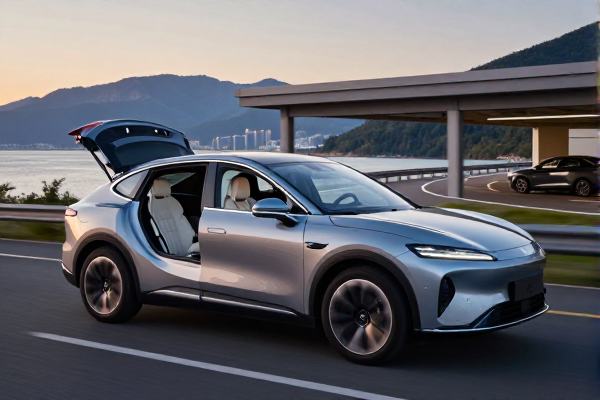
Despite its technological ambitions, Xpeng's global sales volume remains modest compared to industry giants. The company has faced challenges, including a fractured relationship with its former Australian distributor that led to legal disputes. However, it has since built a network of 25 dealerships across the country and aims to rapidly expand its local vehicle lineup from one SUV to five models within six months. Gu expressed a particular commitment to the Australian market, describing it as the company's "home in the southern hemisphere" and promising to adapt its technologies, including self-driving features, to local conditions—even humorously mentioning navigating Melbourne's complex tram hook turns.
The Australian EV landscape presents both opportunity and hurdle. While internal combustion engines still dominate, EVs and hybrids captured over a third of new passenger car sales in June—a significant jump from 11% the previous year. This surge is partly attributed to global fuel supply anxieties, but also reflects growing consumer acceptance. Notably, China has recently surpassed Japan and Thailand as the top source of new cars imported into Australia, highlighting the increasing influence of Chinese automakers.
Xpeng's robot deployment strategy carefully navigates labor concerns. Gu assured that IRON is intended to assist, not replace, human workers, with initial rollouts planned for corporate offices and factories in China before extending to international showrooms. This phased approach allows for real-world testing and refinement while managing workforce integration.
The company's broader portfolio, including its development of flying vehicles and advanced driver-assistance systems, points to a future where transportation is multimodal and heavily automated. Xpeng's investment in these areas, while capital-intensive, is a bet on owning the intellectual property and platform architecture that could define next-generation mobility.
For the U.S. audience, Xpeng's Australian maneuvers offer a case study in global EV competition. Although Xpeng does not currently sell vehicles in the United States, its technology-driven growth strategy and foray into advanced robotics demonstrate how Chinese automakers are competing on innovation, not just cost. As the battle for EV supremacy intensifies, such moves could influence expectations for retail and service experiences worldwide, potentially pressuring American and European brands to accelerate their own automation and AI integration roadmaps.
Success in Australia could serve as a critical proof-of-concept for Xpeng's international ambitions. If the IRON robots enhance brand perception and customer engagement, it may pave the way for similar deployments in other key markets, ultimately supporting the company's goal of evolving from a car manufacturer into a comprehensive mobility technology leader.