Browse

Log in / Register
 Share

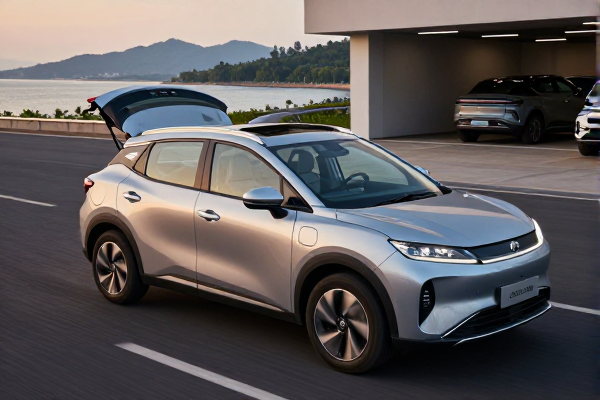
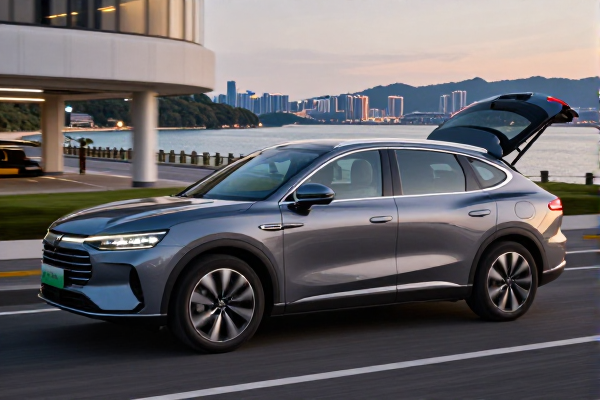
As of August 6, 2026, the facelifted XPeng G6 is on sale in the UK at £39,990, undercutting the Tesla Model Y's £41,990–£44,990 entry price and recharging from 10 to 80 percent in about 12 minutes at peak, against roughly 32 minutes for the Model Y. Not a clean sweep: Tesla's Long Range still claims 61 more WLTP miles and 283 more litres of boot space, and the G6 is unavailable in the US, where a 100 percent tariff on Chinese-built EVs keeps it out. For US readers, it is a preview of the pricing pressure on Tesla's global best-seller.
XPeng's UK lineup opens at £39,990 for the RWD Standard Range, with the Long Range at £44,990 and the AWD Performance Black Edition at £49,990. Tesla's Model Y carries a recommended retail range of £41,990 to £44,990 in carwow's listings, but The Electric Car Scheme's July 2026 comparison used £44,990 for the entry Model Y and £48,990 for the Long Range—so the G6's advantage lands somewhere between £2,000 and £5,000, depending on how the trims line up. Either way, the G6 is the cheaper door into the family EV class, and the £4,000 Long Range gap is the one buyers actually feel: in a segment where monthly payments decide the deal, that is a real pull.
The facelift is part of the play. XPeng used the mid-cycle refresh to hold the price point down while adding equipment, a deliberate move for a brand that has only been selling in Britain since 2025 and still has to earn its name.
The G6's charging claim comes from an 80.8kWh battery, an 800-volt silicon carbide platform and 5C cells—cells built to take a very high current relative to their capacity. In The Electric Car Scheme's figures that combination delivers a 451kW peak and roughly 133 miles of range in a 10-minute stop, with the full 10-to-80 percent session running about 12 minutes. The entry Model Y, with a 63kWh pack and a 175kW peak, takes roughly 25 minutes for just the 20-to-80 percent window in carwow's testing.
Two caveats keep this honest. First, most public rapid chargers in Britain and Europe still cap at 350kW, so the G6 will rarely touch 451kW outside the newest ultra-rapid sites. Even at 350kW, though, the 800V architecture holds high power longer than Tesla's 400V system, which is why the stop-time gap survives in real driving. Second, claims are claims: carwow measured the entry Model Y at 3.3 miles per kWh against a claimed 4.5, and Autocar found the G6 less efficient in daily use than its charging numbers suggest. Speed, temperature and load pull both cars down.
| Spec, UK data | XPeng G6 | Tesla Model Y |
|---|---|---|
| Entry price | £39,990 | £41,990–£44,990 |
| Long Range price | £44,990 | £48,990 |
| Long Range WLTP range | 326 miles | 387 miles |
| Peak DC charging | 451kW | 250kW |
| 10–80 percent charge | ~12 minutes | ~32 minutes |
| Boot space, seats up | 571 litres | 854 litres |
| Warranty | 5 yr / 75,000 mi | Battery 8 yr / 100,000 mi |
Range is still the Model Y's ace. carwow lists current Model Y WLTP figures from 309 to 383 miles, and the July comparison puts the Long Range versions 61 miles apart in Tesla's favour—387 against 326. That is more than an extra motorway round trip between charges, a real edge for buyers who cover distances rather than study charge curves.
The cargo gap is even wider: 854 litres in the Model Y with the seats up against 571 litres in the G6. For a family hauling buggies, luggage or flat-pack furniture, that 283-litre difference outweighs any charging spec. It is also the clearest sign that the G6 is a tall crossover working hard to pass as a family SUV.
The G6's UK price does not exist in a vacuum. With the US effectively closed by tariffs, Europe is the main export battleground for Chinese EV makers, and Britain is the biggest right-hand-drive market in play. XPeng is part of that wave, and its UK pricing follows the template its rivals used to break into the Nordics and Western Europe: come in under Tesla, talk up charging and equipment, and let the cheaper monthly cost do the selling. Tesla has answered these attacks before with price cuts in Europe; the Model Y's current UK list range already reflects that pattern.
It also means the £39,990 entry point is not a permanent advantage. Tesla has been willing to move the Model Y's price down when rivals pile on pressure, and the July 2026 trim updates show how quickly the gap can shift.
XPeng has only sold cars in the UK since 2025, and The Electric Car Scheme says plainly that no meaningful long-term reliability or owner-survey data exists yet for the G6. What buyers can verify is a five-star Euro NCAP rating from 2024 and a five-year, 75,000-mile warranty. Tesla's battery warranty extends to eight years or 100,000 miles, and its Supercharger and service network is far deeper. XPeng's servicing runs through UK partner International Motors, a younger and much smaller network.
One sourcing note: The Electric Car Scheme is a salary-sacrifice provider with a financial interest in EV uptake, so its comparison table is used here for specifications only, not for monthly-cost illustrations. City AM's buyer test is the more practical rule: long-distance, luggage-heavy owners should still take the Tesla, while home-charging buyers on a fixed budget get more car for less outlay from the XPeng.
The G6 is not available in the United States, and it will not be while Section 301 tariffs keep a 100 percent duty on Chinese-built EVs. This comparison is therefore a preview, not a purchase guide, for American readers. It is still a useful one, because the Model Y is Tesla's volume engine in every market where it sells; each country where a Chinese rival undercuts it on price and charging speed forces Tesla to defend the margins on the vehicle that funds the rest of its lineup. That pressure has already pushed Tesla to cut prices in the US, and as long as Chinese brands keep winning these overseas head-to-heads, the Model Y's American pricing stays under pressure.
In the UK, the pick comes down to use case: the G6 is the sharper value for drivers who charge at home and count minutes at the plug, while the Model Y remains the better tool for maximum range, maximum cargo space and the confidence of a mature network. For US readers, the lesson is indirect but clear: Tesla's best-seller is no longer the automatic default on price or charging speed anywhere outside North America.