Browse

Log in / Register
 Share

December 23, 2025 — WeLion New Energy, an energy-storage startup from Beijing, has been named to MIT Technology Review's 2026 Climate Tech Companies to Watch list. Founded in 2016, the company develops semi-solid-state batteries — an intermediate step between today's liquid-electrolyte lithium-ion cells and the all-solid-state designs that have so far resisted mass production. WeLion's bet is that batteries can store noticeably more energy per kilogram, carry less fire risk, and reach the real world faster than fully solid cells. So far, that bet has produced a 1,000-kilometer EV pack for Nio, an 824 Wh/kg laboratory prototype, and a growing marine business.
Today's lithium-ion batteries have done the heavy lifting for the electric-vehicle era, but they're hitting a wall. The liquid electrolyte inside them is flammable, and a damaged cell can turn into a serious hazard. Decades of refinement have pushed lithium-ion close to its practical energy-density ceiling. For applications that need huge amounts of energy in a small, light package — long-range EVs, cargo drones, and especially boats — higher energy density, not just lower cost, is the bottleneck. Battery makers have hunted for a successor chemistry for years, and the leading candidate has been solid-state.
In a solid-state cell, the electrolyte is solid, removing the fire risk and potentially packing more energy into the same space. The catch: these cells are notoriously difficult to manufacture at scale. Materials get brittle, interfaces degrade, and existing lithium-ion production lines can't simply be retooled. Fully solid-state batteries have been perpetually "five years away" for decades. WeLion's answer is a hybrid — a part-liquid, part-solid electrolyte that can be made with more conventional equipment. It isn't the theoretical endpoint of battery chemistry, but it's a product that can exist today; the company says it's pushing toward fully solid cells anyway.
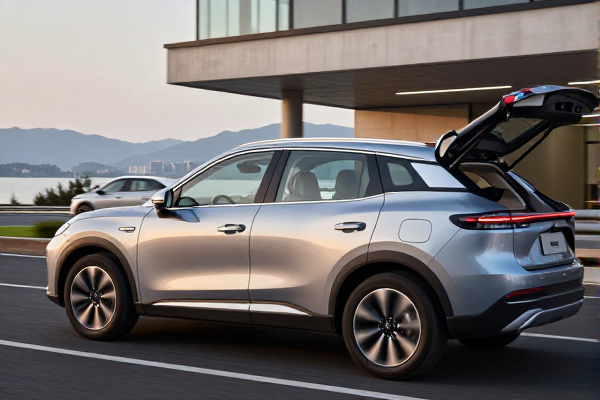
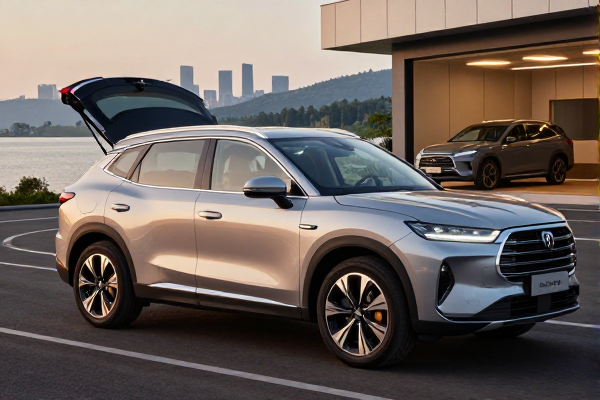
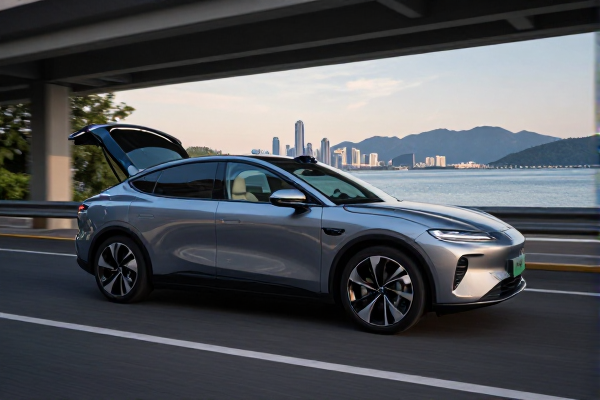
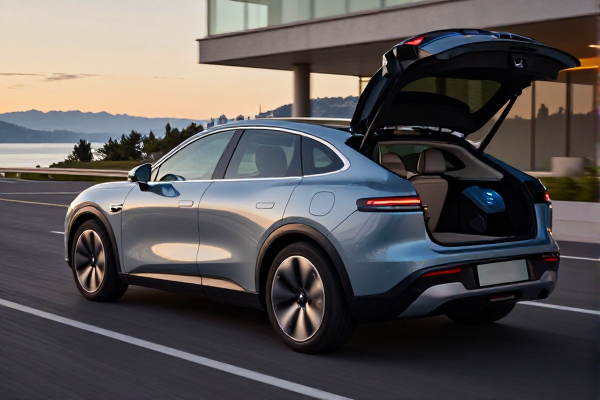
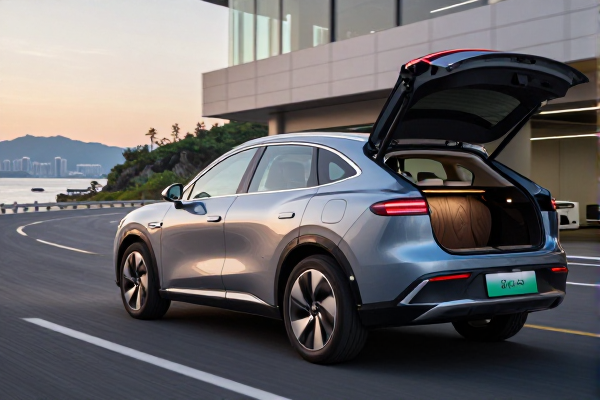
The clearest proof came in 2023, when WeLion partnered with Nio, the Shanghai EV maker known for battery-swapping stations, on a pack that delivered 360 watt-hours per kilogram — roughly 80% more energy per kilogram than the ~200 Wh/kg average of mainstream lithium-ion packs. For drivers, that translated into more than 1,000 kilometers (621 miles) of range in an electric sedan. Only about 200 of the packs were ever made; production costs were punishing. But WeLion says they remain in active service, a meaningful data point for a chemistry that frequently never leaves the lab.
Cars are only part of the picture. Through a subsidiary, WeLion has developed batteries for cargo ships and ferries, and two inland cargo vessels powered by its packs are scheduled to begin service in October 2026 in Huzhou, a port city in eastern China. Each vessel will carry about 4,000 kilowatt-hours of electricity — enough for up to 250 kilometers (155 miles) of sailing. On the research side, the company reported an 824 Wh/kg semi-solid-state cell in laboratory tests in 2025, more than three times the density of today's standard lithium-ion packs. WeLion is careful to note that cell is a prototype, far from commercialization.
Context for those numbers: CATL, the world's largest battery maker, has itself announced a "condensed battery" claiming up to 500 Wh/kg, with aviation and automotive use in mind. WeLion's lab result would leapfrog that figure. But a claimed number and a shipped product are entirely different things — a distinction that cuts both ways in the battery business.
The climate stakes are straightforward. China is the world's largest emitter of carbon dioxide, and its transportation sector accounts for roughly 10% of national emissions. Inland shipping is a particular blind spot: emissions from vessels moving goods along China's lakes, canals, and rivers are projected to rise about 25% through this decade, reaching 18.7 million metric tons by 2030. More energy-dense batteries are one of the few practical ways to electrify those boats — and the same chemistry can help shift cars, trucks, and ferries away from diesel and gasoline.
WeLion's challenges are as clear as its milestones. Its semi-solid cells cost more than the conventional lithium-ion batteries produced by Chinese giants such as CATL, and its manufacturing footprint remains small by industry standards: 11 gigawatt-hours of annual capacity today, spread across four plants, with two more facilities set to add a combined 18 GWh. If those additions come online as planned, annual capacity roughly triples to 29 GWh — still a fraction of what market leaders turn out. In a cutthroat battery market, price per kilowatt-hour decides winners, and WeLion isn't there yet.
There's also the distance between laboratory testing and the real world. The 824 Wh/kg result, while striking, is a lab measurement — and labs permit conditions that production cells rarely face. WeLion has declined to disclose the testing protocol, how many charge-discharge cycles the cell survived, or how its capacity degrades over its lifetime. Automakers care less about a single peak number than about longevity, fast-charging behavior, and cold-weather performance. Most industry analysts expect genuinely solid-state batteries to remain a niche well into the 2030s; semi-solid designs like WeLion's may be the nearest thing to a real breakthrough the market sees before then.
The company is running on a tight, public schedule. A drone battery with 410 Wh/kg is slated to reach the market by the end of this year. The two Huzhou cargo ships launch in October 2026. WeLion also intends to introduce its first all-solid-state automotive battery in 2027, targeting 400 Wh/kg. Hitting those dates would put WeLion in a rare category: a startup that has commercialized next-generation battery chemistry in revenue-generating products while much larger rivals still talk about roadmaps.
WeLion doesn't operate in a vacuum. In 2024, Beijing helped pull together a national all-solid-state battery innovation platform, pooling resources from major manufacturers — including CATL and BYD — along with automakers, universities, and research institutes. WeLion is part of that effort, and Chinese authorities reportedly committed billions of yuan in public funding to the field. The company's roots help explain why: cofounder Chen Liquan, a scientist at the Chinese Academy of Sciences, led development of the country's first all-solid-state battery back in 1988.
For the United States, this is more than a foreign-company story. The Department of Energy has funded advanced battery research for years, and American startups like Solid Power and Factorial Energy — backed by BMW, Ford, Hyundai, and Stellantis — are chasing the same chemistry, already shipping early cells to automakers for validation. Yet battery-manufacturing economics currently favor China, and whoever masters solid-state production at scale will likely set the terms of EV pricing for a decade. WeLion is among the closest to that goal, however steep the final stretch.
A place on a watch list doesn't equal commercial success. WeLion still has to prove it can cut costs, scale production, and answer hard questions about cycle life and real-world performance. But it has what many battery startups lack: working products, public milestones, and government support. In a field that has spent two decades being perpetually "five years away," that puts WeLion ahead of most of the pack.