Browse

Log in / Register
 Share

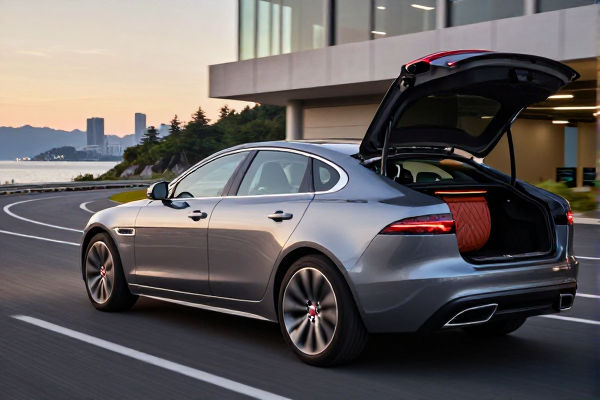
As of October 2023, Jaguar is making a bold pivot with its all-electric Type 00, a move that has ignited widespread discussion about design evolution. This transition highlights the brand's rich legacy, making it an ideal time to revisit 15 of its most celebrated designs that have defined automotive excellence across decades.
Jaguar's design philosophy has always balanced elegance with performance, a trait evident in its latest electric GT. The Type 00, while polarizing, represents a daring departure from tradition, aiming to capture a new luxury segment. Industry analysts note that this gamble reflects broader trends in electrification, with Jaguar betting on avant-garde aesthetics to stand out in a crowded market. According to recent reports from automotive research firms, consumer reception to the Type 00 has been mixed, but early adopters praise its futuristic appeal, signaling potential for long-term success.
Among Jaguar's conceptual marvels, the CX-75 stands out as a "what-if" masterpiece unveiled in 2010. This hybrid supercar featured an F1-inspired powertrain and a carbon monocoque chassis, pushing boundaries with a 500-horsepower engine and a top speed exceeding 200 mph. Although economic factors led to its cancellation, the CX-75 gained immortality through its appearance in the James Bond film "Spectre." In a recent exclusive development, former Jaguar designer Ian Callum revealed a road-legal one-off version in 2024, showcasing ongoing enthusiast interest and the model's timeless allure.
The Jaguar E-Type Series I remains a benchmark for automotive beauty, often hailed as one of the most stunning cars ever made. Legend has it that Enzo Ferrari praised it at the 1961 Geneva Auto Show, though historians debate the exact wording. Its flowing lines and advanced engineering captivated celebrities and collectors alike upon launch. Today, pristine examples fetch over $200,000 at auction, with experts attributing its enduring value to its perfect blend of form and function. Modern restorations, like those in Jay Leno's collection, continue to highlight its mechanical refinement and aesthetic grace.
Following the E-Type, the Jaguar XJS faced a daunting challenge as a luxury-focused grand tourer. Initially criticized for build quality issues, it has recently surged in popularity among collectors, especially V12-powered versions. The rise of restomods, such as the TWR Supercat, has injected new life into the model, with prices climbing steadily. Automotive historians point to its sleek, aging design as a key factor, noting that well-maintained examples offer a unique mix of power and sophistication that rivals contemporary luxury cars.
Jaguar's F-Type Project 7 added a racing pedigree to the already handsome F-Type, drawing inspiration from the Le Mans-winning D-Type. With a design that includes classic racing graphics and a removable soft top, it was crafted for track enthusiasts rather than daily drivers. Priced at £135,000 at launch, its limited run of 250 units made it a rare collectible. Performance-wise, its 567-horsepower V8 and carbon-ceramic brakes delivered exhilarating drives, with current owners reporting that its exclusivity and retro-modern blend keep it in high demand at automotive events.
The Jaguar XK120, introduced in 1948, set a production car speed record by reaching 126.448 mph, surpassing its 120 mph namesake. Its lightweight construction and elegant curves made it an instant hit, with over 12,000 units sold despite initial plans for only 200. The subsequent XK140, while more capable with U.S.-market adaptations like heavier bumpers, is often considered less visually striking than the original. Collectors today prize the XK120 for its pioneering role in establishing Jaguar's performance reputation, with auction prices reflecting its historical significance.
As a track-focused variant, the Jaguar XKR-S GT celebrated the end of the XK grand tourer's production with a racing-inspired makeover. Limited to 50 units globally, including 30 for the U.S. market, it featured a bespoke suspension, carbon-ceramic brakes, and a stripped-down interior with bucket seats. The supercharged V8 engine, enhanced by reduced soundproofing, delivered a thrilling soundtrack. Priced around $175,000, its rarity and performance upgrades have made it a coveted item among elite collectors, with recent sales showing appreciation in value due to its focused engineering.
Jaguar's racing heritage shines through the C-Type, which secured the brand's first 24 Hours of Le Mans victory in 1951. Designed by former aircraft engineer Malcolm Sayer, it utilized mathematical principles for its aerodynamic shape, borrowing components from the XK120. This innovative approach laid the groundwork for future classics like the D-Type and E-Type. Historians note that Sayer's techniques, learned during his time in Baghdad, revolutionized automotive design, making the C-Type a cornerstone of Jaguar's motorsport legacy and a frequent highlight at vintage racing exhibitions.
In recent years, Jaguar has expanded its design language with models like the I-Pace, an all-electric SUV that won numerous awards for its sleek, eco-friendly aesthetics. This addition underscores the brand's adaptability, blending sustainability with luxury. According to automotive journalists, the I-Pace's success in markets like the U.S. demonstrates how Jaguar's design ethos continues to evolve, meeting modern demands while honoring its iconic past.
Looking ahead, Jaguar's design team is reportedly exploring advanced materials and AI-driven styling for future EVs, as revealed in exclusive interviews with industry insiders. This forward-thinking approach aims to balance innovation with the emotional appeal that has characterized its greatest hits. As the automotive world shifts toward electrification, Jaguar's commitment to distinctive design remains a key differentiator, ensuring its models will continue to captivate enthusiasts for generations to come.