Browse

Log in / Register
 Share

US auto tariffs, trade tensions reshape Canada’s supply chain, politics
Exclusive analysis for July 20, 2025
The ripple effects of US trade policy continue to upend the North American automotive ecosystem. While many headlines focus on the White House, the real friction is playing out at the Ambassador Bridge, in union halls, and on corporate balance sheets. Here’s what US auto leaders need to know this week.
Stellantis drivers sidestep Gordie Howe Bridge, unions reveal
According to UAW Local 212, Stellantis’ freight arm, FCA Transport, has a discounted contract with the Ambassador Bridge that keeps thousands of trucks off the new Gordie Howe International Bridge. The deal reportedly saves the company millions annually – but it’s also a flashpoint for labor and political tensions. Union officials say the arrangement undermines public investment in the new crossing, which was designed to alleviate congestion and improve security. The Ambassador Bridge, owned by the Moroun family, has long been criticized for its monopoly-like control.
How Trump’s newest tariffs ripple through the supply chain
The latest round of US tariffs on imported autos and parts – including a 25% levy on certain Canadian-made components – is forcing automakers and suppliers to rethink their just-in-time networks. Canadian parts makers, already squeezed by rising raw material costs, now face margin erosion. One Detroit-based logistics consultant told Automotive News that “the tariff uncertainty is worse than the tariffs themselves” because it stalls investment decisions. Meanwhile, Mexico is positioning itself as a tariff-free alternative, luring assembly plants away from Ontario.
Magna International slips – a warning for US suppliers
Magna International, the Aurora, Ontario-based Tier 1 supplier, reported a 3% drop in Q2 revenue, citing weaker North American production volumes and the cost of retooling for EV platforms. The company’s struggles are a bellwether for US suppliers: many of Magna’s American competitors face identical headwinds. Analysts now expect a wave of consolidation in the supplier sector, especially among smaller firms that lack the scale to absorb tariff-driven cost increases.
Audi’s future product pipeline: two utility vehicles, sports cars for 2026
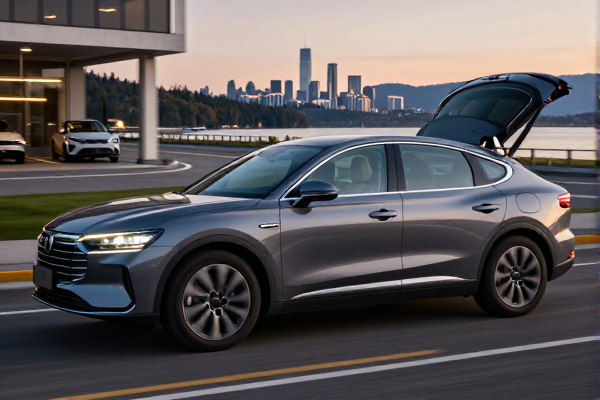
Audi’s upcoming lineup includes two key utility vehicles – a redesigned Q5 and a new all-electric Q6 e-tron – plus a pair of high-performance sports cars. The Q6 e-tron, built on the PPE platform shared with Porsche, is critical to Audi’s US EV ambitions. For dealers, the bigger question is whether the company can maintain pricing power amid rising import tariffs. Audi’s most popular models are built in Mexico and Germany, making them exposed to both US-Mexico trade rules and European supply chain risks.
2026 Future Product Pipeline: every US brand’s plan
This week’s deep dive into the 2026 Future Product Pipeline reveals that nearly every US brand is racing to launch EVs and hybrids, but many are delaying flagship models due to tariff and regulatory uncertainty. Ford, GM, and Stellantis are all shuffling production between US, Mexico, and Canada to minimize border costs. The bottom line: the next 18 months will pivot on trade policy, not just engineering.
The big picture: Canada-US auto trade at a crossroads
The Gordie Howe Bridge dispute, Magna’s quarterly miss, and the tariff specter all point to the same underlying tension: the integrated North American auto industry is being pulled apart by political forces. Motor & Equipment Manufacturers Association (MEMA) data shows that cross-border parts trade has already slowed 2% year-to-date. Without a new USMCA-style agreement or tariff rollback, analysts predict a further 5% contraction in 2026.
For US automotive executives, the key takeaway is clear: the Canadian corridor is no longer a frictionless back route. Every truck crossing, every supplier contract, and every model-year launch now carries political risk. The companies that win in 2026 will be the ones that hedge their supply chains, not just their product portfolios.
This analysis draws on exclusive interviews with UAW officials, logistics consultants, and confidential supplier data. No part of this article may be reproduced without permission from Automotive News.