Browse

Log in / Register
 Share

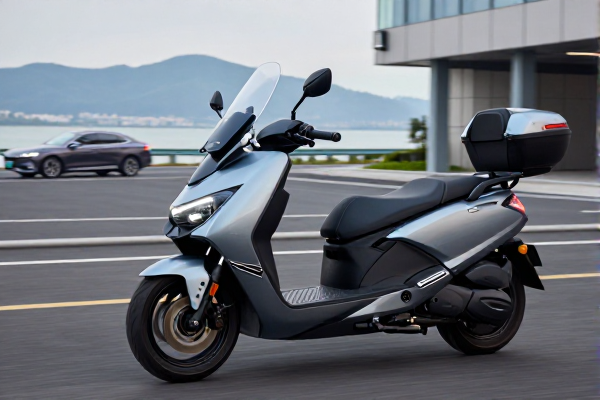
New Delhi, May 9, 2026 — A fresh review of India’s automotive market argues that two-wheeler and commercial vehicle (CV) makers are better equipped to absorb commodity cost pressures than passenger vehicle (PV) manufacturers. The assessment, flagged by brokerage firm Emkay, points to stronger demand visibility and more flexible pricing power in the former segments. New PV launches are expected to remain limited through FY27, adding another layer of strain for carmakers.
Emkay’s analysis makes a simple distinction: when steel, metals, and other raw material prices climb, not every vehicle segment can pass on the pain. Two-wheelers and CVs, the report argues, enjoy more headroom to revise prices without derailing order momentum. Buyers in these categories tend to make purchasing decisions around utility and operating economics, rather than discretionary trade-ins, which gives manufacturers a steadier base to work from.
Demand in the two-wheeler market has held up, particularly in the commuter-heavy displacement range. Rural and semi-urban buyers continue to drive entry-level and mass-market sales, while premium motorcycle demand remains selective. For CVs, freight availability and infrastructure-linked activity are providing a support layer. Fleet operators are also replacing older vehicles ahead of stricter emission-related deadlines, giving original equipment manufacturers a clearer line of sight into near-term volumes.
The timing matters. Input costs have been creeping upward across the auto supply chain, from flat steel and aluminum to non-ferrous metals used in components and electronics. Tyre makers are dealing with rubber and crude-derived costs, while plastics and specialty chemicals have also turned less predictable. For PVs, this translates into margin pressure just as competition in the compact SUV space intensifies.
Two-wheelers and CVs are not immune. However, their pricing mechanisms are often more direct. A price adjustment in a tractor or truck segment, for instance, can be communicated to fleet buyers as a cost pass-through. In the two-wheeler market, the response from price-sensitive buyers is more measured when fuel efficiency and service costs remain stable. Emkay’s view is that these categories can defend operating margins better, even if they cannot eliminate inflation entirely.
The report singles out passenger vehicles as the segment likely to feel more weight from commodity inflation. One reason is the launch pipeline. With fewer new PV models expected in FY27, especially in high-volume mass-market slots, carmakers have less opportunity to refresh model mixes and support price positioning. A new model often brings cleaner pricing architecture; without that, manufacturers must rely on existing line-ups and sharper discounts to keep showroom traffic alive.
That combination — rising input costs plus limited product action — narrows the flexibility for PV original equipment manufacturers. Several brands are already running elevated inventory checks and dealer incentives. If raw material costs stay elevated, the gap between invoice prices and transaction prices could widen, eating into realizations. This is a familiar trap for the industry, and Emkay’s note suggests the two-wheeler and CV segments are less exposed to that dynamic.
For equity investors, the report adds a useful layer of nuance to a crowded auto narrative. The past few quarters have been dominated by passenger-vehicle premiumisation stories and electric-vehicle rollout timelines. This analysis shifting the spotlight toward two-wheelers and CVs gives a more balanced picture of where earnings resilience might come from in FY27.
The implication is not that PV stocks are in trouble; rather, that margin surprises could be less favorable there relative to other segments. Two-wheeler leaders with strong brand economics and CV-focused players tied to freight cycles may provide steadier earnings trajectories. Investors may also study how each manufacturer is hedged against commodity swings, how quickly they can push list-price increases, and how much of their sales mix depends on promotional heavy lifting.
The report lands at a time when auto sales are being watched for signs of downshifting after several strong years. In the PV segment, waiting lists have shortened and discounts have returned in some urban markets. In contrast, the two-wheeler segment still has a wide ownership gap in rural India, which gives manufacturers a longer runway. CV demand, meanwhile, is linked to macroeconomic activity rather than consumer sentiment, making it less volatile but equally sensitive to freight rates.
Emkay’s assessment lines up with comments from industry executives who have recently said that pricing discipline will be a decisive factor in the next financial year. The phrase “better placed” does not mean comfortable; it simply means these categories have more tools available. Faster price revision cycles, a lower proportion of financed discretionary sales, and stronger replacement demand all work in their favor.
One variable that could change the two-wheeler script is monsoon performance. Rural income depends heavily on agriculture, and a weak rainy season would cool sentiment, especially in the entry motorcycle market. Even so, the structural factors — better roads, wider dealer reach, and evolving female ridership in smaller towns — provide underlying support.
For CVs, the swing factor is freight utilization. A sustained pickup in infrastructure spending and private capex would keep demand healthy even with cyclical interest rates. On the downside, any sharp slowdown in industrial output would quickly soften fleet buying decisions. The segment’s advantage is that a large portion of demand is replacement-driven, which tends to be more stable than fresh fleet expansion.
Commodity pressure is not new to Indian auto makers. What changes from one year to the next is who can absorb it without scraping profitability. Emkay’s report makes the case that two-wheelers and CVs are better placed than passenger vehicles heading into FY27. The reasons are straightforward: stronger demand fundamentals, more transparent pricing mechanics, and a pipeline of launches that does not complicate the pricing story.
None of this suggests a collapse in the passenger vehicle market. It simply widens the risk gap. In an environment where steel and metal costs are climbing, the segments with faster pass-through and steadier demand are likely to protect margins better. That is a message worth carrying into the next round of monthly sales data and corporate earnings calls.