Browse

Log in / Register
 Share

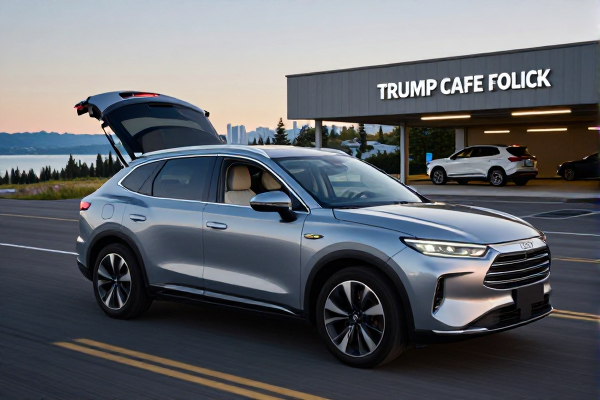
As of April 26, 2025, the fuel-economy rules that will govern America's 2031 model year no longer point toward 50.4 mpg. The Trump administration has reset the Corporate Average Fuel Economy (CAFE) course to 34.5 mpg for passenger cars and light trucks. It is a rollback built to ease compliance pressure on automakers, but the long-term fuel cost is written into the agency's own projections.
CAFE is not a sales mandate. It requires each automaker's U.S. fleet to meet an efficiency average. The previous schedule, written by the Biden administration, called for steep annual gains in the mid-2020s and smaller increases afterward, ending at 50.4 mpg by 2031. Automakers spent months arguing that the numbers were essentially unreachable without an aggressive shift to electric vehicles.
NHTSA's replacement plan scraps most of that escalation. The agency first outlined the direction in December, and its formal notice landed Sept. 28. The headline number is now 34.5 mpg for the 2031 model year, a 15.9 mpg gap from the old target. That gap is the single most important figure in the rule because it determines how much engineering effort goes into fuel-saving technology.
The Trump administration presents the rollback as a consumer win. NHTSA estimates that the softer standard trims an average of $930 from the cost of a new vehicle compared with the Biden-era path. Some of that likely reaches shoppers; some of it could simply protect profit margins on pickups and SUVs.
The other side of the ledger is also from NHTSA: the agency projects about 100 billion additional gallons of gasoline burned by 2050, roughly $185 billion in extra fuel spending, and carbon-dioxide emissions about 5 percent higher. So the tradeoff is fairly direct: cheaper manufacturing costs now, higher fuel bills over the next few decades.
The 34.5 mpg number matters most for truck-heavy lineups. CAFE standards treat light trucks differently from passenger cars, and the rules are tied to vehicle footprint. A lower fleet average gives Ford, General Motors, Stellantis, and other truck-heavy brands far more breathing room to keep selling the full-size pickups and three-row crossovers that dominate U.S. showrooms.
Under the stricter schedule, those vehicles would have needed extensive hybrid systems, weight reduction, or large numbers of EV credits to offset their fuel consumption. The new target does not require that. It also reduces the pressure on automakers to sell small EVs purely as compliance offsets. For companies that had warned the old rule would force costly electrification timelines, this is the relief they wanted.
A quieter consequence of the rollback is the slower spread of efficiency hardware consumers rarely see. Stop-start systems, mild-hybrid setups, aerodynamic add-ons, and low-rolling-resistance tires all cost money. They improve mpg, but they do not necessarily improve the driving experience.
Stop-start systems were already disappearing from some new models before this rule change. A softer CAFE curve takes away the engineering rationale for bringing them back on every trim level. The same logic applies to lightweight materials and complex transmission calibrations. With a lower target, automakers can make product decisions based more on customer experience and profit and less on regulatory pressure.
President Trump has called the rollback an end to the "EV mandate." That language is politically convenient but technically loose. The Biden rule never required automakers to sell electric vehicles. Automakers could have complied with a mix of hybrids, efficient gas engines, and other technologies.
That said, the practical effect was very similar to a mandate. The old 50.4 mpg average was nearly impossible to meet with conventional powertrains alone. The new target removes that pressure, so automakers have less reason to push their lineups toward EVs on a national basis. That is a major shift, even if the legal description of the old rule was never a literal EV quota.
The federal rollback does not override state authority. California, along with more than a dozen states that follow its clean-car rules, can keep requiring higher-efficiency and zero-emission vehicles within their borders. That creates a two-track U.S. market.
In California and its allied states, automakers will likely keep selling EV-heavy model mixes, with more battery variants and high-mpg trims. Elsewhere, the lower federal target will make conventional trucks and gas engines easier to justify. Regional pricing could diverge, along with charging infrastructure and used-EV values. Buyers in some states will see more incentives; buyers in others will see fewer.
This kind of split strategy is not new. Automakers already build different trims and engine options for California's stricter emissions regime. The bigger question is whether companies commit to two separate product plans nationwide or try to standardize on one national lineup. That decision will determine how fragmented the U.S. market becomes.
The 34.5 mpg figure is not locked in yet. NHTSA still has to work through public comments before issuing a final rule, and the number could move during that process. Automakers are already planning 2028 and 2029 models, so any delay or last-minute adjustment would ripple through product cycles that are now underway.
There is also another layer: EPA tailpipe rules overlap with CAFE. Even if NHTSA softens fuel-economy requirements, EPA greenhouse-gas standards can still force automakers to sell cleaner vehicles. The Trump administration has been critical of both layers, but unwinding them is a slower process than announcing a new target.
Legal challenges are likely once the final rule is published. Environmental groups have made clear they consider the rollback a giveback to the oil industry, and any court fight could drag past the next presidential election. For now, the direction is clear: a lower national CAFE target, a friendlier regulatory path for trucks, and more state-level divergence over electric vehicles.
The rollback is a compromise with a long tail. It makes new vehicles cheaper to produce, protects the pickup and SUV business model, and gives automakers more freedom to choose their own technology path. It also locks in more fuel consumption, higher CO2 emissions, and a greater reliance on gas prices for the next 25 years. For most buyers, the immediate effect will be subtle: slightly different pricing, more trucks on dealer lots in some states, and fewer efficiency features on the window sticker. The 2031 target is the number to watch, but it is only the start of a much bigger regulatory debate.