Browse

Log in / Register
 Share

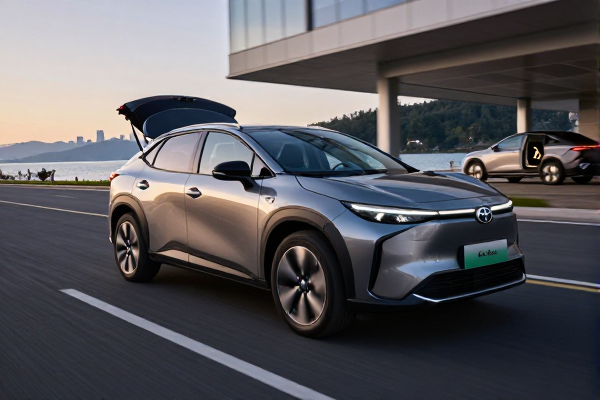
Nearly two years after Toyota launched the bZ4X, its first purpose-built electric SUV, the sales curve is finally sloping upward. But here's the uncomfortable truth for the company: the biggest reason early momentum stalled wasn't range. It wasn't price. It was the message Toyota's own executives had delivered for years.
On May 7, 2026, Toyota is still trying to walk back that years-old self-inflicted wound. The product is better than before, and the lineup is growing. The harder question is whether customers will let the company hit reset.
In Australia, where the bZ4X landed in 2024, Toyota's senior team spent most of the previous five years telling anyone who would listen that electric cars didn't make sense for the market. They said hybrids were the smarter path. They said EVs were too expensive and couldn't do what combustion engines could. Back in 2019, one executive said Toyota had no plans to launch an EV in Australia at all.
Sean Hanley, then Toyota Australia's vice president of sales and marketing, summed up the company's thinking at the time: "I always get concerned when pure electric vehicles turn up at fairly big prices, and people instantly think people will buy them and they'll take off." He pointed to hybrids as the real solution, adding that electrification only works when it's affordable.
That was a reasonable position in 2019. The problem came later. When Toyota finally launched its first modern EV in Australia, it arrived with a starting price of around $66,000 local. That was well above the $50,000 price point Hanley had flagged as the point where buyers would hesitate. The contradiction couldn't be ignored.
Let's be fair to the original bZ4X. It was safe, reasonably comfortable and built with the kind of quality you expect from Toyota. But it was also late. Chinese brands such as BYD were already offering electric SUVs with more equipment, more range and lower prices. Tesla's Model Y had become the default electric family car. In that company, the bZ4X looked like a cautious product from a manufacturer that wasn't sure it wanted to be there.
That lack of conviction showed up in the sales numbers. In Australia in 2025, Toyota sold just 1,041 bZ4X examples. The Tesla Model Y sold 22,239 in the same market. That gap isn't explained by charging infrastructure alone, and it isn't explained by product quality either.
Part of it came down to Toyota's own storytelling. The brand spent years telling loyal buyers that hybrids were the responsible choice and full EVs weren't practical. Then it asked those same buyers to spend serious money on an EV. For many customers, those two messages never connected.
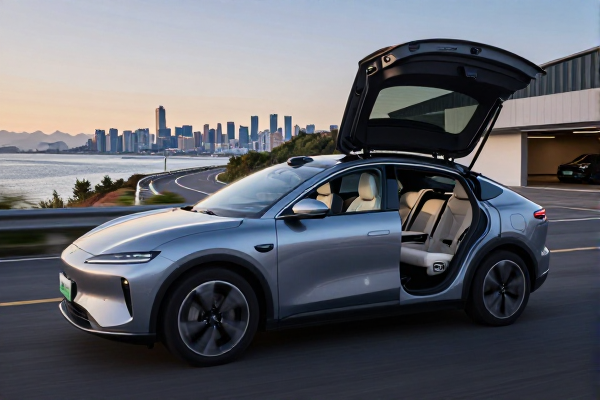
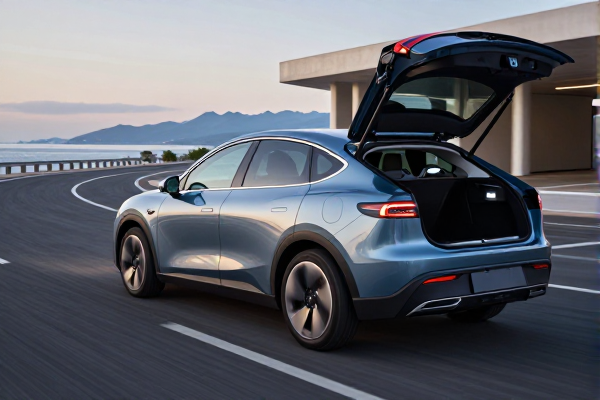
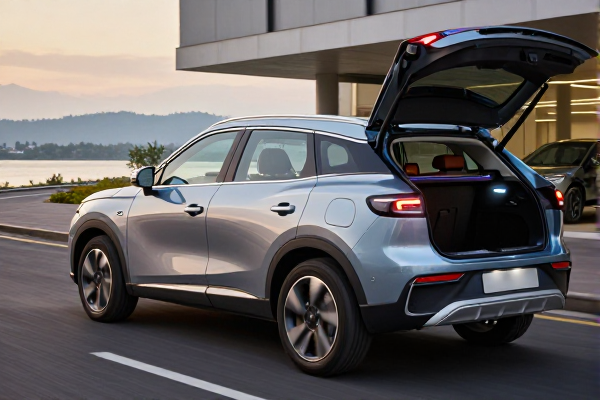
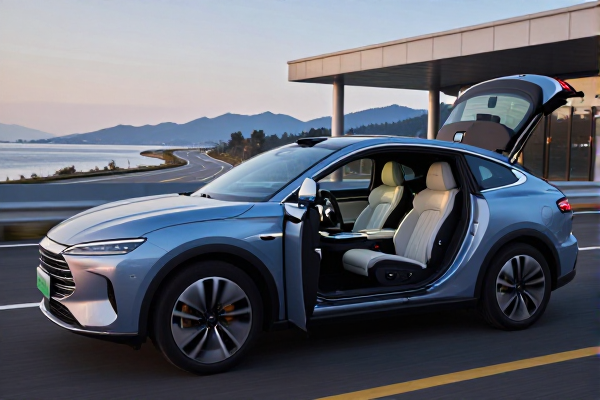
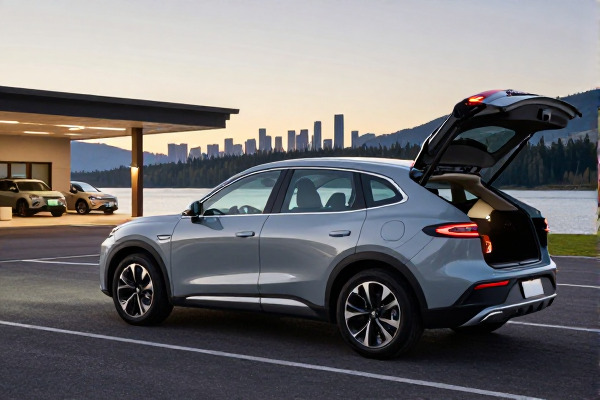
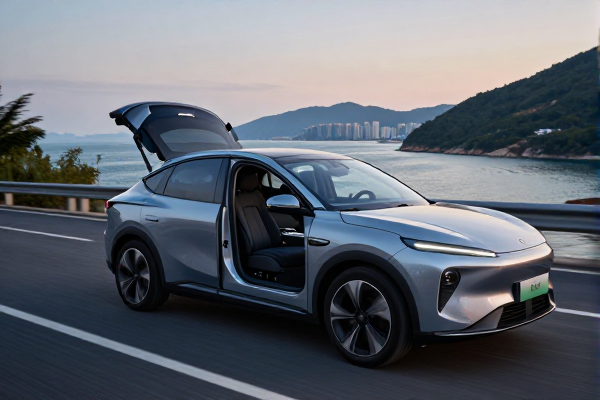
The good news for Toyota is that the new bZ4X is finding real traction. The company says the updated model, including the new Touring variant, is already selling at more than double the previous family's run rate in the early months of 2026. That's a meaningful shift, and it isn't just about better specs.
John Pappas, Toyota Australia's new vice president of sales and marketing, said at the Touring launch that the combination of better value and growing awareness is starting to land. "You can see that step up," Pappas said. "We launched bZ4X Touring, and the increased run rate with the Touring has literally doubled the run rate of the family. That's a really good step for us."
Toyota is also expanding its electric portfolio. A battery-electric C-HR is due in the middle of 2027. The HiLux BEV has arrived for fleet customers, especially mining operators. Even though the HiLux isn't aimed at typical family driveways, it sends an important signal: Toyota is done pretending battery-electric vehicles have no place in its lineup.
Toyota's biggest strength in electrification is also its biggest complication. The company owns the hybrid story. For 20 years, customers have trusted Toyota to make electrified cars that work. That reputation should have been a bridge to full EVs.
Instead, Toyota used it as a shield. "Hybrids first" too often became "EVs later" or "EVs only when necessary." That may have protected hybrid sales, but it conditioned customers to view battery-electric Toyotas with suspicion. When the bZ4X arrived, it wasn't launching against Tesla and BYD. It was launching against Toyota's own carefully built narrative.
That's why this isn't just a marketing problem. It's a brand-trust problem. And brand trust is harder to repair than range or charging speed.
Here's something that doesn't show up in the spec sheet: Toyota has one of the deepest dealer networks of any automaker in the world. No EV startup can match it. When someone is spending serious money on an unfamiliar technology, a familiar showroom counts for a lot.
That institutional trust is exactly why Toyota's early anti-EV messaging was so damaging. The same customers who trust a Toyota dealer for reliability also listened when Toyota executives dismissed EVs. Now the company has to convince those customers that it has changed its mind for the right reasons, not just because of regulation or competitive pressure.
The work is already happening on dealer floors and in advertising. But there's a limit to how quickly a decade of positioning can be reversed. Toyota may need another product cycle or two before the words "Toyota EV" feel as normal as "Toyota hybrid" do today.
The pieces for a genuine EV resurgence are in place. The bZ4X is more competitive than it was. The model lineup is expanding. The dealer network is enormous, and Toyota's balance sheet can absorb losses while smaller EV companies are still struggling to scale.
What the company still needs, more than anything, is a consistent message. Saying EVs aren't practical while selling an EV was the original sin. Repeating that mistake with the electric C-HR or the next-generation bZ4X would be inexcusable. Toyota has to stop hedging and make its EV ambitions as visible as its hybrid ambitions have been for 20 years.
The first lesson is simple: don't tell customers your product doesn't make sense, then ask them to buy it. Toyota now appears to have learned that lesson. The real test is whether it can stick with the new message long enough to earn back the time it lost.