Browse

Log in / Register
 Share

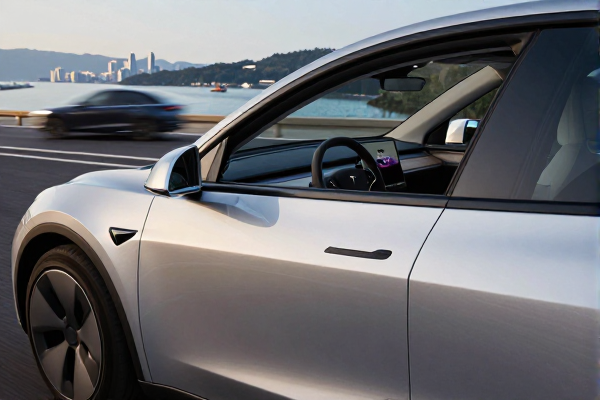
Updated July 10, 2025 – A massive recall in China is putting a spotlight on a design feature that has become nearly universal on modern electric vehicles: electronic door handles. The recall, which involves 4.3 million vehicles from Tesla and eight other automakers, stems from concerns that these handles could trap occupants inside during emergencies when the vehicle loses power.
The handles, pioneered by Tesla, sit flush with the car body to reduce drag and enhance aesthetics. They extend electronically when the driver approaches, but in a crash or power failure, they may not function as intended. While Tesla has issued a software fix in China, the same issue has not prompted a recall in the United States or Europe—yet.
Why These Handles Can Be Dangerous
Unlike traditional mechanical handles, electronic door handles rely on a button or sensor to release the door. Without a clear, easy-to-find manual release, drivers and passengers may struggle to exit a vehicle that has lost electrical power, especially in a fire or submersion scenario.
Michael Brooks, executive director of the Center for Auto Safety, says the problem lies in the design of the manual override. “Some manufacturers use a pull-twice system that is intuitive, but Tesla’s manual release is often hidden in a door cubby or under a panel, with no visible markings,” Brooks explains. This can be deadly in a situation where every second counts.
Consumer Confusion and Complaints
JD Power’s 2023 quality study found that seven of the ten models with the most door-handle-related complaints were electric vehicles. “The door handle is the primary point of contact, yet automakers are making it more complex,” the firm noted.
Several U.S. lawsuits allege that Tesla’s door handles contributed to injuries or deaths because occupants could not escape a burning vehicle. There are also complaints filed with the National Highway Traffic Safety Administration (NHTSA) about parents being unable to open doors to rescue children who had accidentally locked themselves inside.
The Scope of the Recall
The China recall announced on January 10, 2025, covers nearly 4.3 million vehicles from Tesla, Xiaomi, Leapmotor, Xpeng, Geely, and others. It is the largest recall in Chinese automotive history. The automakers are deploying over-the-air software updates to make the door handles more responsive and, in some cases, to improve the visibility of manual release mechanisms.
However, recalling vehicles in one country does not guarantee similar action elsewhere. “Tesla may still fight a recall in the U.S.,” Brooks says. “The company has historically resisted government-mandated recalls, and the NHTSA has been slow to act.”
Regulatory Action in the U.S. and EU
China has become the first country to ban “hidden” door handles, with new regulations taking effect by 2027. In the United States, a proposed rule would require vehicles with electronic door handles to include a reliable mechanical backup. The NHTSA announced in July 2024 that it would consider a new formal safety standard covering door opening in emergencies, after rejecting a petition to recall the Tesla Model 3 over the same issue.
European regulators are also working on updated standards through the United Nations Economic Commission for Europe. Their goal is to ensure that electronic door handles can be opened from both the inside and outside when the vehicle’s electrical system fails.
What This Means for American Drivers
If you own a Tesla or any EV with hidden electronic handles, it’s wise to locate the manual release now, before an emergency. Most Tesla models have a small mechanical cable tucked behind a panel on the door—but it’s not labeled. Consumer groups recommend that automakers make these releases more obvious and include them in owners’ manuals.
The China recall may push U.S. regulators to act faster. “The sheer scale of this recall should be a wake-up call,” says Brooks. “When millions of vehicles are potentially unsafe, the pressure on NHTSA to set a clear standard will only grow.”
Expert Insight: A Growing Safety Gap
Automotive safety engineer Dr. Linda Harris, who has consulted on several EV safety cases, notes that the industry is moving faster than regulations. “We’re seeing a disconnect between the rapid adoption of high-tech door handles and the safety standards that govern emergency egress. Regulators are playing catch-up, and that puts lives at risk.”
Dr. Harris recommends that all EV owners test their door handles in a simulated power-loss scenario—such as turning off the car’s battery—to ensure they can exit quickly. “If you can’t find the manual release in under 10 seconds, it’s not safe enough.”
The Bottom Line
The China recall is a landmark event, but it doesn’t necessarily mean safer doors in the U.S. anytime soon. Until regulators establish mandatory requirements, the responsibility falls on drivers to educate themselves about their vehicle’s emergency exit system. As more EVs hit the road, the debate over door handle design is far from over.