Browse

Log in / Register
 Share

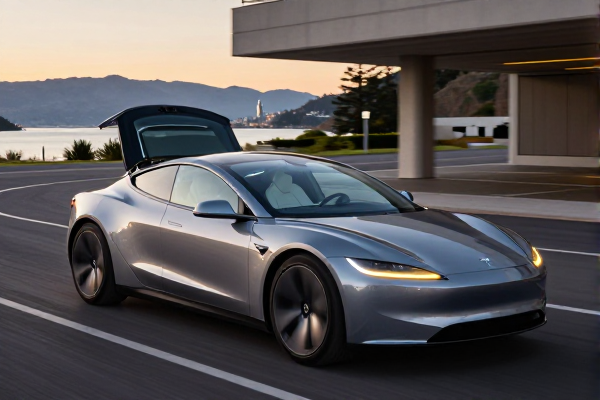
Kyle Conner came away from Tesla’s latest Roadster event with a mix of awe and annoyance. The Out of Spec Reviews founder attended the May 9, 2026 reveal at SpaceX’s McGregor facility, where Tesla sent a prototype soaring across the room and drove another car up an inverted ramp. He called it one of the most spectacular vehicle demonstrations he had ever seen, but he also stressed that the night produced very little real engineering data.
As the dust settled, Conner’s biggest complaint was the same one he has had with many Tesla events: the theater was unforgettable, the information was not.
There is no denying that the Roadster reveal was visually overwhelming. The team used SpaceX-style hardware to make a car fly, and the inverted ramp stunt added a level of drama that few car companies would attempt. For Conner, the flight portion was genuinely exciting.
Yet after the applause faded, he was blunt about what was missing. Tesla did not offer a clear spec sheet, battery capacity number, motor output rating, or even a firm explanation of how the thrusters would work in a production car. At one point, Conner noted that the vehicle might simply use cold gas thrusters for all anyone knew. That may be enough for a show, but not enough for someone trying to assess whether the Roadster is a real product.
He was also careful to give credit where it was due. The run up the inverted ramp impressed him more than the flying. That maneuver looked simple from a distance, but keeping a car pinned to a ceiling-like surface requires serious downforce, suspension tuning, and a lot of confidence. Conner pointed out that McMurtry had previously only driven its Spéirling upside down for a short distance, so seeing Tesla pull off something similar on a bigger scale underlined how far the team had pushed the display.
Although Tesla stayed quiet on technical specifics, Conner spent a good amount of time inspecting the prototype. The static display included cutaways of the battery pack and the rear drive unit, and those parts told a clearer story than the press release.
The cells looked to Conner like a power-dense interpretation of Tesla’s 4680 architecture. That would make sense for a car designed to chase lap records rather than maximize range. He guessed the pack could be in the 100 kWh class, while admitting that the number was speculative. Tesla has not confirmed anything.
The drive unit also stood out for its size. It looked very small for the amount of power required, which is an encouraging sign for weight and packaging. At the same time, a tiny motor pushing enormous current raises questions about heat management and long-term durability. Without official numbers, Conner could only judge the hardware visually.
Inside the cabin, the display showed a track-focused interface, with a readout indicating the thrusters were pressurized at 5,500 psi. That detail was intriguing, though Conner was unsure how much of that system would make it into a legal road car.
One technical area Conner did address directly was Tesla’s steer-by-wire setup. He said the low-speed behavior felt natural in the Cybertruck, but the sensation started to fall apart under heavier loads. He used that experience to raise a fair point: a 1,000-horsepower sports car will load the steering rack far more aggressively than most trucks ever will.
If the Roadster inherits the same steering system without major changes, driving enthusiasts may feel a disconnect between what the front wheels are doing and what the steering wheel communicates. Tesla’s engineers could tune around that, but nobody at the event was offering technical details.
Conner said one of the most frustrating parts of the night had nothing to do with the car itself. At other Tesla events this year, he and his colleague Coleton had been able to sit down with engineers and talk through architecture decisions. That did not happen in McGregor.
No one was willing to speak at length, which made it difficult for Conner to separate valid production plans from cleverly built showpieces. He acknowledged that this kind of protective secrecy often comes with highly anticipated reveals, but it still left him feeling shortchanged.
For all of his criticism, Conner was far more optimistic about the Roadster than many online commentators. He pointed to the near-production look of the battery and motor hardware on display, as well as Tesla’s stated 2028 timeline. That target is ambitious but not absurd, and it gives Tesla breathing room to develop the car properly.
He also argued that Tesla is a different company than it was eight or nine years ago. In this new mode, he sees an organization focused on execution rather than promises. He described himself as cautiously optimistic that the Roadster will eventually become a real car.
That optimism does not come from the flying gimmick. What genuinely excites him is the possibility of a fast, engaging, electric sports car that can go head-to-head with the best combustion-era icons. He hopes Tesla will take the Roadster to the Nürburgring and attempt a serious lap record.
In a surprising moment, Conner admitted that the vehicle he is most excited about in Tesla’s current lineup is actually the Semi. That comment reminded viewers that the Roadster may be the headline-grabber, but Tesla’s commercial vehicles could matter more in the long run.
Conner was not the only enthusiast wrestling with mixed emotions. Hagerty’s Henry Catchpole received a private preview and was told the Thrust model could complete a rollout 0-60 mph run in 0.55 seconds. That would be an outrageous number if true, and it raised more questions than it answered.
The more extreme the claim, the more important it is to provide some context. Yet Tesla’s presentation offered little explanation for how it planned to achieve that kind of straight-line performance on a public street. Catchpole reportedly left the event more puzzled than before.
Tesla succeeded in creating a viral moment with the Roadster. The flight sequence, the inverted ramp, and the sheer scale of the SpaceX setting will be hard to forget. But viral moments do not replace transparency.
For Conner, the night was a reminder that Tesla can still produce world-class excitement while leaving the technical community hungry for details. The hardware on display looked promising, and the production timeline sounds more credible than past promises. Until Tesla releases actual specifications, however, the Roadster remains more spectacle than specification.
What the industry needs now is not another teaser. It needs numbers, battery data, prices, and a clearer view of what will actually be sold. Until then, reactions like Conner’s will stand as the most honest assessment of the night: deeply entertained, yet still waiting for the full story.