Browse

Log in / Register
 Share


August 21, 2025 – China’s State Administration for Market Regulation (SAMR) has announced the largest vehicle recall in the country’s history, affecting more than 1.2 million cars from ten automakers. The root cause? Electronic door handles that can jam or fail to open in freezing temperatures, a design flaw that has silently spread across the global electric vehicle (EV) industry.
The recall includes models from Tesla, BMW, NIO, XPeng, Li Auto, Ford, GM, Hyundai, Toyota, and Volkswagen. While the exact number of vehicles per brand varies, Tesla accounts for the largest share with nearly 450,000 Model 3 and Model Y units built between 2021 and 2024. The regulatory notice states that water ingress into the door handle mechanism can cause ice formation, preventing the handle from retracting or popping out as intended.
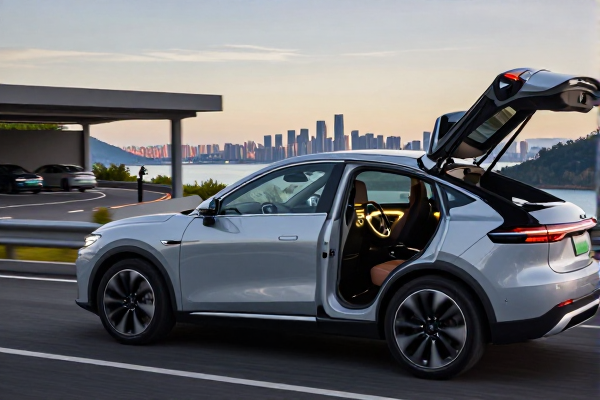
Electronic door handles, often flush with the car’s body when not in use, have become a signature feature of many modern EVs. They rely on a small electric motor or solenoid to extend the handle when the driver approaches or pulls the door. In cold climates, moisture can seep into the assembly and freeze, causing the handle to stick either in the recessed or extended position. In some cases, the handle fails to deploy at all, trapping passengers inside.
“This is not a software bug that can be fixed over the air,” said Dr. Alan Mercer, a former National Highway Traffic Safety Administration (NHTSA) engineer who now advises automotive safety startups. “The root cause is mechanical and environmental. A firmware update won’t stop ice from forming. Automakers will likely need to replace the entire handle assembly with a redesigned version that includes better seals and drainage channels.”
Flush electronic door handles first appeared on high-end EVs like the Tesla Model S in 2012. Over the past decade, they spread to mass-market EVs and even some gasoline-powered models. The appeal is clear: reduced drag improves aerodynamics and range, while the sleek look enhances the futuristic aesthetic. However, real-world reliability has lagged behind the marketing promise.
In the United States, NHTSA has received hundreds of complaints about electronic door handles failing in cold weather, but no formal recall has been issued. The lack of a unified standard for door handle testing in cold climates is a blind spot that regulators in Europe and North America are now beginning to examine.
To understand why the problem only now triggered a massive recall in China, we spoke with Li Wei, a former quality engineer at a major Chinese EV supplier. “Chinese automakers have been testing door handles at -20°C for years, but the test conditions often don’t replicate real-world freeze-thaw cycles,” he said. “A handle might pass a single freeze test but fail after repeated exposure to slushy roads and automatic car washes.”
Li added that the recall was likely accelerated by social media backlash. Videos of drivers unable to open their Tesla doors in Beijing’s sub-zero winters went viral last December, prompting regulators to launch a targeted investigation. The investigation found similar issues across multiple brands, suggesting a supply chain problem: many automakers source door handle modules from the same tier-1 suppliers, including Huf, Kiekert, and Valeo.
Replacing door handles on 1.2 million vehicles is a logistical and financial nightmare. Each handle assembly costs between $50 and $150, depending on complexity. With labor, dealership logistics, and customer compensation, the total bill could exceed $300 million. Automakers are expected to absorb the cost, though some may seek recourse from their suppliers.
For Tesla, the recall is especially damaging. The company has long argued that its flush handles are safe and reliable, and has previously dismissed customer complaints as “misuse” or “environmental factors.” Now, it must comply with China’s mandatory recall order or face fines and potential sales restrictions in the world’s largest auto market.
China’s SAMR has been tightening vehicle safety regulations, especially for EVs. In 2023, it introduced a new rule requiring automakers to submit safety reports for any new electronic systems, including door handles, battery management, and autonomous driving features. The current recall is the first major test of that rule’s enforcement.
“This is a wake-up call for the entire industry,” said Zhang Hong, a Beijing-based auto analyst. “If a door handle can trigger a record recall, imagine what a faulty battery or ADAS sensor could do. Regulators are now treating every electronic component with the same scrutiny as brakes and airbags.”
Owners of affected vehicles in China will receive notifications from their automakers and can schedule a free repair at authorized dealerships. The fix involves replacing the door handle assembly with an improved version that includes a rubber gasket and a drainage hole. Tesla and BMW have already begun shipping upgraded parts to service centers.
For consumers outside China, especially in cold-climate regions like the U.S. Midwest and Canada, the recall serves as a warning. While no equivalent recall has been announced in North America, owners should be aware of the symptoms: a door handle that feels sluggish, makes unusual noises, or fails to extend in cold weather. If you experience these issues, report them to NHTSA and your dealer.
The record Chinese recall underscores a broader challenge for the global auto industry: as cars become more software-defined and aerodynamically optimized, physical components like door handles are being pushed to their limits. The pursuit of a few extra miles of range has introduced a new failure mode that regulators are only beginning to address.
For now,