Browse

Log in / Register
 Share

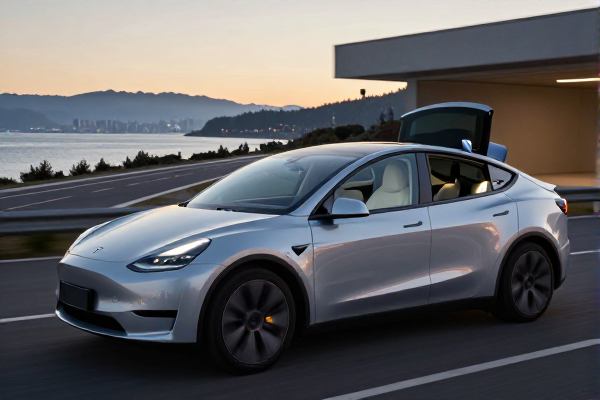
Oct. 1, 2026 — Tesla is expected to release its third-quarter delivery count Oct. 2, and the pre-report consensus is sobering. Analysts surveyed by Bloomberg estimate the automaker handed over roughly 463,761 vehicles worldwide in the quarter, about 7% fewer than a year earlier. It would be another sign that the company's core EV business has moved into a slower, more crowded phase of growth.
That comparison is not entirely apples-to-apples. The year-ago quarter was inflated by a rush of U.S. buyers who jumped into the market before the federal EV tax credit expired in September 2025. That helped Tesla record one of its best quarters ever, with nearly 500,000 deliveries — a milestone the company has approached repeatedly over the past few years but never cleared.
For the full year, analysts still see a modest recovery. The average estimate puts 2026 deliveries at about 1.77 million vehicles, which would snap two consecutive years of annual declines. Yet the path to that number is less about surging demand and more about discounting, price discipline and a scramble to defend share against a deep bench of rivals.
The core problem is no secret. U.S. consumer appetite for EVs has softened, Chinese competitors keep applying pricing pressure, and Tesla's current lineup — now centered on the Model 3, Model Y, Model S and Model X — is growing older without a true next-generation replacement. The result, according to Wall Street, is an auto business that will muddle along rather than resume the explosive growth investors grew used to in earlier cycles.
Autos still generate the bulk of Tesla's revenue, so the quarterly delivery number remains a meaningful barometer. But investor attention has shifted to Elon Musk's long-term projects: autonomous driving, artificial intelligence and robotics. Adding to the narrative is persistent market chatter about a possible Tesla-SpaceX combination, a scenario that remains speculative but has given the stock some lift when momentum elsewhere stalls.
“The legacy EV business has reached the point where it is stabilized, but at the same time, it's not a business I see growing again at the rapid rate that it did in previous years,” said Andrew Rocco, a stock strategist at Zacks Investment Research.
Tesla's spending on those futuristic initiatives is expected to top $25 billion this year. The problem is that none of them — not the slowly scaling robotaxi service, and not the not-yet-released Optimus robot — is close to producing meaningful margin contribution. For investors hoping the delivery slowdown will be offset by a software or robotics windfall, the likely message is: wait a few more quarters. Or years.
Tesla's stock closed Sept. 30 down more than 20% for 2026, a decline that softened somewhat over the past two months. The recent bounce suggests some investors are willing to look past weak near-term sales to the company's longer-term ambitions. But not everyone has turned optimistic on the core auto business.
JPMorgan analyst Rajat Gupta has one of the highest delivery estimates on the Street at 482,000 vehicles. Significantly, he lowered his price target Sept. 28, citing weaker-than-expected sales conditions in both the U.S. and China. Even with a bullish volume call, the delivery report is likely to be a reminder that Tesla has to work harder for every sale than it once did.
Tesla has been trying to generate momentum with product events. In September, it held two launch-style showcases — one for the Cybercab and one for the long-promised Semi. Next on the calendar is the public debut of the Roadster, a vehicle more than a decade in the making. That event was pushed later in the month because of weather, Tesla said.
CFRA senior equity analyst Garrett Nelson argues the company needs a hit, and soon, to revive the showroom side of the business. “The company desperately needs a new model, a successful new model, from a brand standpoint,” Nelson said.
Still, fresh metal alone may not be enough. The bigger question is whether Tesla can turn product buzz into sustainable volume gains, especially in a market where buyers have more choices and less urgency.
One notable exception to the demand slump is Europe. Tesla registrations in the European Union jumped 52.7% in August and were up 65.9% from January through August of 2026, according to the European Automobile Manufacturers Association. That is a sharp reversal from last year, when political backlash around Musk weighed on the brand in some EU markets.
The regional surge is tied to rising gasoline prices and a wave of lower-cost Chinese EVs that have accelerated the overall transition to electric motoring. Tesla appears to be capturing part of that upswing, which could help balance persistent weakness elsewhere.
Tesla's two biggest markets are telling a different story.
In the United States, Tesla is still the dominant EV seller, but Cox Automotive data shows third-quarter sales dropped roughly 31% year over year. That is a steep slide for a company that once defined EV growth in America.
In China, Tesla has turned to end-of-quarter discounts on the Model 3 and Model Y to defend its position in an increasingly saturated market. The pressure is visible in export data: of the approximately 86,000 Tesla vehicles produced in China in August, about 36,000 were shipped overseas, according to the China Passenger Car Association. Shanghai-made deliveries slipped from the previous month, another sign of soft domestic momentum.
Tesla may benefit from legacy automakers pulling back on new EV launches around the world, but Chinese brands still dominate the conversation on pricing and new model cadence. That competitive pressure is not going away.
The delivery print will be judged not just on the size of the miss or beat, but on how much of the volume was bought with discounts. A number near the high end of forecasts, such as Gupta's 482,000, could trigger a relief rally. But without signs that underlying demand is improving, analysts say the reaction is likely to be muted.
For now, the message from Wall Street is that Tesla has become a mature automaker with a high-stakes side project in software and robotics. Friday's report is an important check-in, but it is not expected to be the turning point. The real pivot, if it happens, will likely come when Tesla starts telling a more concrete story about revenue from autonomy, AI and the new vehicle launches still waiting in the wings.