Browse

Log in / Register
 Share

Chinese automaker Geely has confirmed it will begin installing solid-state batteries in production vehicles as early as 2027, joining BYD and battery giant CATL in a race to deliver 1000km-plus driving ranges. The announcement, reported by Chinese media outlets this week, marks a major step toward commercializing a technology long hailed as the holy grail of electric mobility.
Why solid-state batteries matter
Solid-state batteries replace the liquid electrolyte found in conventional lithium-ion cells with a solid material, typically a ceramic or polymer. This swap delivers several key advantages: higher energy density (allowing more range from a smaller pack), faster charging, better performance in cold weather, and significantly reduced fire risk. For automakers, the benefits are twofold. They can either shrink the battery pack to cut weight and cost while maintaining current range, or keep the pack size and effectively double the driving range.
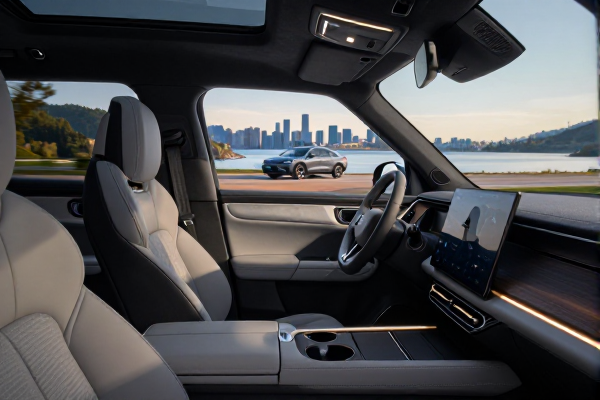
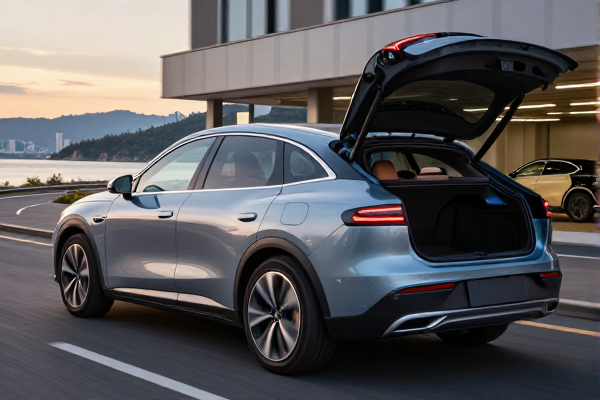
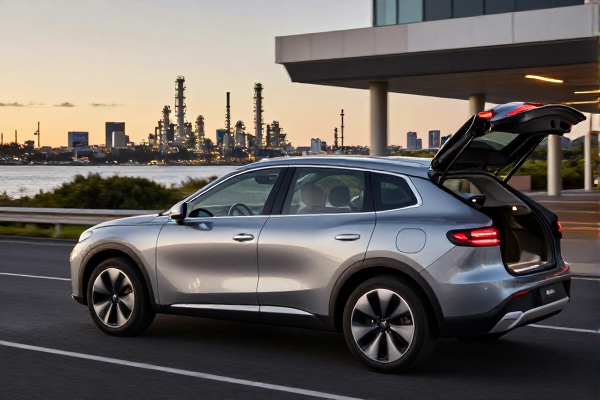
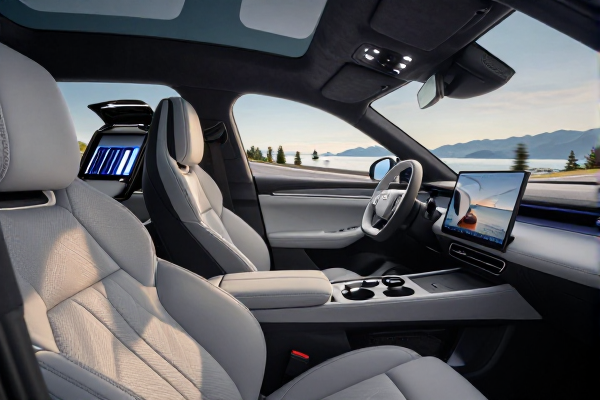
Geely’s latest cells are reportedly targeting 500Wh per kilogram, more than double the energy density of the average EV battery today. To put that in perspective, the “Golden Brick” battery found in some Zeekr 7X models—which already delivers close to 500km of range and supports 450kW charging—is rated at around 200Wh/kg. Doubling that density would allow the Zeekr 7X, the Volvo EX60, and the Geely EX5 to exceed 1000km on a single charge, according to engineering estimates.
The race to 2027
Geely is far from alone. BYD has already shown prototype solid-state cells and plans to integrate them into its high-end models by 2027. CATL, the world’s largest battery maker, has also signaled a 2027 timeline for mass production. Outside China, Toyota has partnered with Idemitsu to launch solid-state batteries in hybrid vehicles by 2027–2028, while Samsung SDI aims to start production in 2027. The convergence of timelines suggests the industry is past the lab stage and entering the validation phase.
But the hype is tempered by reality. No Chinese automaker has publicly released verified test results of its solid-state packs—a fact that skeptics point to as a sign that production challenges remain formidable. “The technology is real, but scaling it to millions of vehicles is a different beast,” said Dr. Emily Chen, a battery researcher at the University of Michigan, in a recent interview. “Manufacturing solid-state cells at competitive cost and yield is still a few years away.”
Mercedes-Benz shows the way
European automakers have been more transparent about their progress. In August 2025, Mercedes-Benz completed a 1205km journey from Stuttgart, Germany, to Malmö, Sweden, in a prototype EQS equipped with a solid-state battery. The vehicle arrived with 130km of range remaining. Chief Technology Officer Markus Schäfer called the drive “a true game-changer” and said the company aims to bring the technology to production vehicles by the end of the decade.
“The solid-state battery is a true game-changer for electric mobility. With the successful long-distance drive of the EQS, we show that this technology delivers not only in the lab but also on the road,” Schäfer said. “Our goal is to bring innovations like this into series production by the end of the decade and offer our customers a new level of range and comfort.”
The cost and adoption curve
Despite the promise, solid-state batteries face a steep cost curve. Current estimates put production costs at $150–$200 per kilowatt-hour, compared to $100–$120 for conventional lithium-ion packs. Analysts at BloombergNEF project that costs will fall below $100/kWh by 2030, but only after significant manufacturing scale is achieved. That means the first waves of solid-state EVs will likely be premium models—think Mercedes-Benz EQS, BMW i7, and Geely’s Zeekr flagship—before the technology trickles down to mass-market vehicles.
Audi engineers have previously cautioned that solid-state batteries may never become mainstream, remaining a niche application due to the difficulty of manufacturing defect-free cells. “They are too hard to make in volume right now,” one engineer told CarsGuide. “We’re not there yet.”
What this means for buyers
For consumers, the solid-state era promises a future where range anxiety is largely eliminated. A 1000km EV would cover most daily driving needs for weeks without charging, and the ability to charge quickly—even in cold climates—would make long-distance travel practical. But early adopters will pay a premium. The first solid-state EVs are expected to carry a price tag comparable to today’s luxury electric sedans, roughly $80,000–$120,000.
As the technology matures and production scales, costs will drop. By 2035, solid