Browse

Log in / Register
 Share

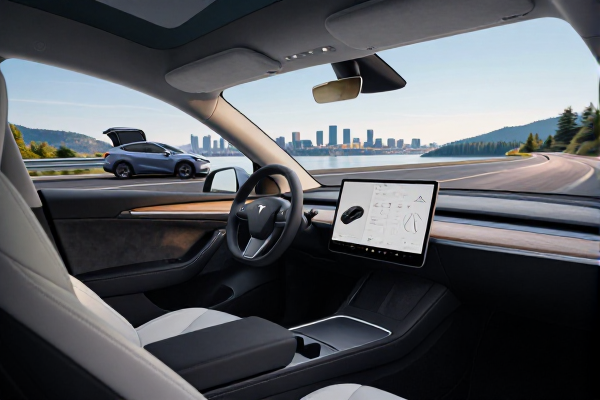
Tesla is accelerating its plans for a mass-market electric vehicle, with new reports from industry observers suggesting concrete progress is being made on a platform designed to undercut the price of the popular Model 3. This strategic move, long anticipated by investors and consumers, signals a pivotal shift in Tesla's mission to dominate the global auto industry. (May 24, 2024)
For years, the prospect of a "$25,000 Tesla" has been a tantalizing rumor circulating among EV enthusiasts and financial analysts. While CEO Elon Musk has frequently alluded to the necessity of a more affordable model, tangible details have been scarce. Recent analysis, however, points to increased internal momentum, with the company reportedly finalizing designs and preparing manufacturing strategies for a new, compact vehicle architecture. This vehicle, often informally dubbed the "Model 2," is seen as crucial for Tesla's next phase of growth, targeting a segment of the market that remains largely untapped by current EV offerings.
The pursuit of a lower price point is not merely about offering a stripped-down version of existing models. Tesla's approach appears to revolve around a fundamental re-engineering of the production process. Key to this strategy is the integration of revolutionary manufacturing techniques, such as the unboxed vehicle assembly process pioneered for the Cybertruck. This method, which involves assembling large sub-assemblies of the car in parallel before final integration, promises to drastically reduce production time and factory footprint. Applying these lessons to a high-volume, low-cost model could be the linchpin for achieving economies of scale previously unseen in the EV sector.
Beyond assembly, Tesla's cost-saving advantage is deeply rooted in its vertical integration and technological moats. The company's industry-leading battery technology, developed through its 4680 cell program, is central to reducing the most expensive component of an electric car. Furthermore, Tesla's streamlined approach to vehicle design—featuring giant castings for the front and rear underbody—eliminates hundreds of parts and simplifies assembly. These innovations, combined with its proprietary Autopilot and Full Self-Driving (FSD) software suite, create a bundled value proposition that competitors relying on third-party suppliers may struggle to match on cost.
Exclusive Perspective: The 'Software-Defined' Value Play A critical, often overlooked aspect of Tesla's affordable car strategy is its role as a catalyst for higher-margin software services. While the car itself may be sold with a thinner hardware margin, its primary function could be to serve as a platform for Tesla's lucrative FSD subscriptions, Supercharging network, and future mobility services. Each affordable vehicle acts as a rolling node in Tesla's ecosystem, generating potential recurring revenue for over a decade. This "razor and blades" model reframes the low-cost car not as a loss-leader, but as a customer acquisition tool for a more profitable software and services business, a strategic nuance that pure hardware automakers cannot easily replicate.
The timing of this push is strategically significant. Global EV demand growth has shown signs of moderating in some regions, with consumers citing high upfront costs as a primary barrier to adoption. A genuinely affordable Tesla could reinvigorate the market and apply immense pressure on both legacy automakers and EV startups who are already struggling with profitability on their current lineups. It would effectively lower the entry point into the Tesla brand, capturing first-time EV buyers and expanding the company's total addressable market exponentially. This move could also be a direct response to the growing competition from lower-cost Chinese EVs, which have begun making inroads in international markets.
The successful launch of a sub-$30,000 Tesla hinges on flawless execution at its planned production sites. Reports suggest significant portions of this new vehicle program are earmarked for Tesla's Giga factory in Texas, with a potential dedicated line at its upcoming factory in Mexico. Ramping production of a completely new vehicle on a new platform, while simultaneously implementing novel manufacturing processes, presents a formidable operational challenge. Tesla's history is marked by "production hell" phases with new models; how quickly it can navigate this phase for the low-cost car will be a major determinant of its market impact and financial success.
In conclusion, Tesla's intensified focus on an affordable vehicle marks a transition from visionary concept to operational reality. It represents a confluence of manufacturing innovation, vertical integration, and long-term software strategy. While hurdles remain in production ramp-up and final pricing, the development is a clear signal of Tesla's ambition to move beyond the premium segment and truly catalyze the global transition to sustainable transport. The coming months are likely to yield more concrete details, setting the stage for one of the most consequential automotive launches of the decade.