Browse

Log in / Register
 Share

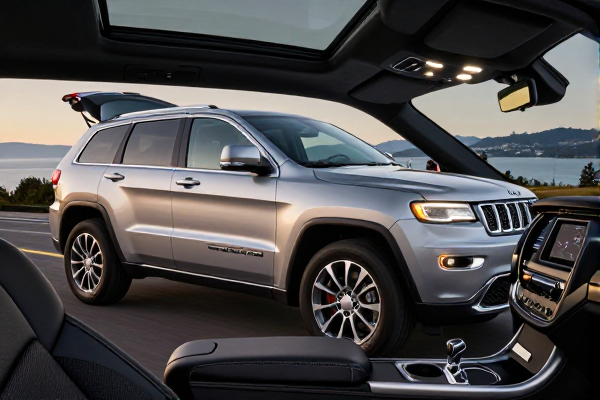
Saudi Arabia's Ministry of Commerce said Sunday it is recalling 391 Jeep Grand Cherokee SUVs from model years 2024–2026 because the tire pressure monitoring system may fail to alert the driver when tire pressure drops. The move affects vehicles already sold or in service in the kingdom, but it also puts a spotlight on a safety feature that American drivers often take for granted.
This article was updated on Sept. 24, 2025, to reflect new details from the Saudi announcement and the current status of U.S. recall databases.
Here's the core problem: In affected Grand Cherokees, the tire pressure monitoring system—commonly called TPMS—may not show the low-pressure warning on the dashboard when a tire loses air. That's not just an inconvenience. A gradual leak can go unnoticed until the tire overheats, separates or blows out at highway speed.
TPMS has been mandatory on all new passenger vehicles sold in the United States since model year 2008. The system is designed to catch slow leaks and under-inflation before they become dangerous. But a failure in the warning side of the system leaves the driver blind. In this case, the Saudi notice doesn't specify whether the fault is tied to sensor hardware, a software algorithm, or a wiring issue—only that the warning may not appear when it should.
The recall covers the 2024 through 2026 model years of the Jeep Grand Cherokee. That's a large slice of the current-generation lineup, a period that includes the redesigned Grand Cherokee and the Grand Cherokee L. Saudi authorities say the problem increases the risk of an accident, so owners are being told to contact Jeep service centers in the kingdom.
Right now, the recall appears to be limited to vehicles sold in Saudi Arabia. At the time of this update, no matching recall is listed in the National Highway Traffic Safety Administration's public database, and Stellantis, Jeep's parent company, had not issued a statement about any U.S. action. That doesn't mean owners in America should simply ignore the news.
The same generation of the Grand Cherokee is sold in North America, and global vehicle platforms frequently share TPMS components and software. Automakers sometimes issue a recall in one market and later expand it to other regions once a root cause is confirmed. The best way for a U.S. owner to stay ahead of the story is to run their vehicle identification number through NHTSA's free recall lookup tool.
It's also worth noting that TPMS faults are not always caught during routine maintenance. Many drivers rely on the dashboard light to tell them something is wrong, so a silent system can mask a problem for weeks. Tire pressure should still be checked manually at least once a month, especially before long trips.
This is the fourth major safety action announced by the Saudi Ministry of Commerce in roughly six weeks. Earlier in September, the ministry recalled 182 Tesla Model 3s from model years 2024–2026 because the far-side airbag system could fail to deploy correctly in a side impact. Tesla fixed that issue through an over-the-air update, meaning owners didn't have to visit a service center.
Before that, Saudi authorities ordered a recall of 4,464 Genesis vehicles across eight models, including the GV70, GV80, G80 and G90. The problem there was a fuel leak that could increase the risk of a fire. In August, the kingdom recalled 84,639 Toyota Camrys from model years 2025–2026 due to an instrument cluster defect that could interfere with turn signals, warning lights, ignition key alerts and seat belt chimes.
The pace is notable. Saudi Arabia has been stepping up vehicle safety oversight in recent years, and the announcements often come with relatively short lead times. For a region that imports a large share of its vehicles, rapid-fire recalls can create parts and scheduling bottlenecks at dealerships, but they also show that the regulator is actively checking automaker-supplied data.
Tires are the only part of a vehicle that physically touches the road. Under-inflated tires can reduce fuel economy, increase stopping distance, and generate enough heat to cause tread separation. In hot desert climates like Saudi Arabia, the stakes are even higher, but the same physics apply on U.S. highways in any season.
TPMS sensors in many vehicles are battery-powered and typically expected to last five to ten years. When a sensor battery dies, some systems display a warning light on the instrument panel rather than a specific low-pressure alert, so drivers know something is amiss. But the Saudi recall concerns the opposite scenario: a failure that produces no warning at all. That kind of silent failure is what safety advocates call "the worst kind of defect" because drivers are conditioned to trust the light.
Owners of the affected Jeep Grand Cherokees in Saudi Arabia should contact a local Jeep dealer to arrange a free inspection and repair. The ministry's announcement doesn't provide a specific remedy, but a recall of this type usually involves re-calibrating or replacing the TPMS software, or swapping out faulty sensors, depending on the root cause.
For owners in the U.S., even if no official recall is in place, it's a good moment to perform a simple check. Inflate all four tires to the pressure listed on the driver's door jamb, then press and hold the TPMS reset button if the vehicle has one. If the warning light doesn't behave as described in the owner's manual, have the system diagnosed at a certified repair shop. A dealership can also run a TPMS system check that identifies whether any sensor is transmitting weak signals or failing intermittently.
It's also worth setting up a reminder: check tire pressure when the temperature changes dramatically. A 10°F drop in outside temperature can reduce tire pressure by roughly 1 psi, and the loss compounds over time. An alert driver is always the last line of defense, regardless of what the dashboard says.
The Saudi recall of 391 Jeep Grand Cherokees is a reminder that modern safety tech can fail quietly. The official announcement doesn't mention any crashes or injuries stemming from the defect, but it moves quickly to eliminate the risk. Whether or not U.S. regulators follow with their own action is uncertain, and it could take time for Stellantis to determine if vehicles in other markets share the same faulty component.
In the meantime, the practical answer for drivers is simple: Don't rely on a warning light as your only source of tire information. A few minutes with a tire gauge each month can catch what a sensor might miss. And if you own a 2024–2026 Jeep Grand Cherokee, keep an eye on the news—this story may not be finished.