Browse

Log in / Register
 Share

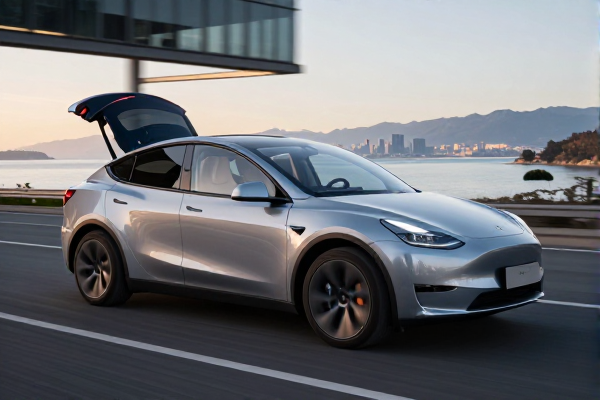
Oct. 13, 2026 — Tesla has signed off on $30 billion in new credit facilities from Citi and Wells Fargo, according to a regulatory filing released this morning. The bank facilities, which have maturities running between one and five years, replace a previously disclosed $5 billion revolver. The move lands at a precarious moment: Tesla’s quarterly net income has thinned to the hundreds of millions, and management is guiding for a much higher capital spending load next year.
For most of its first 15 years, Tesla basically couldn’t grow fast enough. Revenue jumped almost every quarter, demand seemed to justify any investment, and the company treated expansion as its own reward. That run ended in 2024 when revenue fell about 1% from the prior year, a wild swing after a 38% jump in 2023. It wasn’t a collapse, but for Tesla, the abrupt reversal marked the first real interruption of a near-constant growth story.
Since then, Tesla has stayed technically profitable but not by a comfortable margin. The company has leaned on a couple of one-time gains to keep the income statement in positive territory, and even those adjustments have left net profit in a narrow band. When quarterly earnings can be measured in the low hundreds of millions, a single bad quarter can flip the number negative. That is the backdrop for today’s move to lock down more credit.
Capital spending is making that risk much worse. Tesla’s capex more than doubled in the last reported quarter, and executives have said the heavy outlays will continue. The company now expects to spend about $25 billion in 2026, up from $8.5 billion in 2025. Analysts are modeling similar totals for 2027. That’s a lot of money being thrown at projects that, so far, have produced more promises than revenue.
The promises include a robotaxi with no steering wheel, a flying-car program that doesn’t claim any performance advantage from the flying, and a humanoid robot effort that Musk has described as leading to a trillion-dollar machine force. None of these are generating meaningful sales yet, but all of them are consuming engineering dollars. It’s a pattern that has appeared before in Tesla’s history: big bets, long timelines, and an eventual need for more money.
Today’s filing says Tesla now has $30 billion in total borrowing capacity across the Citibank and Wells Fargo facilities. The previous $5 billion credit line was never drawn, according to the earlier filing, so this is effectively a fresh liquidity buffer rather than a restructuring of existing debt. The company says it doesn’t expect to draw on the new lines during the remainder of 2026. But that’s a soft promise given that the year ends in about three months and the real spending wave is supposed to arrive in 2027.
Size matters here. $30 billion is roughly equal to a quarter of Tesla’s current annual revenue. Measured against Tesla’s recent quarterly profit — a few hundred million dollars — the credit line looks enormous. It’s the kind of cushion you build for a period of uncertainty, not for business as usual. The fact that Tesla felt the need to line up that much capacity, rather than a smaller revolver, tells you what management expects the next couple of years to look like.
The most worrying data point, though, is cash flow. Tesla reported negative cash flow last quarter for the first time since Q1 2024, when a serious sales drop hit the company. Before that one-off dip, Tesla had enjoyed years of positive free cash flow and seldom needed external financing. The return to cash burn, combined with a capex plan that shows no signs of easing, is exactly why the company felt the need to add $30 billion in backup funding.
Tesla still holds roughly $43 billion in cash, so a conventional reading could be: it doesn’t need the money. That misses the point. Large manufacturers routinely maintain undrawn revolving credit as cheap insurance. It signals confidence to suppliers, protects against a downturn, and doesn’t eat into the cash stockpile. Ford and GM have long kept multibillion-dollar revolvers for the same reason. What’s unusual here is the combination: a big cash pile, a new $30 billion backstop, and a free-cash-flow trend that has just turned negative. In ordinary times, companies pick one of those. Tesla is now carrying all three.
The product side doesn’t make the outlook easier. Tesla planned to release three vehicles this month, although at least one has already slipped. The Cybercab still isn’t running without a remote or safety driver. The Semi has been slow to ramp despite years of early orders. And the Roadster — announced more than a decade ago — now looks less like a car program and more like a narrative device used to keep investors focused on the proposed SpaceX merger.
All this could still work out. Tesla has proved its skeptics wrong before, and an undrawn credit line is not an admission of failure. But the financing decision, taken alongside the spending plan, tells a clear story: Tesla is betting that heavy capital outlays now will create products that pay off later. If those products fall further behind schedule, or if the cash burn accelerates, $30 billion will be only the beginning.