Browse

Log in / Register
 Share

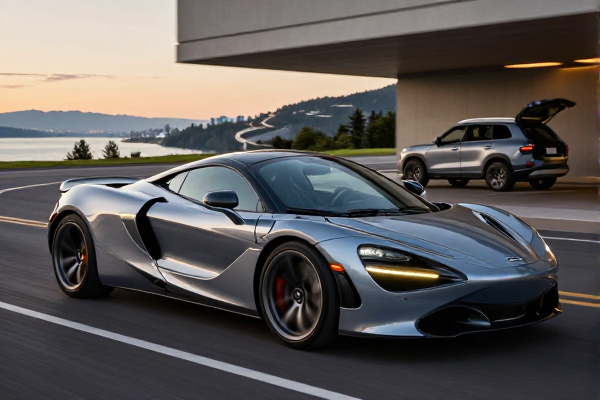
McLaren has officially abandoned its long-standing refusal to build a performance SUV, confirming overnight that it will invest £500 million ($637 million USD) into UK manufacturing and develop a new high-riding model. The announcement, made on July 17, 2025, marks a dramatic reversal of the brand’s 2018 stance, when then-North American president Tony Joseph famously declared there were “three reasons” McLaren would never produce an SUV.
The British sports car manufacturer plans to open a new factory and create 1,000 local jobs, bucking the broader trend of automakers scaling back UK operations. Honda, Nissan, and Jaguar Land Rover have all reduced their footprints in the region in recent years.
McLaren CEO Nick Collins told Reuters that the upcoming SUV would stay true to the brand’s DNA. “We’ll do it very much in a McLaren way. It will bring something unique to the segment, which we think the customers will value,” he said. The model is expected to lean on a plug-in hybrid powertrain, similar to the twin-turbo 3.0-liter V6 hybrid system found in the Artura. Full electric remains off the table: “We will do an electric vehicle when our customers ask us for one, and they’re not asking,” Collins added.
The investment will also fund in-house development of hybrid engines and transmissions, reducing reliance on external suppliers and positioning McLaren for stricter emissions regulations without rushing into full electrification.
In 2018, Tony Joseph told ABC that an SUV “could dilute the brand”, “is not a driver’s car”, and that the financial investment “would not pay off”. He also claimed that “it’s not the customers who are asking for an SUV. It’s the media.” Seven years later, McLaren’s own data shows a different picture. Every other luxury and performance automaker that launched an SUV saw it become their best-selling model globally in 2025: the Porsche Macan, Lamborghini Urus, Aston Martin DBX, Bentley Bentayga, and Rolls-Royce Cullinan. Ferrari’s Purosangue, despite being a polarizing design, also posted strong sales.
“The luxury SUV segment now accounts for roughly 45% of total global luxury vehicle sales,” says auto industry analyst Dan Ives of Wedbush Securities. “McLaren had to enter or risk being left behind by both competitors and consumer demand.” The company’s recent financial struggles – including a net loss of £87 million in 2024 – further underscore the strategic necessity of a high-volume, high-margin SUV to stabilize revenues.
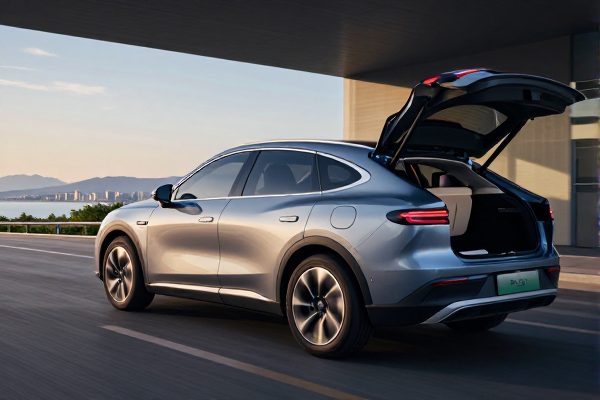
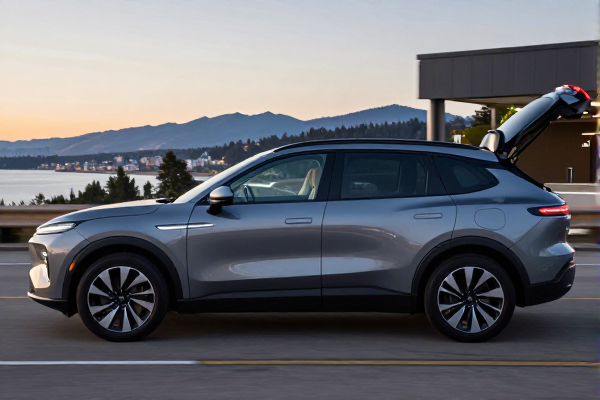
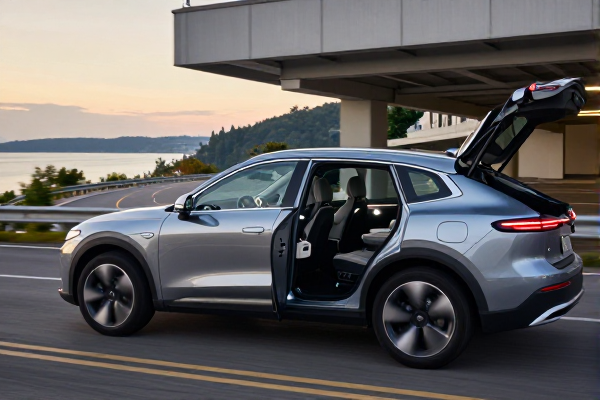
McLaren has not yet announced a name or production timeline for the SUV. The new factory likely will not come online before 2027, with the first SUV deliveries expected around 2028. Some industry insiders speculate the model could revive the “Speedtail” or “Sabre” nameplates, though a fresh designation is more plausible. The vehicle will almost certainly ride on a modified version of McLaren’s carbon-fiber Monocell architecture, adapted to accommodate higher ride height and all-wheel drive – a first for the brand.
McLaren’s reversal is not without precedent. Lamborghini, Aston Martin, and even Ferrari all pledged they would never build SUVs before eventually succumbing to market reality. The Urus, which debuted in 2018, single-handedly doubled Lamborghini’s annual sales. For McLaren, the question is whether it can replicate that success while maintaining its reputation for lightweight, track-focused engineering.
Collins insists the SUV will be “a real McLaren”, though he stopped short of providing weight or performance targets. With competitors like the 707-hp Urus Performante and 715-hp DBX707 setting the bar, McLaren’s entry will need to exceed 700 horsepower and undercut rivals on weight to earn its stripes.
The £500 million investment is a bright spot for UK manufacturing, which has suffered from Brexit-related uncertainty and the shift of global production to lower-cost regions. McLaren’s decision to keep production in Woking, Surrey, aligns with the UK government’s push to secure domestic EV and high-performance vehicle supply chains. “This is a vote of confidence in British engineering,” said UK Business Secretary Jonathan Reynolds in a statement.
However, skeptics warn that the move comes at a high cost. Developing a new platform for a one-model SUV could strain McLaren’s balance sheet, given its relatively small volume of around 2,500 cars annually. “McLaren is walking a tightrope,” says Ives. “They need the scale of an SUV to fund future sports car development, but they can’t afford to lose the buyer who values purity.”
McLaren’s SUV is no longer a question of “if” but “when and how”. With a hybrid powertrain, a likely 2028 launch, and a £500 million factory backing it, the brand is betting that its interpretation of a performance SUV will convince the purists it once listened to. For now, the silence on electric drive suggests the Woking firm will remain a hybrid specialist for the rest of the decade – until customers finally start asking.
MORE: Explore the McLaren showroom