Browse

Log in / Register
 Share

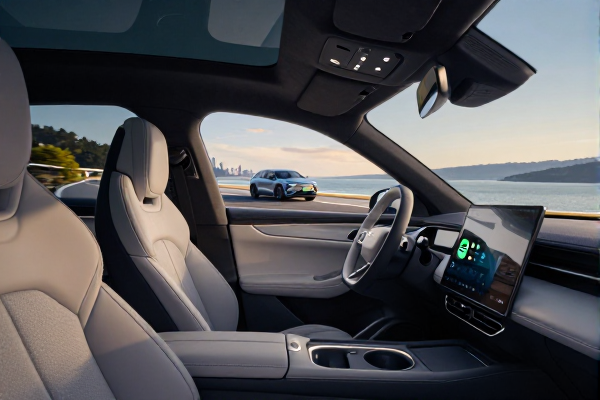
May 9, 2026 — Spotify has unveiled its first standalone app designed specifically for vehicles, enabling drivers to stream music directly from the car’s infotainment system without touching a phone. The Stockholm-based company announced the move as part of a broader effort to improve how people listen behind the wheel, a step that signals a shift from smartphone-dependent listening toward embedded car audio.
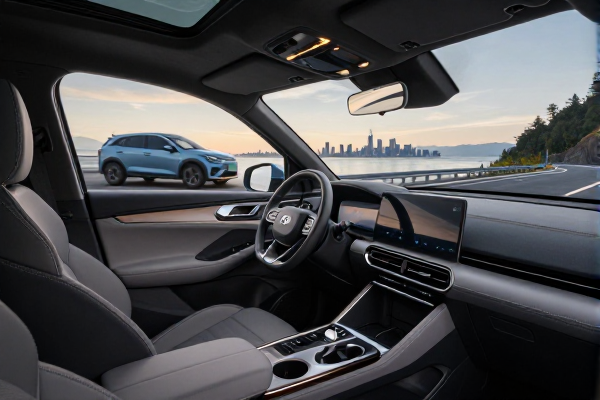
The core pitch is simple: no Bluetooth handshake, no cable, no phone sitting in the cup holder. Once the app is installed on a compatible dashboard, it uses the vehicle’s own display and connectivity to pull playlists, albums, and personal recommendations. For drivers, that means fewer steps before music starts. For Spotify, it means the car is no longer just an accessory to the mobile app; it is a platform in its own right.
The practical benefits go beyond convenience. A phone connected by Bluetooth drains its battery faster, sometimes mid-commute. Calls, messages, and app alerts also interrupt the audio at the worst possible moment. With a standalone car app, the music feed is more isolated from phone noise. Drivers can still use their phone for maps, calls, or navigation without worrying about whether Spotify is playing in the background.
The interface also has to be different. An infotainment screen is not a phone screen. Drivers glance at it in short moments, and they need large, obvious controls. Spotify has been refining its layout for years, but a car-native version puts the heavy weight on minimal menus and fast action. The goal, clearly, is to get from “car starts” to “music plays” in as little time as possible.
This launch is not just about one app update. It is a change in how Spotify thinks about cars. For more than a decade, in-car listening depended on a smartphone: a cable, a Bluetooth connection, or a mirroring protocol like Apple CarPlay or Android Auto. Those systems still work, but they treat the car as a second screen for the phone.
Spotify’s standalone app treats the car as the first screen. That is a meaningful shift in ownership of the experience. When the app lives on the vehicle’s infotainment system, Spotify can design its own controls, update its own features, and control the experience more directly. Automakers still approve what goes into the car, but Spotify no longer has to wait for a phone to join the session.
That distinction matters in the broader automotive industry. Carmakers have been cautious about letting smartphone systems conquer every screen. Some want their own native software to remain central. Offering Spotify as an embedded app gives automakers a way to deliver a popular service while keeping the dashboard in their own operating environment.
Spotify’s new direction is a clear departure from its earlier car experiment. Years ago, the company tested Car Thing, a small dashboard device designed to control Spotify while driving. It was different from this app in one crucial way: it still depended on a smartphone to stream the audio. Drivers treated it as one more gadget to mount, charge, and manage. The product was eventually discontinued.
The lesson from Car Thing was straightforward. People do not want a separate box bolted to the air vent. They want the service to disappear into the car itself. With this standalone app, Spotify is trying exactly that approach. There is no extra hardware, no vent mount, no awkward cable path. The car’s own screen becomes the canvas.
Spotify may be the biggest streaming platform in the world, but it does not automatically own the dashboard. SiriusXM has spent decades building relationships with automakers. Apple and Google have spent years shaping the phone-connected experience through CarPlay and Android Auto. And now, with Android Automotive, vehicles are starting to run third-party apps natively.
Spotify’s standalone app enters that crowded field with two advantages. First, it carries existing user habits: millions of drivers already know how Spotify organizes music. Second, it has one of the largest catalogs, including exclusive podcasts and audiobooks. For drivers who have not chosen another ecosystem, Spotify becomes the natural default on the car’s home screen.
That also raises pressure on rivals. Amazon Music, Apple Music, and others may need to speed up their own embedded efforts. Automotive partnerships are often exclusive or semi-exclusive for short periods. Automakers can now pick which music services to feature prominently, and Spotify wants to be the one that appears first.
Cars represent one of the last major places where people consume audio without a phone as the center. Commutes are predictable, daily, and filled with listening opportunities. For many drivers, the car is where they decide whether a subscription is worth keeping. If streaming music in the car feels complicated, the service becomes expendable. If it feels invisible and instant, it becomes essential.
Embedded car apps can also support new commercial models. Automakers already sell connected services and data plans, and a music subscription can be bundled into that package. Spotify could benefit from those partnerships without having to invent new hardware. The car becomes a gateway to more premium subscriptions, especially for households that already stream in the home but have not brought that experience into the vehicle.
The toughest barrier is fragmentation. Automakers use different operating systems, different screen sizes, different voice assistants, and different hardware. An app that works beautifully in one vehicle may feel sluggish in another. Maintaining a high-quality experience across all those environments is far more difficult than building for two phone operating systems.
Connectivity is another question. A vehicle needs a data connection to stream music in real time. If the car does not have a robust cellular plan, drivers may burn through their allowance quickly. That could push them back to a phone hotspot, which would quietly undo the point of a standalone app. Offline downloads may help, but they require planning and storage.
There is also the upgrade cycle problem. People replace phones every few years and often expect to keep a car for a decade. Vehicle hardware ages quickly, especially the processors inside infotainment systems. Spotify will have to make sure the app remains useful on older cars without requiring a dashboard upgrade.
One of the most important details lies in the interface. A standalone car app must be designed for glances, not deep reading. Big album art helps. Large play and pause buttons help. Long scrolling lists do not. Spotify has already experimented with simplified phone modes for drivers, but the full car-native interface has to go further.
Voice control is likely to be part of the answer. Many newer cars support voice commands through their own assistants, and Spotify has its own voice search features for premium subscribers. A driver should be able to say, “Play my daily mix,” without touching the screen. If the car app is built to work that way from the start, it will feel far safer than a phone-connected setup that forces the driver to reach into a mobile menu.
Spotify has not revealed every automaker or launch region in the initial announcement, but the direction is clear. The first standalone car app is a foundation piece. Future versions can expand to rear-seat screens, separate listening zones for passengers, and tighter integration with the car’s navigation system. Those features would have been difficult to support if Spotify were still locked inside the phone.
For now, the biggest change is at the driver level. Music starts faster. Phone dependency goes down. The car’s screen becomes a direct connection to Spotify. That might not sound dramatic after years of smartphone mirroring, but it rewires the relationship between a streaming service and the place where many people listen the most.
The road ahead will not be smooth. There will be glitches, regional delays, and moments where automaker systems do not behave the way users expect. But Spotify has made its position clear: the car is no longer a peripheral for the phone. It is a destination in its own right. The question now is how fast the next wave of compatible vehicles arrives—and how much driver behavior actually changes once the phone is no longer in the loop.