Browse

Log in / Register
 Share

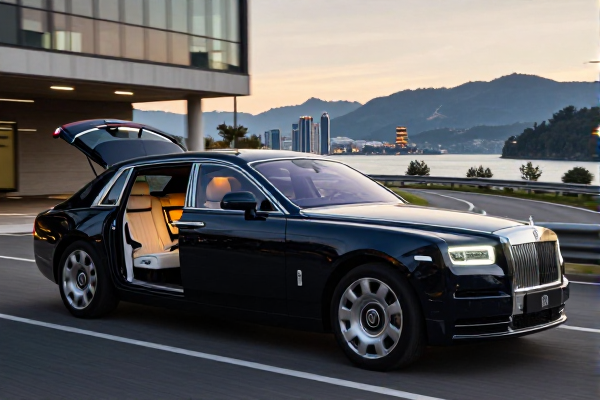
A Rolls-Royce Phantom and a BYD Sealion collided near Clarke Quay in Singapore on Friday, leaving a 72-year-old woman injured and prompting a police investigation that remains open as of Monday, June 23, 2026.
The crash happened around 2:40 pm at the junction of New Bridge Road and Carpenter Street. Photos from the scene show a battered ultra-luxury sedan and an electric SUV whose left-side passenger doors were crumpled, with airbags deployed. But authorities have not yet said how the two vehicles met or who may be at fault.
The Rolls-Royce Phantom bore the brunt of the impact at its front end. The famous Parthenon-style grille and the front bumper were visibly damaged, although the rest of the car appeared structurally intact. The BYD Sealion, meanwhile, took the hit along its left flank. Its rear passenger door was caved in, and the front door showed heavy creasing. Airbags inside the Chinese-made EV had gone off during the impact.
That damage asymmetry raises immediate questions about collision dynamics. Front-to-side impacts generally place more responsibility on the vehicle that strikes the other. But police have made no statements about traffic light signals, right-of-way, or any possible infraction.
The 72-year-old woman was riding in the BYD Sealion when the crash occurred. Singapore Civil Defence Force personnel took her to Singapore General Hospital. According to the police report, she was conscious as she was transported.
Two other people at the scene received on-site checks for minor injuries and both declined hospital care. Their names and roles have not been disclosed.
The Rolls-Royce was driven by a 48-year-old man. The BYD had a 76-year-old man behind the wheel. Both are now under police investigation, which in Singapore does not automatically mean they are suspected of wrongdoing. It is a standard procedure when a serious injury collision occurs.
Neither driver has been arrested or charged. Police are likely reviewing closed-circuit television footage from nearby buildings, as well as any dashboard-camera clips submitted by the public.
Beyond the tabloid appeal of a seven-figure British luxury car tangled with a fast-selling Chinese electric SUV, this incident offers a real-world test of two different safety philosophies.
The Rolls-Royce Phantom is built on an aluminum spaceframe and is engineered to protect its occupants from almost any frontal impact, while maintaining a serene cabin. Its front-end damage looks dramatic but is unlikely to compromise the safety cell.
The BYD Sealion, a key rival in Singapore's surging EV market, comes with a full suite of airbags, including side curtain units that deployed as intended. The fact that the 72-year-old passenger remained conscious is a reassuring sign, although side impacts are always more dangerous than frontal ones because there is less crumple zone.
Crash photographs alone cannot determine which car provided better protection. That will come from the official accident investigation, which can take weeks in Singapore.
This crash matters well beyond Singapore. The BYD Sealion is not sold in the United States, but BYD is rapidly expanding globally and has been studying potential entry into the North American market. Collisions like this provide real-world data on how BYD's structural engineering compares against established premium brands.
The Rolls-Royce Phantom, meanwhile, is a common sight in New York, Beverly Hills, and Miami. While the US-model Phantom has the same basic body structure, road conditions and driver behavior differ. Still, any data point on how a Phantom absorbs impact is useful safety intelligence for insurers and fleet operators.
Singaporeans on social media were quick to comment on the juxtaposition of the two vehicles, with some calling it "the most Singaporean crash ever." Others noted that New Bridge Road and Carpenter Street form a tight, busy junction where pedestrians and vehicles often mix during lunch hours. But the exact sequence of events remains unknown.
Police have asked any witnesses to come forward. Meanwhile, the two damaged vehicles have been towed to a storage facility for mechanical inspection. It is not yet clear whether insurance claims will be paid out, but in Singapore, comprehensive policies typically cover such collisions once liability is established.
For now, the key facts are these: A 72-year-old woman is recovering in hospital, both cars suffered serious but survivable damage, and two drivers are waiting for the safety camera footage to tell the story. The investigation could take weeks, and neither side has made a public statement.
As EVs become more common on Singapore roads and luxury cars continue to dominate the country's streets, collisions between vehicles at opposite ends of the price spectrum will only become more frequent. This one, however, will likely be remembered not because of the damage, but because it underscored how far Chinese-made EVs have come in safety engineering.
The wait for the full report from the Singapore Traffic Police will be closely watched by auto safety analysts on both sides of the Pacific.