Browse

Log in / Register
 Share

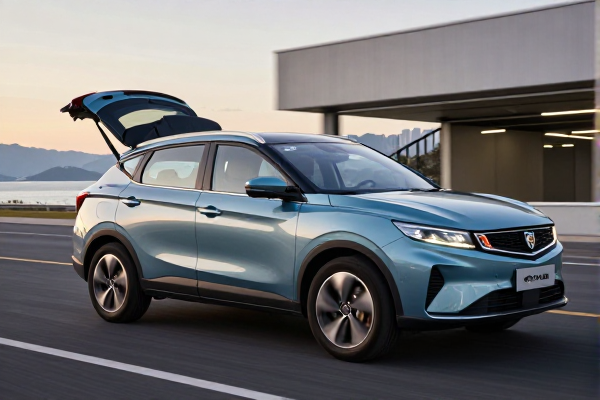
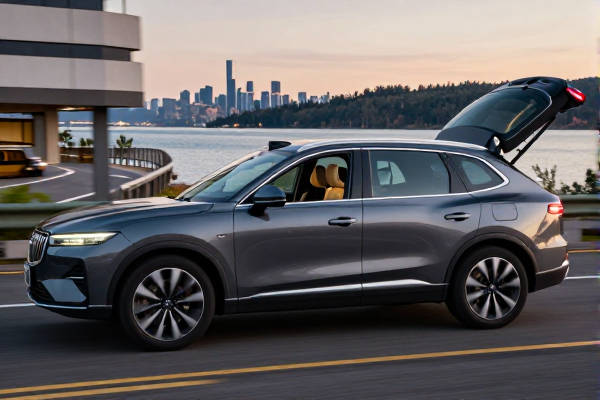
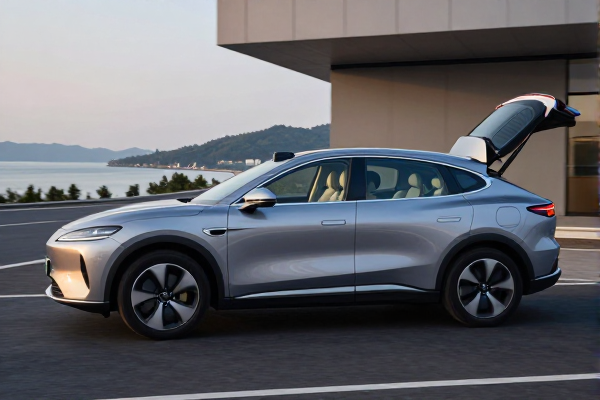
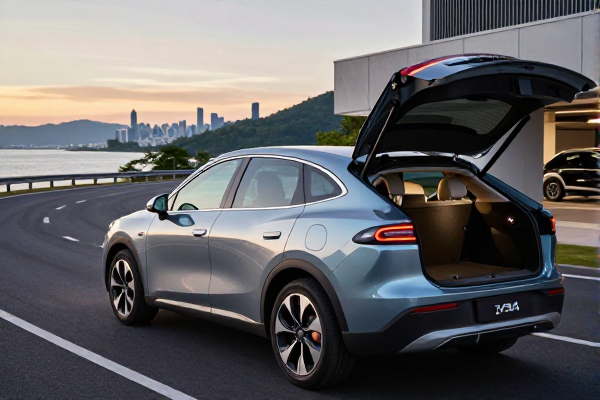
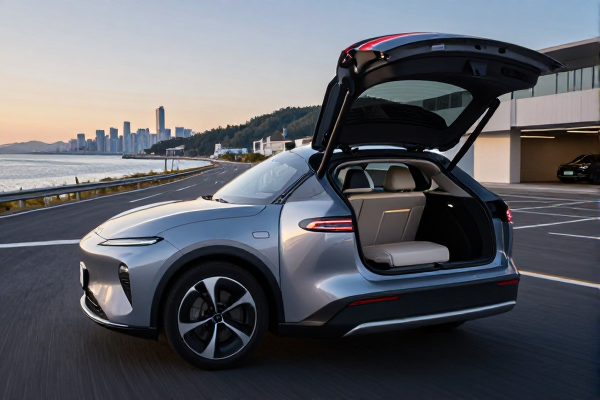
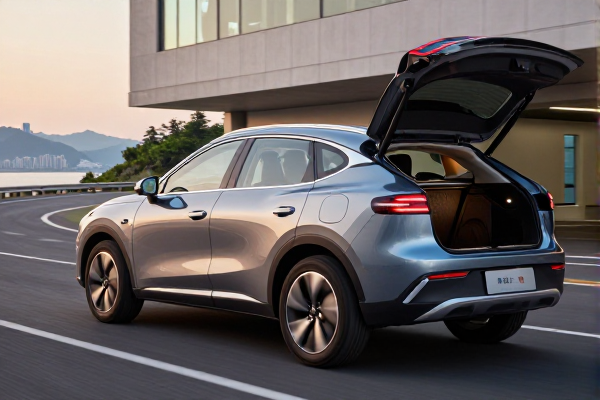
KUALA LUMPUR — As of Sept. 30, 2026, Proton's electric vehicle arm, PRO-NET, has delivered 40,000 e.MAS cars, a total reached barely 20 months after the brand's market launch. The milestone matters. But the number that deserves more attention sits in Malaysia's August registration records: the Proton e.MAS 5 was registered 4,770 times that month, making it the fifth most-registered new vehicle model in the country — an electric car inside a top-five club that Malaysians have traditionally reserved for petrol-powered Peroduas and Protons.
For anyone tracking EV adoption beyond the US, that detail is worth a closer look.
An EV brand that did not exist two years ago has now accumulated 40,000 deliveries. Standing alone, that's an impressive trajectory for a newcomer in a market the size of Malaysia.
The August JPJ data, though, is what turns that achievement into a pattern. Four models finished ahead of the e.MAS 5: the Perodua Bezza, Perodua Axia, Proton Saga and Perodua Myvi — and the gap to the Myvi was just 108 registrations, according to figures reported by local motoring publication Carz. That means the electric model came within a rounding error of Malaysia's best-selling petrol cars.
The cumulative picture looks similar. Between January and August 2026, JPJ records show 17,837 e.MAS 5 registrations, putting it seventh among all new vehicle models in Malaysia for that eight-month period.
August also produced a striking overall statistic: 8,833 electric vehicles registered, with EVs claiming roughly 11.4 percent of all new vehicle registrations. Around one in nine new vehicles joining Malaysian roads that month was fully electric.
For context, US electric vehicle share of new car sales has hovered around high single digits to low double digits in most recent industry estimates — a similar territory, but achieved through a different route: premium models and federal tax credits rather than an affordable compact from a national champion.
There is a catch, and it is a significant one.
Of those 8,833 August EV registrations, 4,770 were e.MAS 5 units — about 54 percent of Malaysia's entire EV volume in a single month, all from one model. Remove the e.MAS 5 from the equation, and every other EV sold in Malaysia actually declined, from 4,535 registrations in July to 4,063 in August.
That changes the narrative. Malaysia's EV market is unquestionably expanding, but in August it expanded because one car matched the country's mass-market needs exceptionally well. Other EV brands did not share in the momentum.
The e.MAS 5 launched in April 2025 at entry pricing below RM 60,000 (roughly US$14,000 at exchange rates prevailing then). That puts it in the same showroom conversation as ordinary compact petrol cars, very far from the premium price tags that introduced many Malaysians to electric motoring.
Price, however, is only part of the explanation. The e.MAS 5 also carries the Proton badge, a brand Malaysians have trusted for decades, and it rides on an architecture co-developed with China's Dongfeng Motor Group — combining familiar local branding with the aggressive cost engineering that has reshaped EV competition across Southeast Asia.
Distribution completed the package. PRO-NET has 60 dealers nationwide supported by more than 1,600 trained sales and after-sales personnel, so the car is visible and serviceable well beyond Kuala Lumpur.
PRO-NET's latest announcement is revealing because much of it is not about new sales at all.
The company plans to reach 70 outlets by the end of 2026, including 57 service centres and 14 Body & Paint centres, and reports parts availability of 98.8 percent. It is also developing certified EV technicians together with MARA, Malaysia's skills development agency.
That is the unglamorous work that decides whether the first 40,000 customers become the next 40,000. Charging access, workshop capacity, and repair turnaround times now matter more to the brand's reputation than delivery speed.
The 40,000th delivery comes with immediate incentives: 40 percent off charging through the e.MAS app between Oct. 1 and Oct. 5, 10 percent off service and maintenance for the whole of October, up to RM 1,000 in additional trade-in value through CARSOME, and RM 100 charging credit for qualifying Care Elite or Flex customers, capped at the first 5,000 sign-ups.
The more strategic element is PassGo, a rewards program that credits owners with 300 welcome points after linking their vehicle and one point for every eligible kilometre driven afterward. Points are redeemable for Grab, Touch 'n Go, foodpanda and Lazada vouchers.
PassGo is a loyalty scheme on the surface, but it marks a shift in focus: from moving metal to building an ownership ecosystem around the car. That is an acknowledgment that in the EV era, the relationship between automaker and owner begins, not ends, at the point of sale.
The Malaysian data provides a useful counterpoint to the argument that EV demand is always policy-driven.
Malaysia's 11.4 percent monthly EV share grew without massive federal purchase subsidies. It grew because one EV was priced, branded, and supported like a normal car — and enough buyers responded to lift it into the overall top five. The US market still has few comparable vehicles: a compact EV from a trusted national brand at genuine mass-market pricing. Malaysia's August experience suggests the demand appears quickly when the product matches the market.
Malaysia has moved past the question of whether its drivers will buy electric vehicles. They will, at least when those vehicles feel like ordinary cars rather than luxury experiments.
The more relevant question now is which EVs those buyers will choose. In August, Proton answered decisively. Whether other brands can replicate that formula — or find one better suited to their own markets — is the next chapter of the global EV transition.