Browse

Log in / Register
 Share

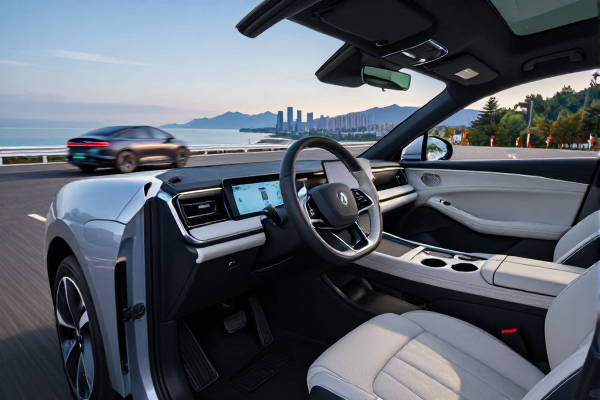
As of March 5, 2026, the Polestar 2 remains the brand's only sedan-shaped model in the US, and it is sold with three distinct powertrains: a 272 hp rear-drive Standard Range version, a 299 hp Long Range rear-drive version, and a 421 hp all-wheel-drive Long Range Dual Motor. All three share the same fastback body, a single-speed transmission, a 127 mph top speed, and zero tailpipe emissions. The differences come down to battery size, motor placement, and what each version asks you to trade away. Here's the breakdown.
The structure Polestar settled on after the 2024 refresh carries over unchanged for 2026. Every version uses a single-speed automatic gearbox and one or two electric motors; there is no fuel option, no hybrid variant, and no manual transmission anywhere in the range. What separates the cars is how the power is generated and stored.
| Powertrain | Power | Torque | Drivetrain | 0–62 mph | Top speed | Consumption | CO₂ |
|---|---|---|---|---|---|---|---|
| Standard Range Single Motor | 200 kW (272 hp) | 490 Nm (361 lb-ft) | Rear-wheel drive | 6.4 s | 127 mph | 14.9 kWh/100 km (≈4.2 mi/kWh) | 0 g/km |
| Long Range Single Motor | 220 kW (299 hp) | 490 Nm (361 lb-ft) | Rear-wheel drive | 6.2 s | 127 mph | 14.8 kWh/100 km (≈4.2 mi/kWh) | 0 g/km |
| Long Range Dual Motor | 310 kW (421 hp) | 740 Nm (546 lb-ft) | All-wheel drive | 4.5 s | 127 mph | 15.8 kWh/100 km (≈3.9 mi/kWh) | 0 g/km |
The 0–62 mph figures are the metric equivalents of 0–100 km/h. US-market 0–60 mph times will typically come in a tenth or two quicker.
The base Polestar 2 produces 272 hp and 361 lb-ft, all of it routed to the rear axle. A 6.4-second 0–62 mph time is fine for daily driving, even if it is no longer headline material for a 2026 EV. The Standard Range model is about price discipline, not bragging rights. Its 70.0 kWh battery gives a WLTP range of 344 miles, and the previous model-year EPA rating was 270 miles. US buyers should plan around the EPA number, not the European one.
Polestar fits a heat pump across the entire 2026 range, which softens winter range loss — a meaningful detail for northern states. The Standard Range car charges at up to 180 kW DC and 11 kW AC. At 4,442 lb, it is not light, and its power-to-weight ratio of 99.3 kW/t actually sits below the mid-size EV class average of 108.4 kW/t. The consumption figure of roughly 4.2 miles/kWh is competitive without being exceptional.
This is the version with the strongest argument. The rear motor produces 299 hp, just 27 hp more than the base car, but the real story is the battery. The 82 kWh pack (78 kWh usable) delivers a WLTP range of 409 miles, and the previous EPA reference of 320 miles made it the longest-legged Polestar 2 ever sold in the US.
The Long Range Single Motor has a curious spec-sheet quirk: at 4,429 lb, it is 13 lb lighter than the base car despite the bigger battery. Denser pack construction offsets the extra cells, and the power-to-weight ratio climbs to 109.5 kW/t — right about the segment average. DC charging also improves to 205 kW, which shortens highway stop times. Acceleration, though, barely changes: 6.2 seconds to 62 mph is only a tenth quicker than the Standard Range car. If range and charging speed matter more than straight-line pace, this is the Polestar 2 to buy.
Add a front motor and the Polestar 2 turns into a different car. Combined output reaches 421 hp and 546 lb-ft, and the 0–62 mph run drops to 4.5 seconds — genuine sports-sedan performance. The top speed stays governed at 127 mph, which is normal for an EV with a single-speed transmission.
The extra motor costs you range. WLTP falls from 409 to 370 miles, and the previous EPA figure was 276 miles. Curb weight rises to 4,647 lb, and efficiency settles at about 3.9 miles/kWh. The payoff is a power-to-weight ratio of 147.1 kW/t — the only version that clearly overpowers the mid-size class average. Towing remains 3,300 lb braked, so the lineup's utility is unchanged regardless of powertrain.
The WLTP numbers in this article — 344, 409, and 370 miles — come from the European certification cycle, which is more forgiving than the EPA's testing. Polestar had not yet published 2026 EPA range ratings at the time of writing. As a reference:
Expect the 2026 window stickers to come in below the WLTP figures, especially in cold weather or at sustained highway speeds.
On charging, the Long Range versions accept up to 205 kW DC, while the Standard Range peaks at 180 kW; all three charge at 11 kW AC. The bigger US development is network access. Polestar has committed to the North American Charging Standard, and Polestar 2 drivers can now use Tesla Superchargers with an adapter. That changes the road-trip calculus significantly compared with the early CCS-only years.
| Powertrain | Curb weight | Braked trailer | Battery | Power-to-weight |
|---|---|---|---|---|
| Standard Range Single Motor | 4,442 lb (2,015 kg) | 3,300 lb (1,500 kg) | 70.0 kWh | 99.3 kW/t |
| Long Range Single Motor | 4,429 lb (2,009 kg) | 3,300 lb (1,500 kg) | 82.0 kWh | 109.5 kW/t |
| Long Range Dual Motor | 4,647 lb (2,108 kg) | 3,300 lb (1,500 kg) | 82.0 kWh | 147.1 kW/t |
The Polestar 2 is a heavy car, full stop. But the towing rating stands out: all three versions are certified to pull 3,300 lb braked, which is rare among electric sedans in the US. The Tesla Model 3 and Hyundai Ioniq 6, for example, don't offer that kind of factory rating. For buyers with a small camper or a boat, that's a box few EVs in this class tick.
Take the average of all three Polestar 2 powertrains and the lineup comes out ahead of the class. Compared with 79 mid-size electric models:
| Parameter | Polestar 2 (lineup average) | Segment average |
|---|---|---|
| Average power | 243.3 kW | 234.7 kW |
| Average weight | 2,044 kg (4,506 lb) | 2,138 kg (4,714 lb) |
| Power-to-weight ratio | 119.0 kW/t | 108.4 kW/t |
The Polestar 2 is about 94 kg (207 lb) lighter than the average mid-size EV and carries roughly 8.6 kW more average power. In real-world terms, that shows up in the dual-motor version's acceleration and in the rear-drive cars' agility rather than in everyday range numbers.
Against the obvious rivals, the positioning is clear. The Tesla Model 3 undercuts on price and, in Performance form, outruns any Polestar 2. The Hyundai Ioniq 6 delivers comparable range for less money. The BMW i4 is the closest in character — a premium sedan with an electric drivetrain — but