Browse

Log in / Register
 Share


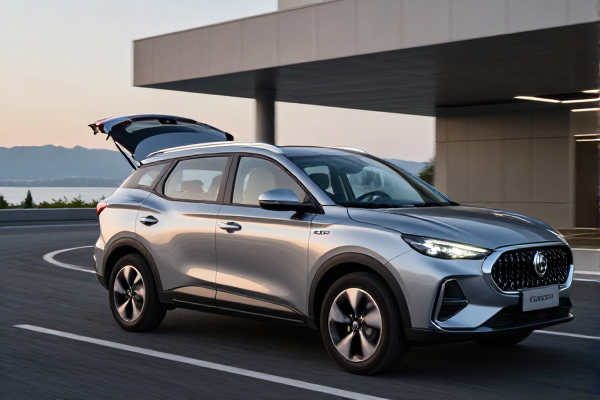
MANILA, July 22, 2025 – The global electric vehicle race is heating up, and a new compact contender from Morris Garages (MG) is set to hit the streets of Southeast Asia first. The MG S5 EV, a rear-wheel drive compact SUV, was unveiled to the motoring press in the Philippines as part of the brand’s “Next Wave” media drive, with a confirmed launch date of August 2025. While MG has not yet announced plans for the United States, the S5 EV’s competitive specs and growing international push from parent company SAIC Motor make it a vehicle worth watching for American EV enthusiasts.
The S5 EV enters a segment that is rapidly expanding worldwide: affordable, compact electric crossovers with rear-wheel drive. In the Philippines, it will go head-to-head with the Geely EX2 and the upcoming Chery QEV, but for US consumers, the closest analogues are the Hyundai Kona Electric, Chevrolet Bolt EUV, and the Nissan Leaf. However, the MG S5 EV distinguishes itself with a rear-wheel drive layout – a rarity among compact EVs – and a notably low drag coefficient of 0.28, which is better than many sedans (typically 0.32) and significantly lower than the average crossover (0.36).
Powertrain and Chassis: A Lightweight, Agile Package
Under the skin, the MG S5 EV is powered by a single electric motor mounted at the rear, producing approximately 167 horsepower and 250 Nm of torque. This is a modest output, perfectly suited for urban commuting and highway cruising. The motor draws energy from a 49 kWh lithium iron phosphate (LFP) battery pack, which is only 110 mm thick – a key engineering achievement that helps keep the crossover’s center of gravity low. The combination of RWD and a low center of gravity gives the S5 EV a planted, sporty feel, according to MG Philippines. A multi-link rear suspension further enhances ride quality and handling agility.
With a claimed range of approximately 415 kilometers (258 miles) on a single charge, the S5 EV sits between the Chevrolet Bolt EUV (247 miles EPA) and the Kia Niro EV (253 miles EPA). However, note that the 415 km figure is likely based on the NEDC or CLTC cycle, which is more optimistic than the EPA cycle. In real-world US driving, the range could be around 200–220 miles, still competitive for its price class. The battery’s LFP chemistry offers longer cycle life and better thermal stability, though it may be slightly heavier than NMC batteries.
Exterior: Aerodynamics Take Center Stage
The MG S5 EV’s exterior is shaped by a relentless focus on reducing drag. The front features active grille shutters that close at higher speeds to improve airflow, and functional air dams direct air around the wheels. At the rear, a full-width LED light bar with “Checkered Flag” pattern LED taillights adds a sporty touch. The 17-inch alloy wheels are fitted with aerodynamic panels to further reduce turbulence. MG claims a drag coefficient of 0.28 Cd, which is exceptional for a compact crossover. For comparison, the Tesla Model Y has a Cd of 0.23, while the Hyundai Ioniq 5 sits at 0.29, so the S5 EV is in good company. The aerodynamic efficiency not only maximizes range but also reduces wind noise, improving cabin quietness.
Interior: Tech-Forward Without Breaking the Bank
Inside, the MG S5 EV offers a blend of practicality and modern technology. The seats are upholstered in a combination of fabric and leather, and the cabin is dominated by two screens: a 10.25-inch digital instrument cluster and a 12.8-inch touchscreen infotainment system. The infotainment runs on a proprietary OS but includes wireless Apple CarPlay and Android Auto for seamless smartphone integration. A four-speaker sound system, automatic climate control, and a rotary shift knob complete the interior package. While the build quality is expected to be competitive for the price point, early reviews suggest the materials are a step above entry-level EVs.
**Potential for the US Market: A Calcul