Browse

Log in / Register
 Share

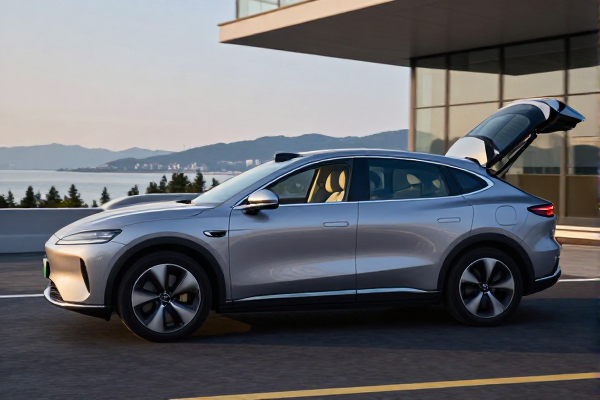
India’s flagship electric vehicle subsidy program, the PM Electric Drive Revolution in Innovative Vehicle Enhancement (PM E-DRIVE), has propelled the sale of 2.65 million EVs across the country as of late July 2026. That’s according to the latest data tabled by the Ministry of Heavy Industries (MHI) in the Lok Sabha, India’s lower house of parliament. The ₹10,900-crore (roughly $1.3 billion) scheme, running from April 2024 to March 2027, is now entering its most critical phase: scaling charging infrastructure fast enough to match demand, and spurring domestic manufacturing to reduce import dependence.
Maharashtra: The undisputed EV leader
Among Indian states, Maharashtra has emerged as the clear front-runner, accounting for the highest number of PM E-DRIVE-backed EV registrations. The state’s aggressive push includes financial incentives for buyers, streamlined registration processes, and a growing network of public charging stations—especially in Mumbai, Pune, and Nagpur. Industry insiders credit Maharashtra’s robust industrial base and the presence of major auto manufacturers like Tata Motors and Mahindra & Mahindra for its lead.
Data from the MHI shows that states with large urban populations and strong state-level EV policies—Gujarat, Tamil Nadu, Karnataka, and Uttar Pradesh—are also clocking impressive numbers. But Maharashtra’s early adoption and infrastructure investment have given it a clear edge.
Charging network expansion gains momentum
The central government has doubled down on charging infrastructure under PM E-DRIVE, with funding allocated to install 88,000 public EV chargers by 2027. As of mid-2026, over 35,000 chargers have been deployed, concentrated in tier-1 cities and along major highways. The government has also mandated that all new commercial buildings and residential complexes with 50+ parking spaces reserve 20% of spots for EV charging.
This infrastructure push is critical: India’s EV market is growing at a compound annual rate of over 40%, but range anxiety remains the top barrier for potential buyers. The Ministry of Power recently introduced standardized pricing for public charging—capped at ₹12 per kWh—to make running costs predictable for consumers.
Domestic manufacturing targets
A key pillar of the scheme is localization. The production-linked incentive (PLI) scheme for advanced chemistry cell (ACC) battery manufacturing has been integrated with PM E-DRIVE, offering subsidies for batteries made from Indian-sourced materials. Several global battery makers—including LG Energy Solution’s joint venture with India’s JSW Group—have announced gigafactories in Gujarat and Tamil Nadu, with production expected to kick off in 2027.
For two- and three-wheelers, which dominate India’s EV sales by volume, the government has hiked the subsidy per vehicle for those that use domestically produced motors and controllers. This has pushed OEMs like Ola Electric, Ather Energy, and Bajaj Auto to accelerate local sourcing.
A global perspective: How India stacks up
To put India’s numbers in context for U.S. readers: the 2.65 million EVs supported by PM E-DRIVE represent roughly 3% of India’s total vehicle fleet—a small but fast-growing share. By comparison, the United States had sold about 4.5 million EVs cumulatively by early 2026, according to the U.S. Department of Energy. However, India’s per-capita EV adoption is rising faster relative to its income level, thanks to the dominance of affordable two-wheelers (average price: $1,200–$2,000) and three-wheelers used for last-mile delivery.
India’s charging density still lags far behind the U.S. (about 1 charger per 15 EVs vs. 1 per 10 in the U.S.), but the gap is closing fast. The Biden administration’s $7.5 billion charging program has deployed roughly 50,000 plugs, while India aims to match that number by 2027 with a much smaller budget.
Challenges and road ahead
Despite the successes, the PM E-DRIVE scheme faces headwinds. Delays in disbursing subsidies to buyers and dealers have been reported, with some stakeholders complaining of 4-6 month payment cycles. The MHI has introduced a digital portal to automate claims, aiming to clear pending applications by September 2026.
Another hurdle is grid reliability. India’s electricity distribution companies (discoms) in several states struggle with peak demand fluctuations, and rapid EV charging could strain local grids. The government is piloting smart charging systems that shift load to off-peak hours, with support from the U.S.-India Clean Energy Finance Task Force.
What it means for global supply chains
PM E-DRIVE is part of India’s broader push to become a manufacturing hub for EVs and components. The scheme aligns with the Production-Linked Incentive (PLI) for automobiles and auto components, which has attracted investments from Hyundai, Kia, and VinFast. U.S. companies like Tesla and Rivian have been watching India’s policy trajectory closely: Tesla’s lobbying for lower import duties on EVs has partially succeeded, with the government slashing duties on EVs priced above $35,000 from 100% to 70% for a limited number of units.
If India can sustain its current momentum—especially in building a reliable charging network and localizing battery production—it could become the world’s third-largest EV market by 2030, behind China and the U.S. For now, PM E-DRIVE remains the engine driving that ambition, with Maharashtra leading the charge.
Conclusion
As of August 2026, the PM E-DRIVE scheme has proven to be a catalyst for India’s electric mobility transition, supporting over 2.65 million EVs and pushing the country toward a cleaner transport future. The focus is now on execution: spending the remaining ₹7,500 crore wisely to plug infrastructure gaps and boost domestic manufacturing. For U.S. policymakers and industry watchers, India’s experience offers lessons in leveraging relatively small subsidies to create a high-volume, low-cost EV ecosystem—something the West has struggled to replicate.