Browse

Log in / Register
 Share

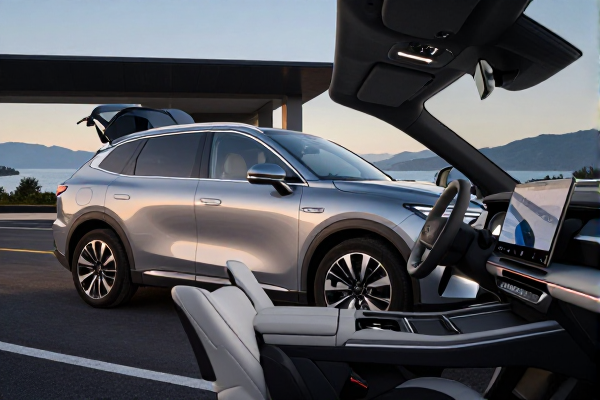
NXP Semiconductors today confirmed that its latest automotive ultra‑wideband (UWB) chip, the Trimension NCJ29D6, will power BMW’s next‑generation digital key and cabin occupant detection systems. The Dutch chipmaker announced on June 10, 2025, that the silicon will be integrated into select BMW Group vehicles starting with the 2026 model year.
The NCJ29D6 is the industry’s first automotive UWB chip to combine precise ranging with integrated radar functionality. By transmitting radio signals inside the vehicle and analyzing reflected waves, the chip can detect minute movements — including the subtle rise and fall of a human chest during breathing. This allows BMW’s system to determine whether a person or pet remains inside the cabin after the vehicle is parked, addressing regulatory requirements for child presence detection that are gaining traction in Europe and North America.
Digital Key Plus gets a hardware upgrade
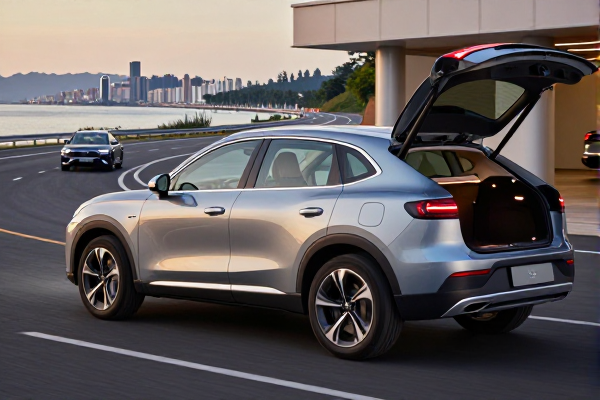
BMW’s Digital Key Plus, which lets drivers unlock and start their vehicles using a smartphone or smartwatch, already relies on UWB for centimeter‑accurate location. The NCJ29D6 chip delivers even better ranging accuracy and lower latency, making keyless entry more seamless. The same hardware also supports kick‑motion recognition for hands‑free trunk opening, as well as intrusion detection that alerts owners if someone attempts to break into the car.
One chip, multiple UWB functions
A key advantage of the NCJ29D6 is its unified architecture. “Automakers can add UWB‑based functions such as kick‑motion recognition, intrusion detection, and automated charging on the same hardware platform,” said Markus Staeblein, Senior Vice President of Secure Car Access at NXP. This eliminates the need for separate radar chips or dedicated sensor modules, reducing both bill‑of‑materials cost and software complexity.
According to NXP, the chip operates in the 6‑9 GHz UWB band and supports IEEE 802.15.4z standards, ensuring backward compatibility with existing UWB infrastructure. The integrated radar mode can be activated via software, giving automakers flexibility to deploy features over the air after the vehicle is sold.
Industry context: UWB radar goes mainstream
Until now, most automotive UWB chips handled only ranging and secure communication. The addition of radar on the same die marks a shift toward multi‑purpose radio platforms. ABI Research forecasts that UWB‑based in‑cabin detection will appear in more than 15 million vehicles by 2027, driven by safety regulations and consumer demand for connected car features.
BMW has been a pioneer in vehicle‑integrated UWB, introducing Digital Key Plus in 2021. With the NCJ29D6, the automaker can now offer a richer set of UWB services without adding hardware. The move also positions BMW to comply with upcoming European NCAP requirements for child presence detection, which are expected to take effect in 2026.
What’s next for UWB in cars?
Beyond BMW, NXP is working with several other OEMs to evaluate the NCJ29D6 for uses such as automated valet parking, charging‑cable detection, and driver‑seat occupancy monitoring. The chip’s integrated radar can also differentiate between humans and luggage, reducing false alerts.
NXP’s Staeblein noted that the same architecture could eventually support gesture control inside the cabin, allowing drivers to adjust climate or audio settings with a simple hand movement. “The chip is essentially a software‑defined radio that can switch between ranging and radar modes on the fly,” he said.
With the first production vehicles expected in late 2025, the NCJ29D6 marks a step forward in making UWB a multi‑function sensor platform for the automotive industry. BMW’s adoption signals that the technology is ready for prime time — and that the humble digital key chip is about to do a lot more than just unlock doors.