Browse

Log in / Register
 Share
Share
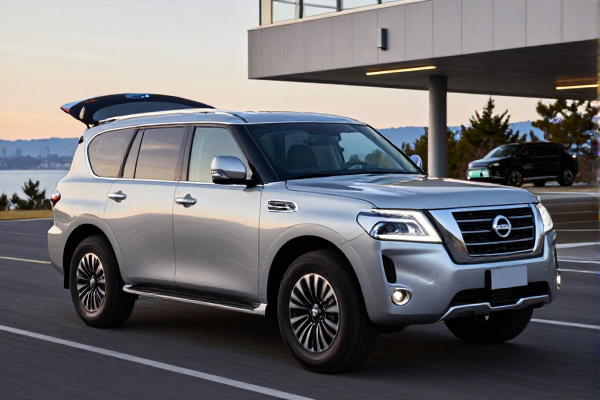
May 9, 2026 — Nissan isn't going to bolt an electric motor onto the Patrol just to chase headlines. Antonio Lopez, the global director and chief product specialist for Nissan's full-size SUVs and pickups, made that much clear during a dinner with Philippine motoring media.
The setting was casual — complete with a surprise serving of balut — but Lopez's message was direct. The current generation of electrified powertrains, including Nissan's own e-Power hybrid system, doesn't have the muscle or thermal management to keep the Patrol's off-road promise intact. If Nissan ever builds an electrified Patrol, it will need better tools than anything available today.
The new Patrol arrived in Philippine showrooms in March 2025, and Lopez has been central to the model from the drawing board to its global rollout. So when he says an EV Patrol isn't imminent, it's worth listening. He joined Nissan as a powertrain engineer before moving into product strategy, which gives his resistance to electrification more authority than a typical marketing line.
The core problem is straightforward. The Patrol is built for sustained punishment: soft sand, steep climbs, high ambient temperatures and heavy loads. Lopez's engineering background tells him that today's electric and hybrid setups can't deliver the same confidence in those conditions without compromise. He pointed specifically to torque delivery and power consistency, which are non-negotiable for a vehicle that anchors Nissan's reputation in the Middle East.
Nissan's e-Power system is a clever solution in a compact crossover. The engine works primarily as a generator, while the electric motor drives the wheels. That eliminates the need for a traditional mechanical connection between the engine and wheels. But in a heavy, ladder-frame SUV constantly working against dunes and inclines, the system would need to cope with hours of peak electrical load. Lopez essentially said the battery, motor and thermal management aren't ready for that kind of sustained abuse.
He didn't rule out electrification forever, though. Lopez said the idea could be revisited once solid-state batteries become more common in production EVs, and once more efficient cooling technology is available. That's a critical detail, because a battery pack buried under a large SUV can't just look good on paper. It has to handle repeated high-drain events without losing performance or cooking itself. The Middle East Patrol customer won't accept a warning light on the first long dune run.
Nissan has already thrown weight behind solid-state development, with a pilot line in Yokohama and a public target for commercialization around fiscal 2028. That timeline is the one to watch if you're hoping for an electrified Patrol. The technology could give engineers the energy density to keep range and off-road capability in balance, while improved cooling hardware keeps temperatures under control when the terrain stops cooperating.
So what does that mean for the immediate future? Don't expect Nissan to chase a conventional hybrid Patrol just because Toyota launched the Land Cruiser HEV. Lopez was clear that the company isn't in a race with the hybrid Land Cruiser or the growing wave of executive-style Chinese off-roaders such as the Jetour GAIA G700 and the Geely Galaxy Cruiser 700. Sticking with a proven combustion powertrain keeps the Patrol predictable, durable and easier to service in remote areas.
That pragmatic stance doesn't mean Lopez lacks imagination. When conversation shifted away from batteries and back to the Patrol's larger future, he became noticeably more animated. He talked about turning the Patrol into a family of vehicles, much like the Land Cruiser has spawned smaller and more playful variants. He openly smiled at the idea of a three-door Patrol, drawing a comparison to the Land Cruiser FJ and the rumored compact Pajero. It may have been brainstorming, but there was genuine excitement behind it.
A smaller Patrol could open doors that a full-size EV Patrol can't. It would suit rural trails, urban parking spaces and younger buyers who want the Patrol badge without the enormous footprint. And if Nissan ever introduces an electrified Patrol, that smaller entry point might be the more natural place to start. Solid-state batteries would offer packaging advantages in a shorter wheelbase, and cooling requirements would be easier to manage in a lighter vehicle.
For now, the combustion engine remains the Patrol's beating heart. Lopez isn't interested in pretending otherwise. He's happy to keep the Patrol loyal to its roots while waiting for the battery tech to catch up with the vehicle's real-world demands. That's not stubbornness; it's engineering discipline from someone who understands what happens when a premium SUV fails in front of its most devoted customers.
Until solid-state cells arrive, or until cooling technology takes a major leap forward, the Patrol stays as it is: a no-compromise full-size SUV with a traditional engine pulling serious weight. Nissan has the patience to wait, and Lopez seems genuinely comfortable with that pace. So are the buyers who still believe a Patrol should feel like it can cross a desert before lunch and still drive home in air-conditioned comfort.
The dream of a Patrol family is still alive, and so is the dream of an electrified version — but only when the technology earns the badge. Until then, both sides of the company are content to let the current Patrol carry the flag. It's a smart bet on substance over spectacle, and one that Lopez is clearly proud to defend.